By Tracy L. Barnett
Two weeks after my last trip to Mexico City, I boarded another night bus to the megametropolis, arriving before dawn. An Uber carried me through the half-lit streets to the home of Laura Kuri, a longtime force in the city’s environmental movement, who welcomed me with coffee, Lebanese breakfast and a badly needed shower.
Soon I was squeezed into a car with a group of environmental facilitators, heading southeast toward Iztapalapa—the sprawling borough of 1.8 million people that receives a formidable share of Mexico City’s waste and has also become one of its most important centers of repair, reuse and recycling.
The occasion was the Forum on Inclusive Circular Economy, organized by my longtime friend Arnold Ricalde, an environmental activist I first came to know through the Vision Council. Now an adviser to Iztapalapa Mayor Aleida Alavez Ruiz, Arnold has spent the past two years helping the borough develop projects around composting, recycling, urban gardens and waste reduction.
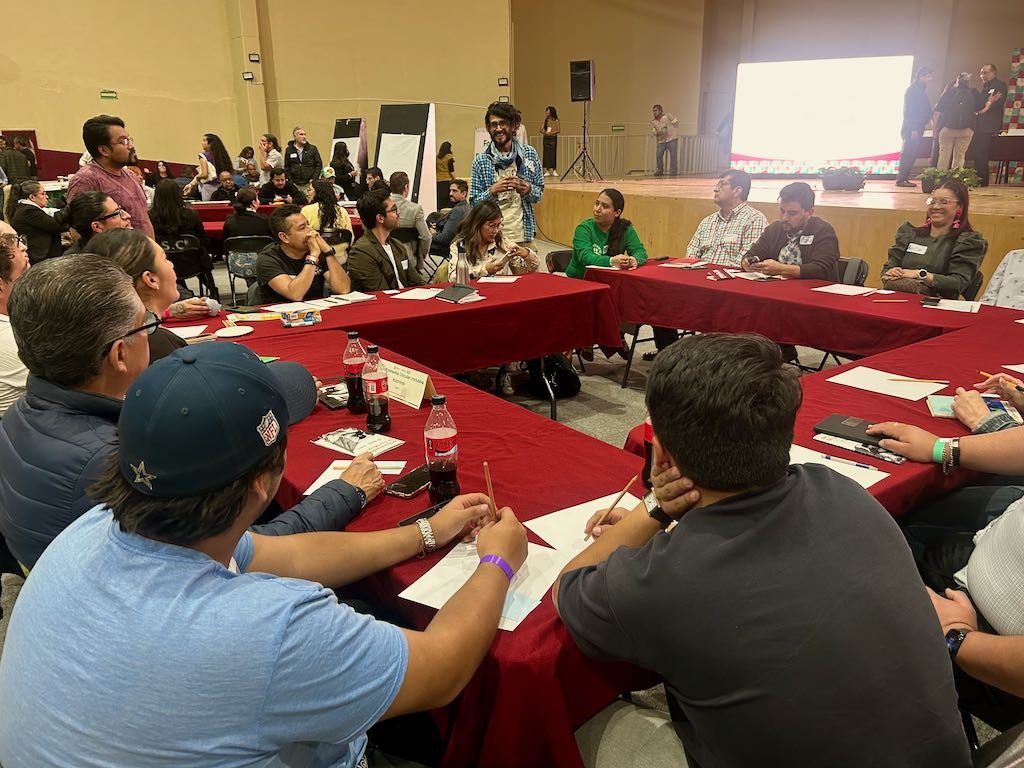
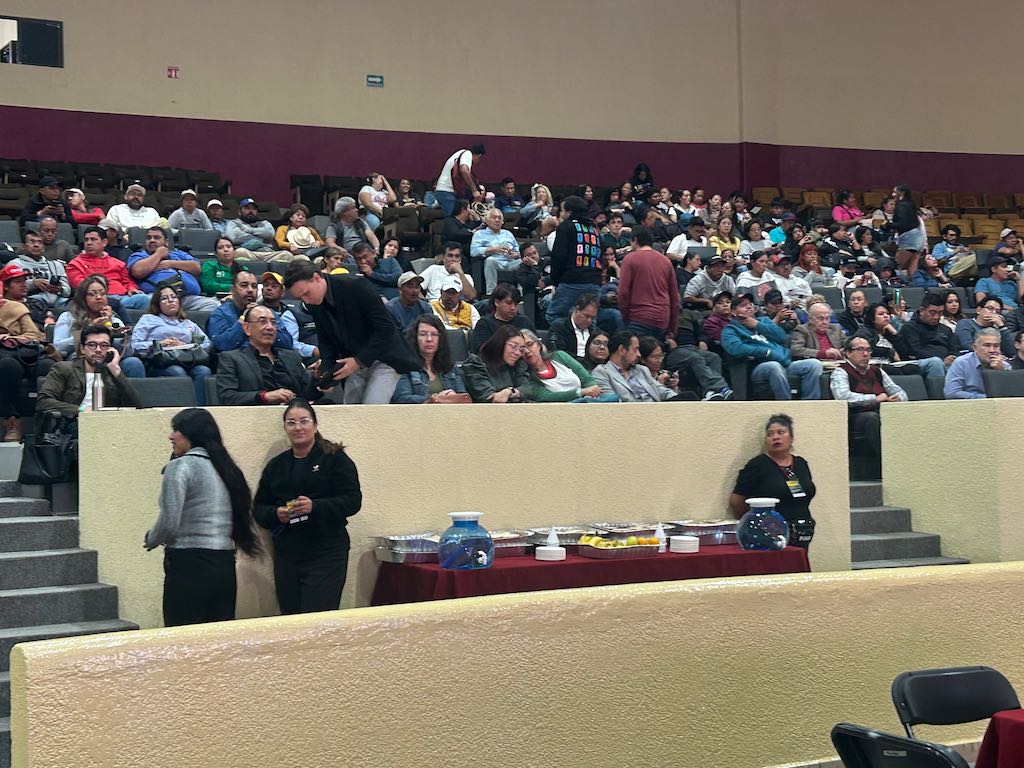
We arrived early to the Centro Cultural Iztapalapa, and I watched the setup of the impressive sound system and audiovisual displays. People crowded the lobby, exchanging contacts, comparing projects and making their way to a packed auditorium. Government officials mingled with environmentalists, business representatives and some of the people who know Mexico’s waste stream best: the pepenadores, or grassroots recyclers, who make their living recovering what everyone else throws away.
Mexico has an estimated 400,000 pepenadores working in landfills and open-air dumps, according to the forum’s organizers, while more than 2 million people participate in the informal recycling economy. Workers throughout this informal economy often lack stable incomes, social security, protective equipment and legal recognition. Some live beside—or even on top of—the enormous mountains of waste from which they extract their livelihoods.
The person who brought that reality most forcefully into the room had traveled from Chile.
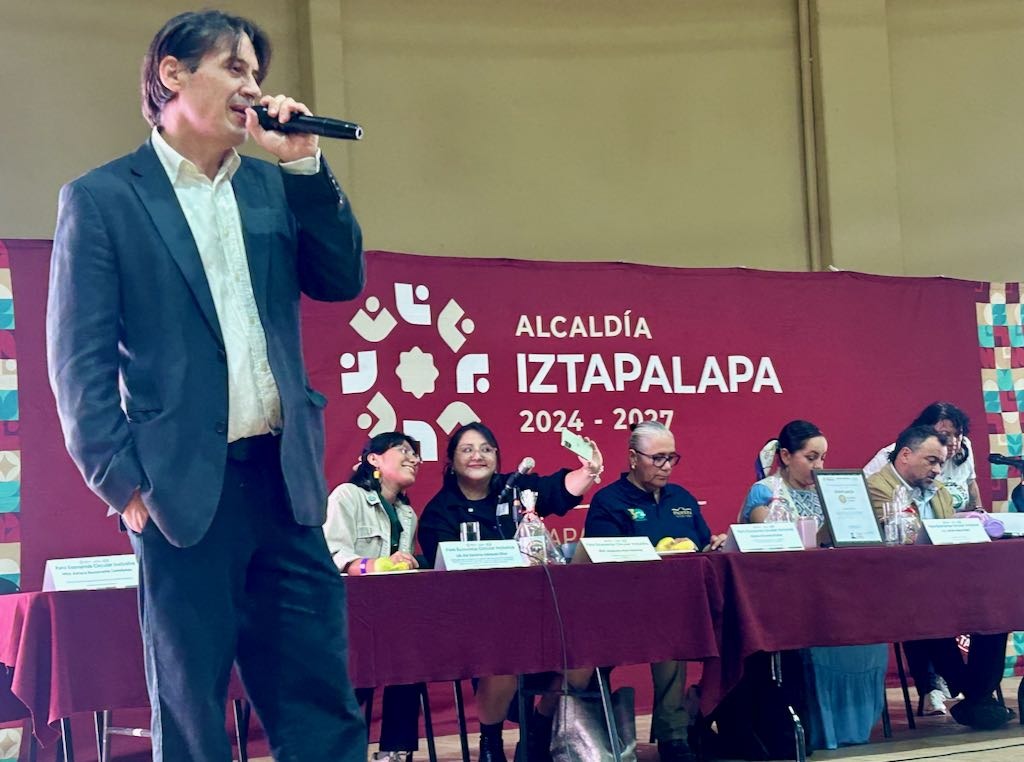
Soledad Mella is a grassroots recycler, president of Chile’s National Association of Recyclers and a leader in both the Latin American and international recyclers’ movements. Small, dynamic and utterly commanding, she stood before the audience rather than remaining seated on the stage.
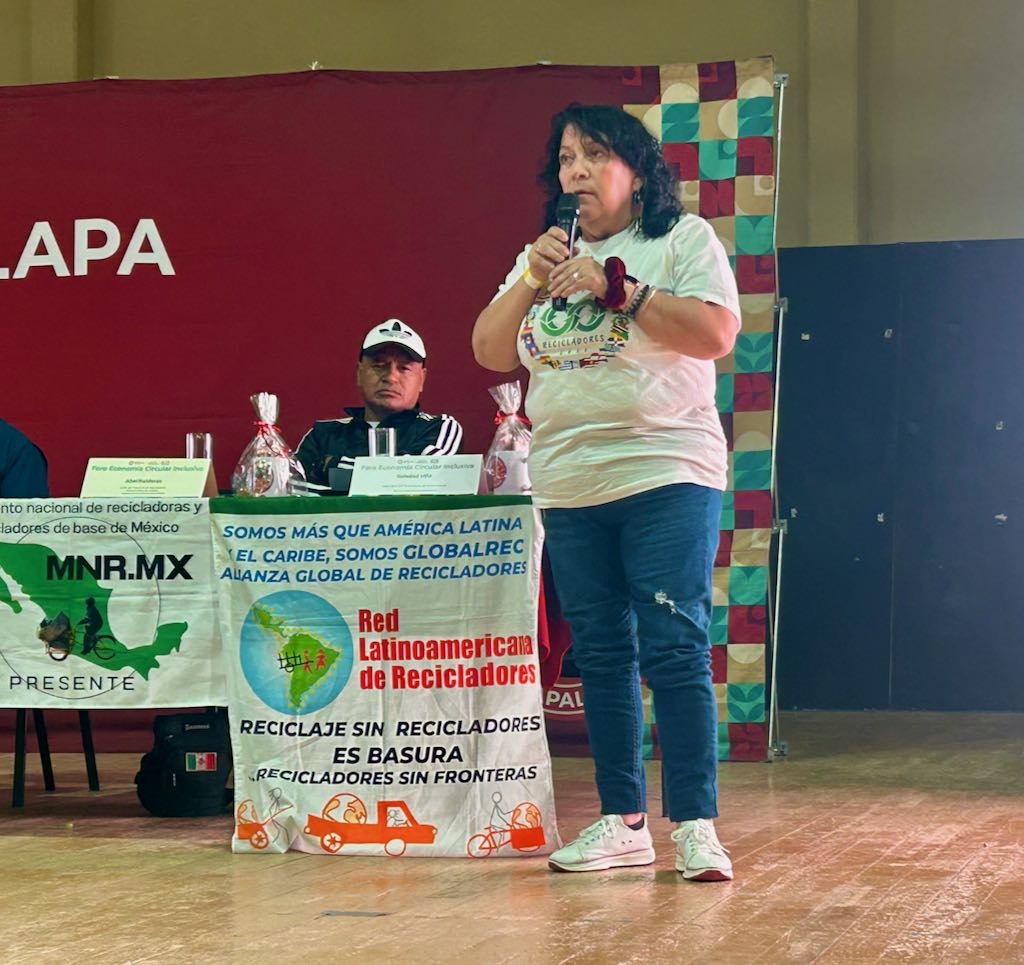
“You’ll have to excuse me, but I like to speak standing up,” she began.
It was immediately clear why.
Mella spoke with the authority of someone who has lived the struggle she was describing. She has carried her message from the streets and waste streams of Santiago to international climate conferences and United Nations negotiations. In Iztapalapa, she came with both encouragement and a warning.
“Living from garbage does not mean becoming part of the garbage,” she declared. “Recyclers must dignify and defend their work—and, above all, organize.”
Her visit came at a pivotal moment. Mexico’s new General Circular Economy Law formally recognizes grassroots recyclers and calls for their inclusion in the systems created to recover and reuse materials. Its implementing regulations, however, have yet to be published. Many of the decisions that will determine whether that promise becomes meaningful remain unresolved.
Will recyclers be registered without drowning in bureaucracy? Will they gain access to social security? Will they receive training, equipment and infrastructure? Will companies be required to purchase recovered materials directly from them? Will recycling finally be recognized and compensated as an environmental service—or will the people who built the industry be displaced once the industry becomes profitable?
Mella had seen this struggle unfold in Chile. When that country adopted its extended producer responsibility law, she explained, grassroots recyclers were initially excluded. Only through organization and political pressure did they win a place within the system.
Recognition in the text of a law is not enough, she warned. Recyclers need the tools to compete: infrastructure, financing, social protections and payment for the service they provide—not merely whatever price the market happens to offer for cardboard, aluminum or plastic on a given day.
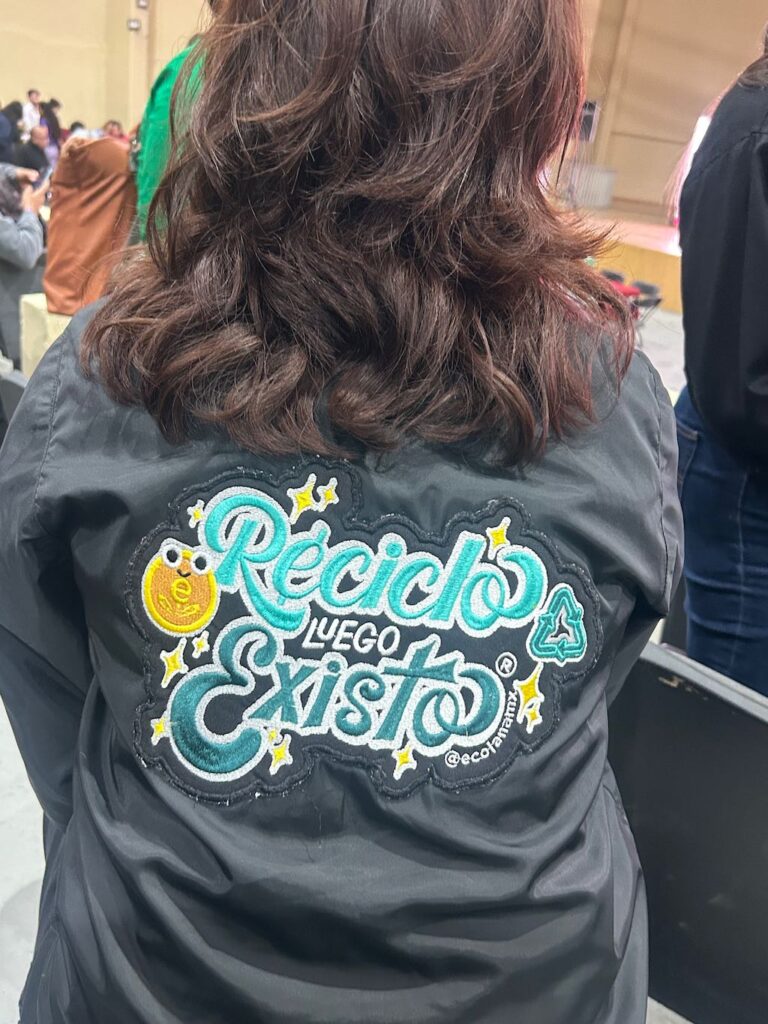
“Garbage and recycling constitute a business model,” she told the audience, “and powerful interests are eager to take control of it.”
Without a just transition, she added, “the sharks, the large companies, will eat us alive.”
Abel Balderas understood exactly what she meant. Balderas began working as a pepenador at age eight and now leads Mexico’s National Recyclers Movement. He spoke with pride about his family’s history in recycling and about the expertise that workers like him have accumulated over generations.
“You are the ones who can teach what can be recycled and what cannot, which material works and which does not,” he told the recyclers in the room. “We are the experts.”
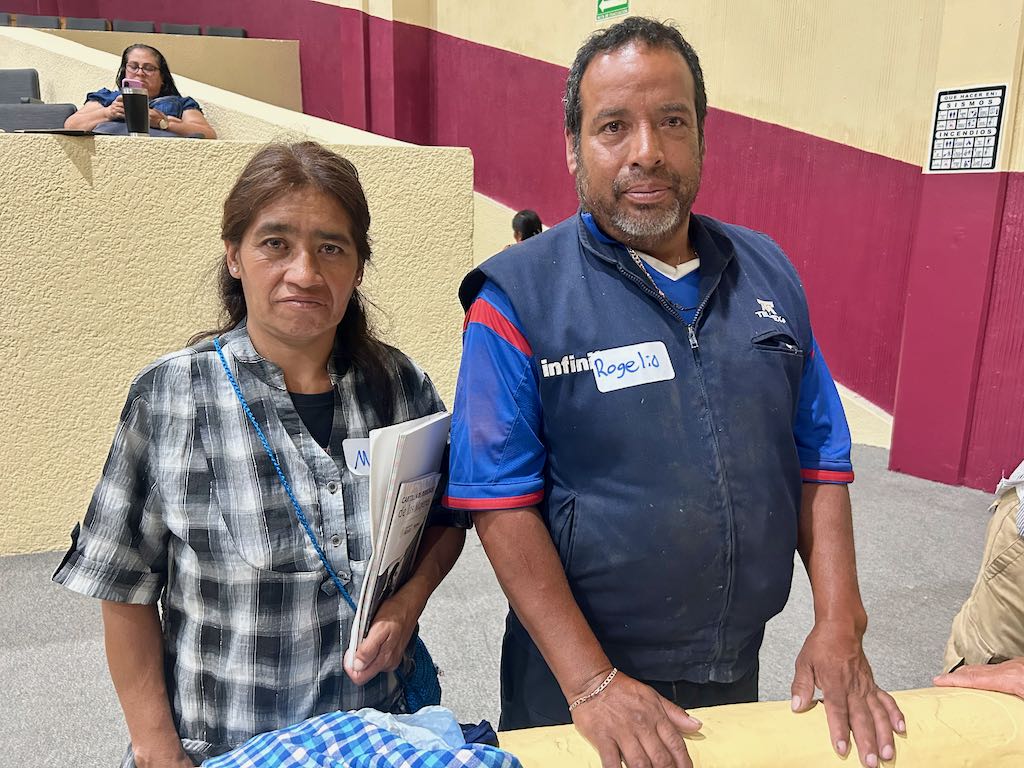
That expertise has rarely been treated as such. For generations, grassroots recyclers have quietly subsidized municipal waste systems, reducing the volume sent to dumps while recovering materials for industry. Yet because their labor is largely informal, their contribution often disappears from official accounts.
René Sánchez Galindo, the federal Environment Ministry’s director general of legal affairs, acknowledged the challenge of turning the new law into a workable system. Regulations will eventually be developed for individual products and materials, each with its own supply chains, markets and environmental consequences.
“We have to ensure that the measures are viable for everyone: industry, consumers and grassroots recyclers,” he said. “There must be what we call economic viability.”
Iztapalapa hopes to help shape that process—and to serve as a proving ground.
The borough collects roughly 2,200 tonnes of waste every day. When the current administration took office, only 2% to 3% was being separated into organic and inorganic waste, according to Alfonso González May, its director general of urban services. That figure has risen to 8%, with meaningful separation now occurring along 37 collection routes.
Eight percent may not sound impressive. González May insisted that its modesty was the point.
“Este 8% ha sido a pulso,” he said. The gain had been achieved little by little, through persistent work. His department, he added, did not want to offer the mayor spectacular figures disconnected from reality.
The borough has also expanded a once-weekly program collecting unwanted furniture, appliances and household debris into six weekly jornadas de triques. The idea is to keep these objects out of clandestine dumps while allowing recoverable materials and repairable items to reenter productive use.
Mexico City already converts used cooking oil into biofuel at a plant in Iztapalapa’s Central de Abasto. The borough is now expanding collection through public markets, government offices and eventually municipal collection crews, keeping the oil out of drains where it contributes to blockages and flooding.
Meanwhile, Iztapalapa’s sustainable development office has identified more than 500 local enterprises participating in some aspect of the circular economy: cellphone and appliance repair shops, cobblers, upholsterers, carpenters, compost producers and artisans transforming discarded clothing, cardboard, wood and plastic.
Through the Soldando Iztapalapa welding program, young people receive welding training while repairing broken school furniture. More than 10,000 desks have already been restored—10,000 objects kept out of the waste stream, while young people acquire useful skills and serve their communities.
The borough also operates a public recycling point outside the cultural center, neighborhood composting workshops and an ecocanje program that exchanges recyclable plastics for staple foods and vegetables grown in local greenhouses and community gardens. A new composting plant is planned to process organic waste using black soldier fly larvae.
These are small advances when measured against the scale of Mexico’s waste crisis. But they represent something often missing from grand environmental plans: experiments rooted in the daily realities of a place and its people.
After the presentations, the forum’s participants divided into five groups organized by material: PET, other plastics, paper and cardboard, metals and electronics. Recyclers sat alongside company representatives, academics, activists and officials to discuss social security, tax registration, training and direct purchasing agreements with industry.
The nearly impenetrable barriers to permits and formalization surfaced repeatedly. Still, most groups managed to identify common ground and propose possible routes forward.
The metals table was the notable exception.
It was facilitated by Adelita San Vicente, the legendary defender of Mexico’s native corn and seeds. She tried to move the discussion toward solutions, but auto industry representatives, the primary buyers of these materials, responded with objection after objection. They were insisting, among other things, on a zero percent tax rate. Eventually, even Adelita gave up.
“Tiburones,” she said afterward.
Sharks.
Mella’s warning had found its illustration.
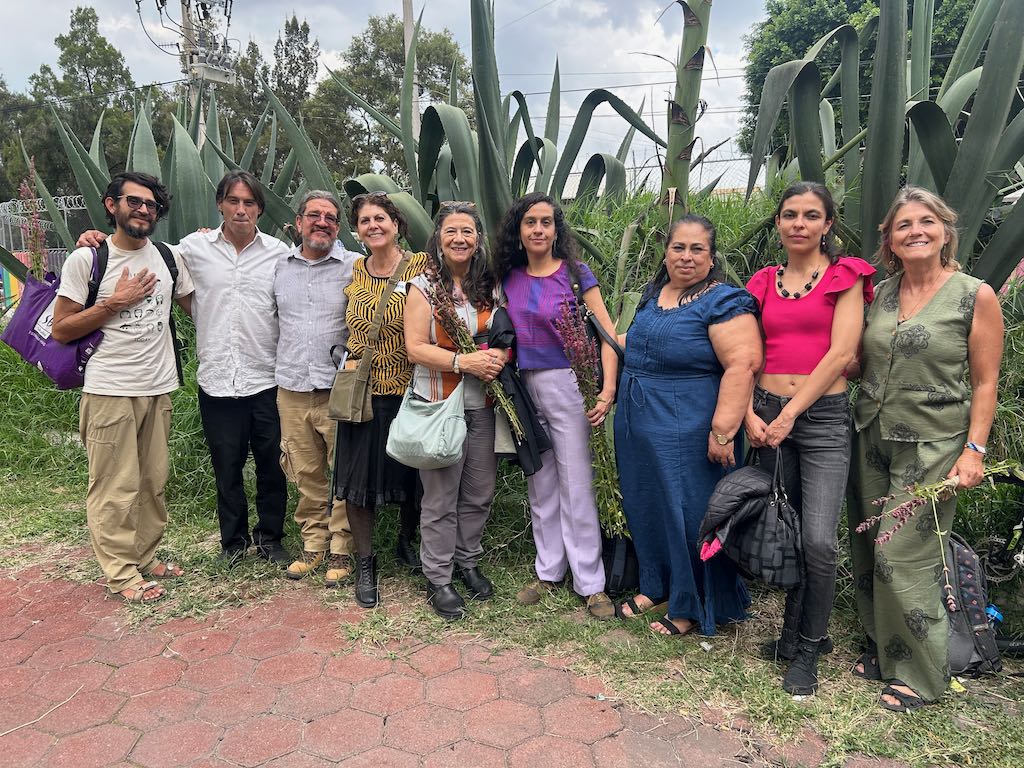
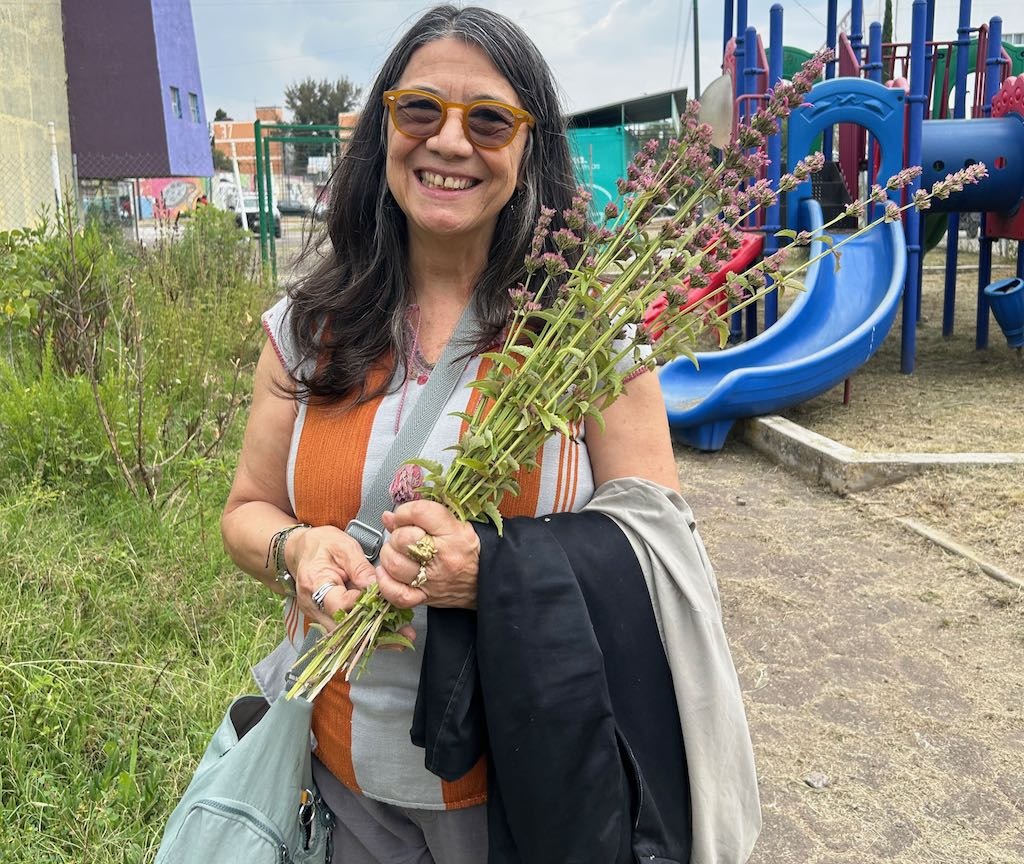
When the forum ended, a smaller group followed Arnold outside to a lot beside the cultural center. Not long ago, it had been an abandoned dumping ground covered in construction debris and trash. Arnold and his collaborators had hauled away the waste, brought in truckloads of compost and planted the space with native and medicinal species.
Now it was a lush garden.
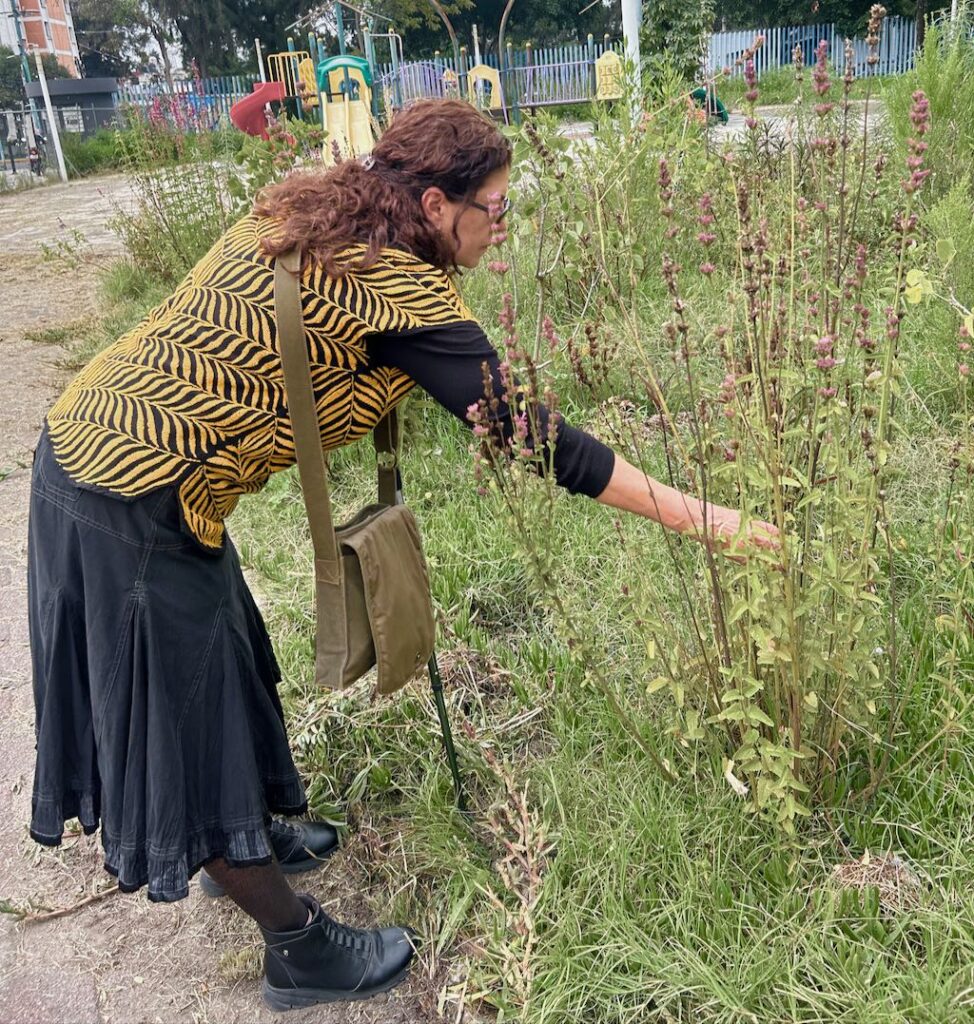
Arnold walked us through the plants, recounting the slow transformation. Around us grew herbs, flowers and young native plants where rubble had once accumulated. The lemony fragrance of toronjil—lemon balm—rose into the afternoon air. As Arnold spoke, several people began gathering fragrant armfuls to carry home.
It was only one reclaimed lot in a borough of nearly 2 million people, and no one mistook it for a solution to Mexico City’s waste crisis.

But standing there, breathing in the scent of medicinal herbs growing from soil rebuilt with compost, it was possible to see the principle at the heart of the day’s discussions: what a society throws away can return with value.
That must include not only its discarded materials, but also the people whose knowledge and labor have kept those materials in circulation all along.
As Mella and her movement say: “Recycling without recyclers is garbage”.

- A Seat at the Table: Food, Migration and an Unexpected Journey Home - October 13, 2026
- Mud, Memory and a Meal: Learning the Art of Bajareque - September 30, 2026
- Recycling Without Recyclers Is Garbage: A Dispatch From the Heart of Iztapalapa - September 25, 2026