By Tracy L. Barnett
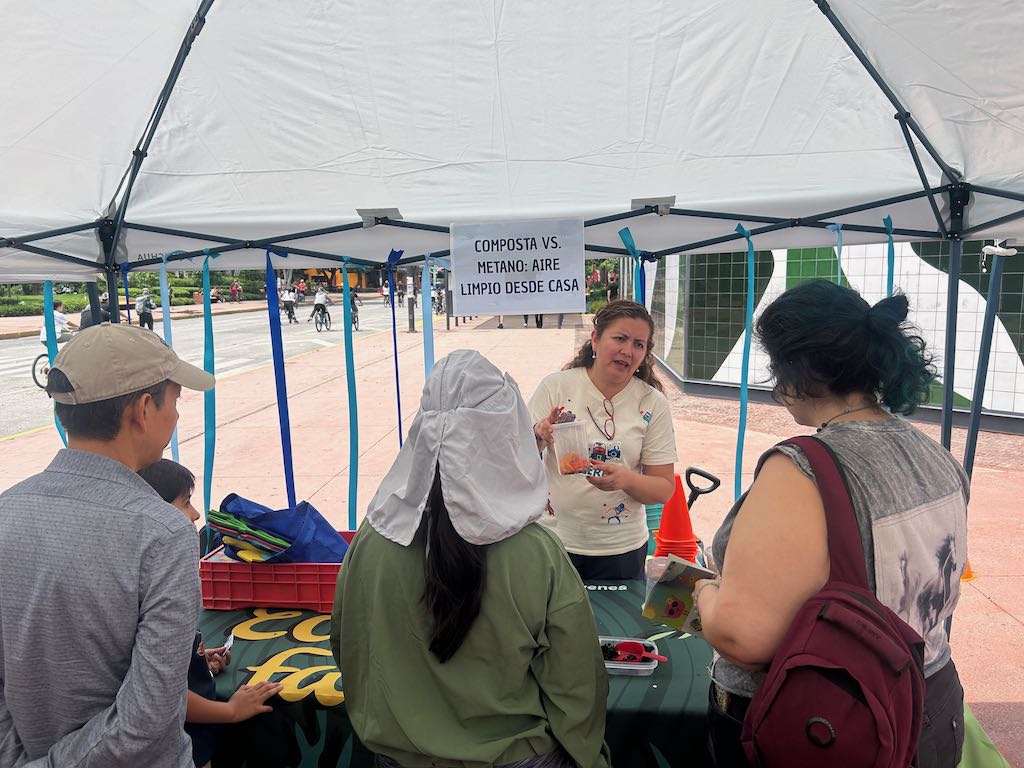
On a Sunday morning when Avenida Juárez was closed to cars but humming with bicycles, skateboards, roller skates and running shoes, one tented corner of Parque Rojo invited passersby to consider something most take for granted: breathing.
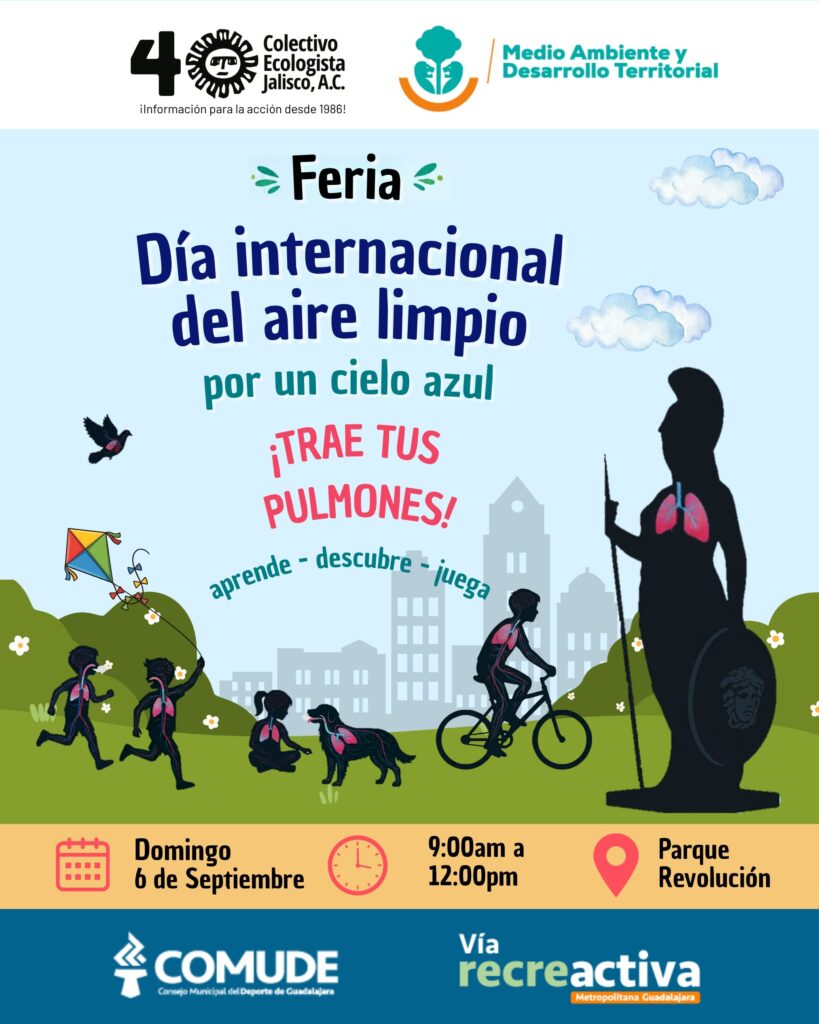
The first Clean Air Fair, organized by the Colectivo Ecologista Jalisco (CEJ) in collaboration with the Jalisco Environment and Territorial Development Ministry (Semadet) and state Health Ministry, marked the United Nations’ International Day of Clean Air for Blue Skies. This year marks CEJ’s 40th anniversary.
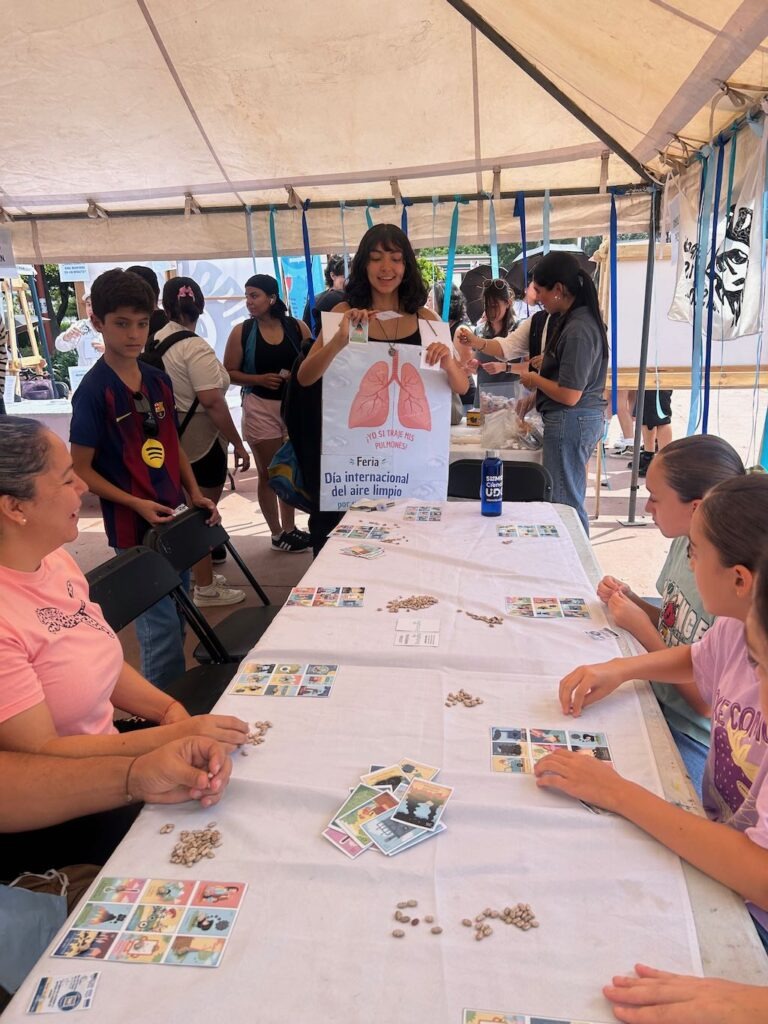
Under the playful slogan “Bring Your Lungs,” the fair turned air pollution—a subject often communicated through technical measurements and alarming statistics—into games, demonstrations and hands-on activities.
Visitors tested their breathing, compared the air consumed by humans and animals, played air-quality lotería and learned how Jalisco’s atmospheric monitoring network detects pollutants.
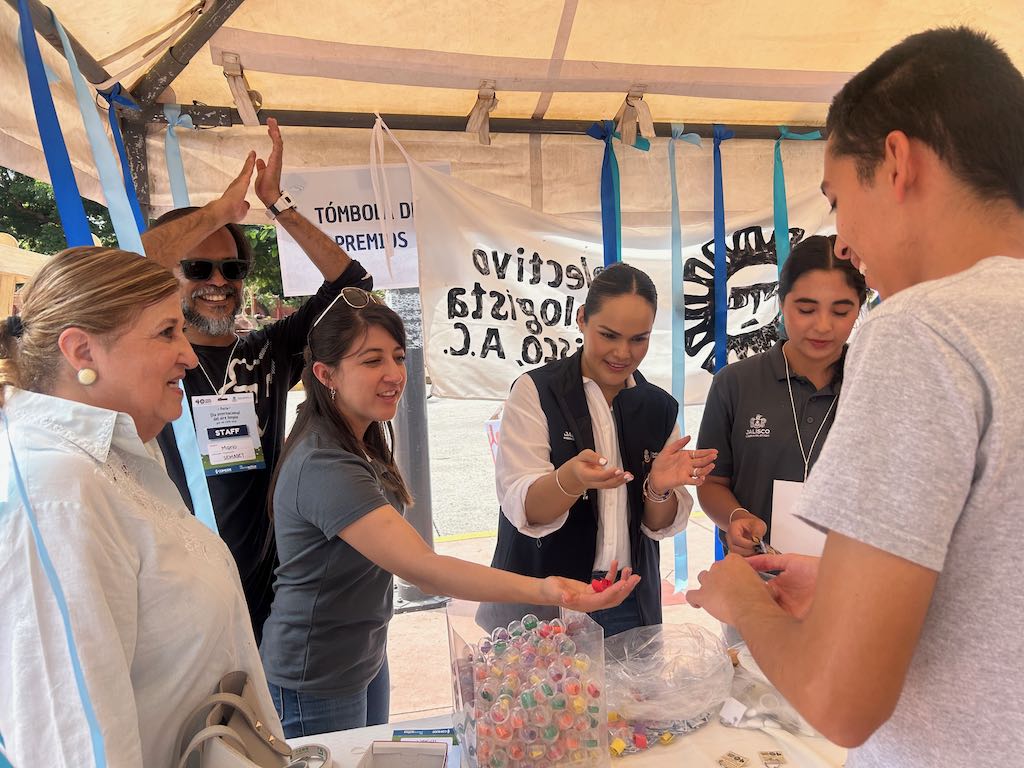
“The fair was born from the collective’s need to communicate air-quality issues in a different, entertaining way, with a close connection to health,” said Erasmo Cruz, CEJ’s project coordinator.
At one booth, a facilitator timed visitors’ breaths for one minute. A whale, participants learned, can inhale approximately 250 liters of air per minute.
Nearby, Semadet technicians displayed equipment resembling that used inside Jalisco’s monitoring stations. Edgar Ruiz, a technician with the state system, explained how analyzers measure ozone, carbon monoxide, sulfur dioxide, nitrogen oxides and microscopic particles known as PM10 and PM2.5.
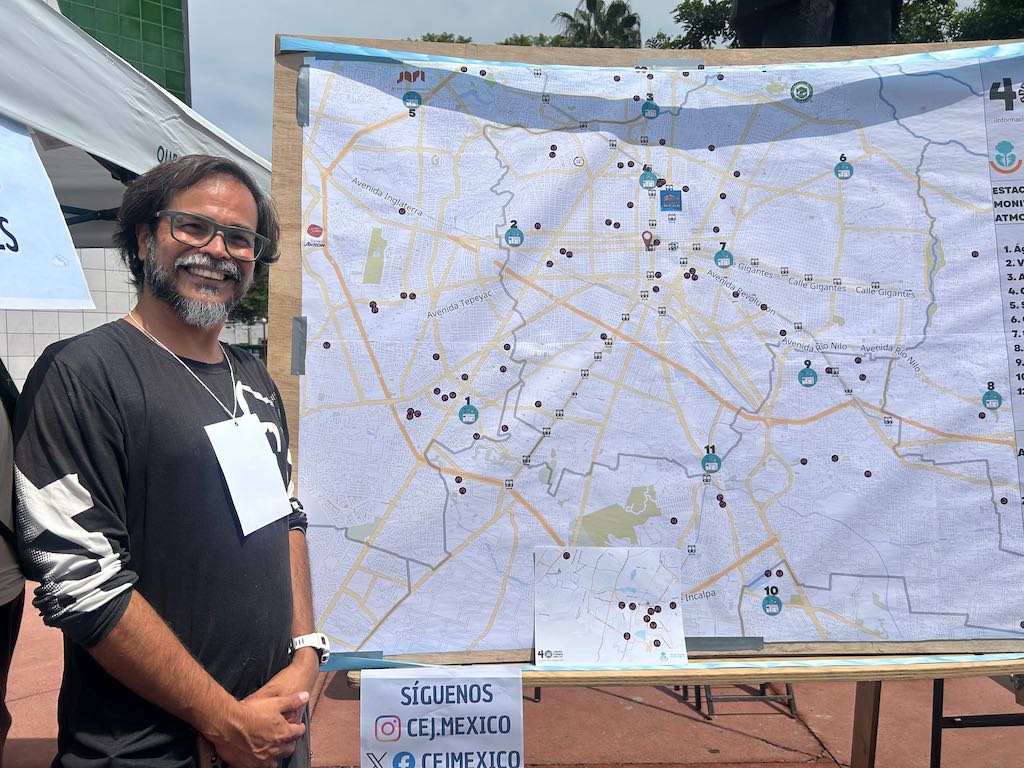
At another display, visitors placed stickers depicting clean, pink lungs on a map to locate the nearest of the Guadalajara metropolitan area’s 13 monitoring stations. The network reports hourly conditions through aire.jalisco.gob.mx, using a color-coded health index.
Karen de la Cabada Ruíz, Semadet’s director general of air quality, said holding the fair during the Vía RecreActiva allowed organizers to reach families already outside and exercising.
“The people are participating very actively,” she said, surveying the crowded booths.
The setting also underscored the connection between transportation and pollution. Each Sunday, the Vía RecreActiva converts major thoroughfares into car-free public space, drawing more than 120,000 people on bicycles, skates or foot, according to CEJ operations manager Saúl Muñiz.

“Air quality crosses many fronts,” Muñiz said. “It is not only an environmental issue; it is closely connected to human health.”
Scientific measurements bear him out. According to the federal environmental institute INECC’s Informe Nacional de Calidad del Aire México 2023, at least one health-based pollution limit was exceeded in metropolitan Guadalajara on 281 days that year—77 percent of the year.
That was virtually identical to the Mexico City metropolitan area, with 282 days above at least one limit. The pollutants differed sharply, however. Guadalajara exceeded daily limits for PM10 and PM2.5 particles on 59 percent of days, compared with 29 percent and 4 percent, respectively, in Mexico City. Mexico City remained considerably worse for ozone, exceeding the standard on 74 percent of days, versus 45 percent in Guadalajara.
More recent figures offer little reason for complacency. According to Semadet’s September 3 air-quality report, through August 31 the metropolitan monitoring network recorded only 55 days on which air quality remained good or acceptable across the network—although that was an improvement from just 35 days during the same period last year.
Muñiz noted that ground-level ozone can irritate the eyes, throat and respiratory tract, while vehicle emissions contribute substantially to urban pollution.
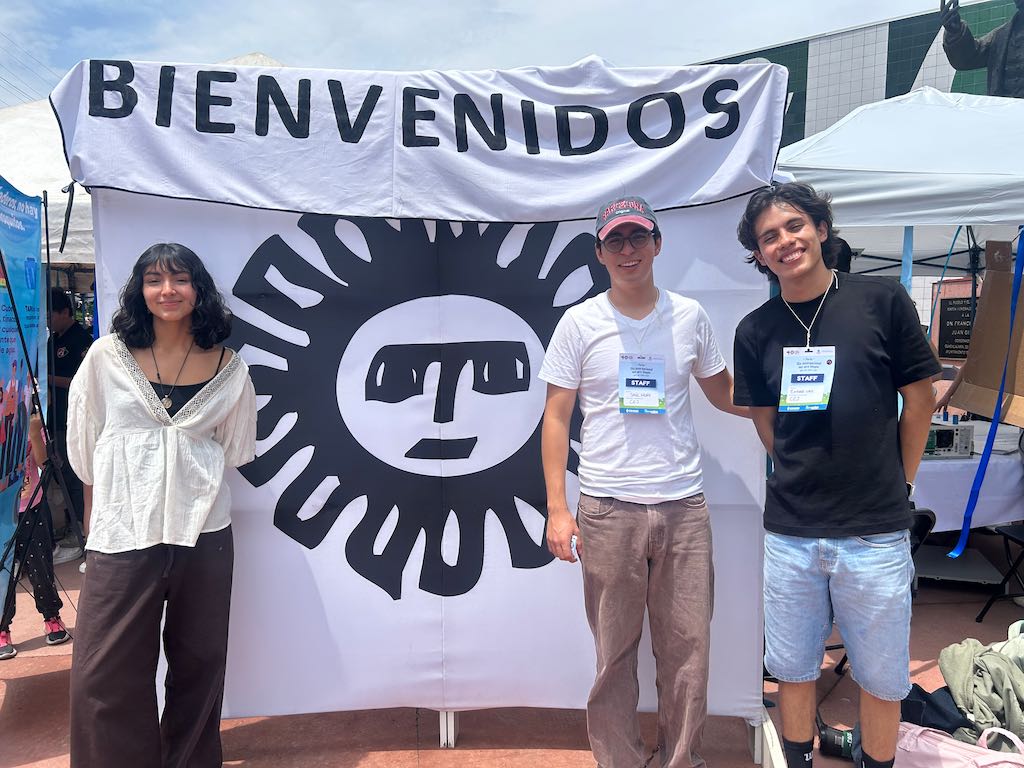
He said the fair exceeded organizers’ expectations and remained busy throughout the day.
For Cruz, the turnout suggested the concept could travel. CEJ is discussing repeating the event next year and sharing the model with collaborators in Mexico City, Colombia and Santiago, Chile.
“It is the result of a lot of work, coordination and, above all, passion,” Cruz said. “It is worth it to see so many people, so many smiles and so many familiar and new faces joining these activities.”

- Mud, Memory and a Meal: Learning the Art of Bajareque - September 30, 2026
- Recycling Without Recyclers Is Garbage: A Dispatch From the Heart of Iztapalapa - September 25, 2026
- Clean Air Fair turns Parque Rojo into open-air classroom - September 19, 2026