By Tracy L. Barnett
Photos: Víctor Ibarra
At the Zapopan´s Agroecological Park, the renovation of six bahareque panels in the community kitchen of the Teocintle Agroecological Collective became a hands-on lesson in traditional knowledge and the joy of collectively caring for a space where, for more than 13 years, this collective has been carrying out its agroecological, community, and cultural activities.
Who says maintenance work can’t be fun—and educational?
This weekend at the Parque Agroecológico Zapopan, as part of the annual Festival de la Tierra event series, bioconstruction teacher Javier Rodríguez, from IMDEC, turned an annual maintenance project into a living classroom.
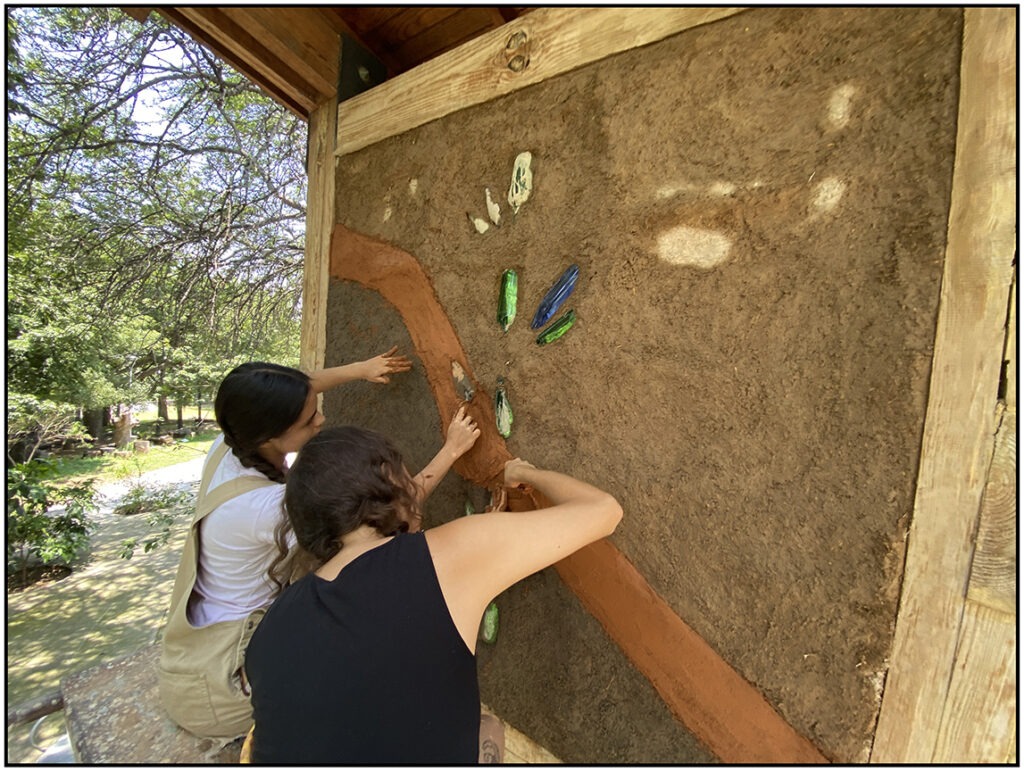
The park’s beautiful open-air kitchen is primarily constructed of wood and other natural materials, but several sections are made of bahareque: panels formed by weaving together a framework of carrizos, or reeds, and covering it with a mixture of earth, sand, plant fiber and other natural materials.
Those panels were built about six years ago and had held up remarkably well. But bajareque, like other natural building systems, is not meant to be constructed and then forgotten. Its earthen surfaces periodically need attention, particularly when they are exposed to rain and the harsh Jalisco sun. It was time to repair several damaged sections and give the panels a fresh protective coating, or enjarre.
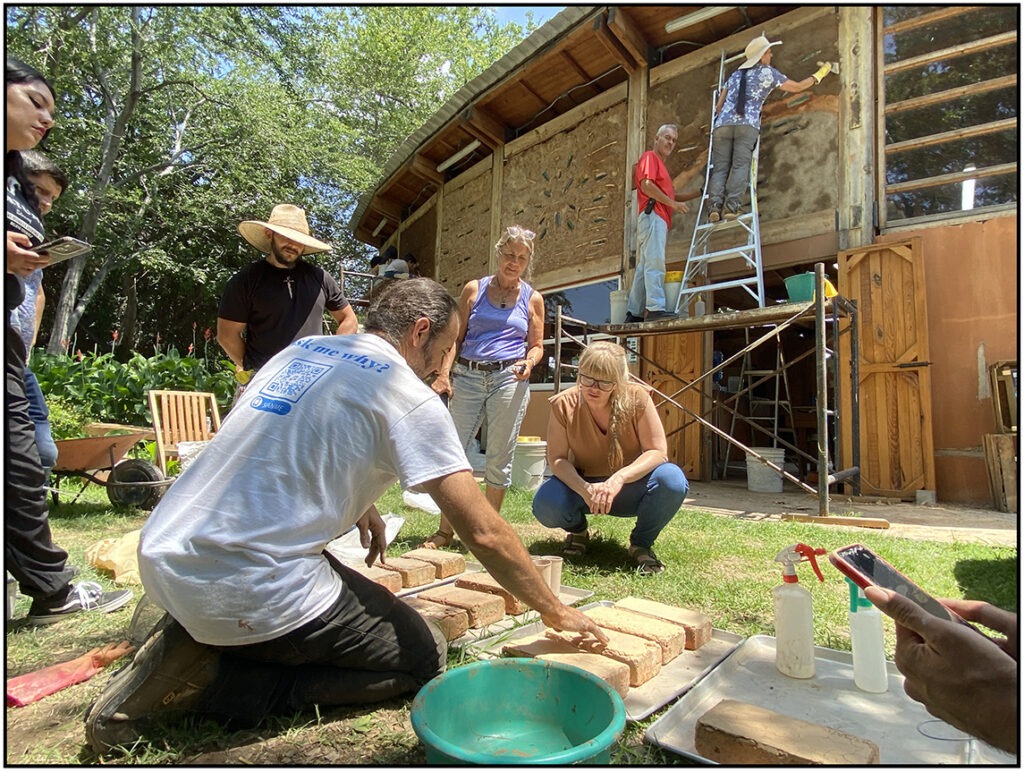
But before anyone began covering the walls, Javier invited the participants to experiment.
Several bricks became a miniature laboratory. On each one, the group applied a different mixture of earth, sand, straw, rice hulls, other fibers or lime. The idea was to observe how each formula adhered, absorbed water, dried and cracked—and then decide which combinations would work best on different parts of the kitchen.
The first lesson was deceptively simple: not all dirt is the same.
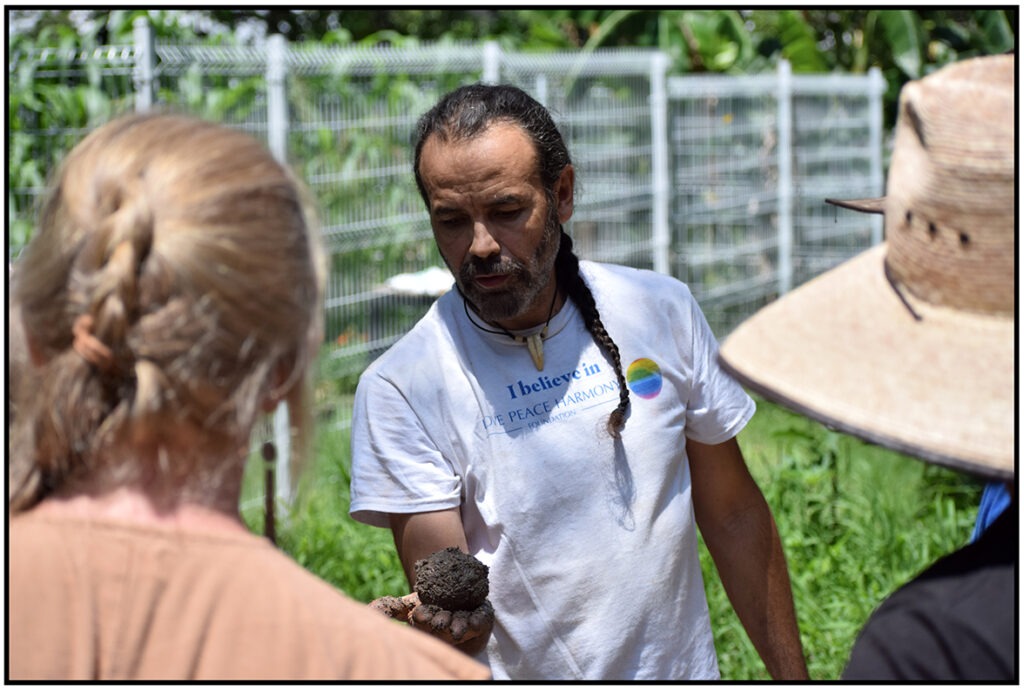
Javier explained that the rich organic topsoil used for growing plants is not what builders are looking for. They dig beneath that first layer and test the earth they find there, sifting it and gradually adding water until it reaches something like the consistency of tortilla dough.
At that stage, the mixture is plastic enough to form into a ball without collapsing. Too dry, and it will not hold together. Too wet, and it becomes viscous and begins to flatten under its own weight.
Then comes the balancing act.
Clay acts as the natural glue in an earthen mixture, Javier explained, while sand forms its skeleton. Clay expands when wet and contracts as it dries, which can produce fissures. Adding sand stabilizes the mixture, but adding too much can leave it without enough binder to hold everything together.
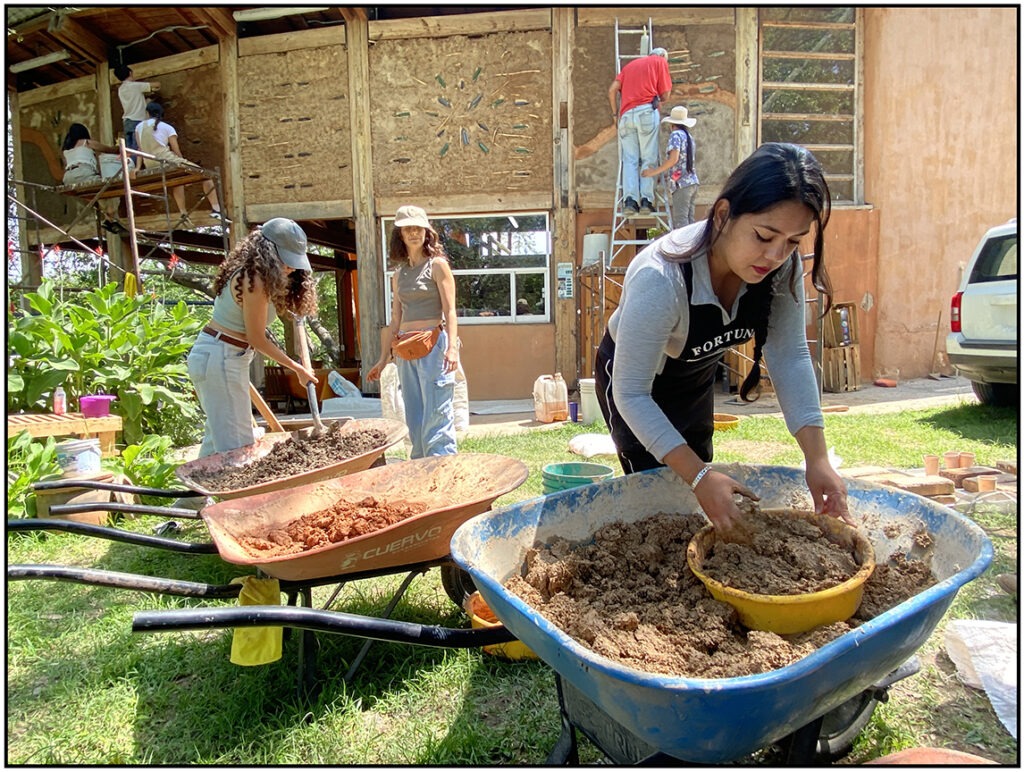
So the group tested different proportions: pure earth, equal parts earth and sand, and mixtures containing progressively more sand.
Cracks, they learned, are not necessarily failures.
A completely smooth wall may be desirable in some settings, but Javier likes the texture created by small fissures. The important question is not simply whether a mixture cracks, but how it behaves, how strong it is and where it will be used.
One beautiful reddish earth, for example, proved more fragile than the others. That did not mean it had to be discarded. It might be unsuitable for the lower portion of a panel, where chairs, feet and curious children could damage it, but perfect for a higher decorative section.
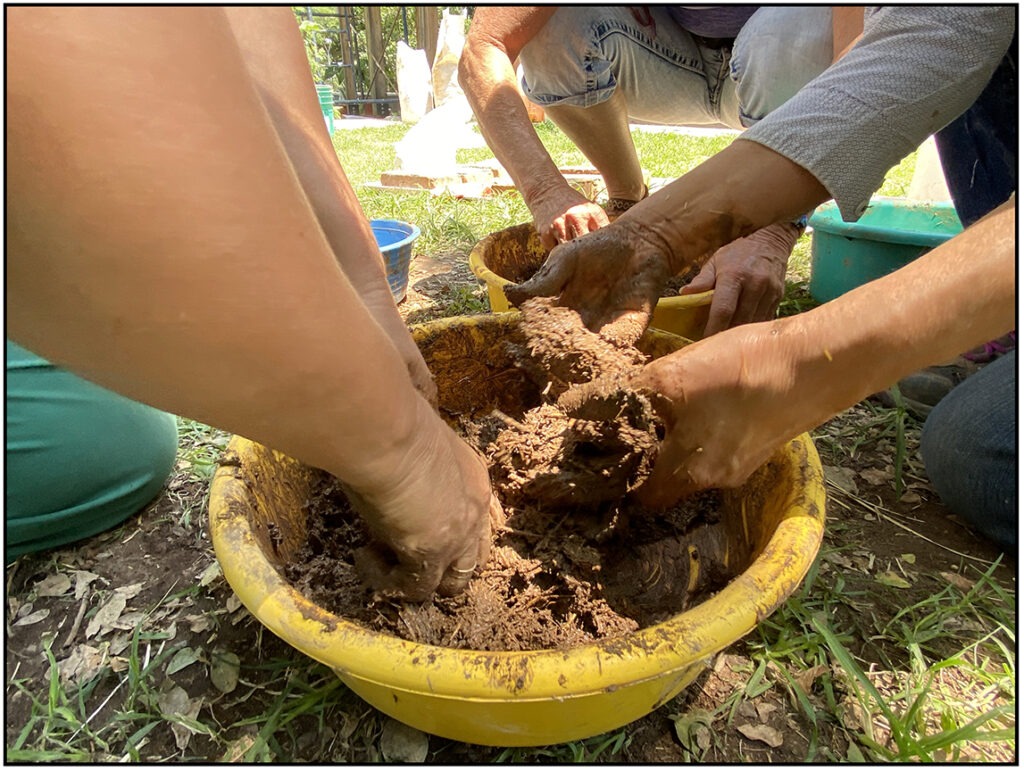
“In bioconstruction,” Javier reflected, “everything has value; everything counts.” Strength and fragility can be combined in interesting and harmonious ways.
Fiber supplies another essential ingredient.
Earth is excellent under compression—it can support enormous weight—but it is weaker when pulled apart. Straw, rice hulls and other fibers help hold the material together, much as reinforcement strengthens other building materials. The structural mixture spread over the woven carrizo framework contains more fiber, while the finer finishing plaster uses less.
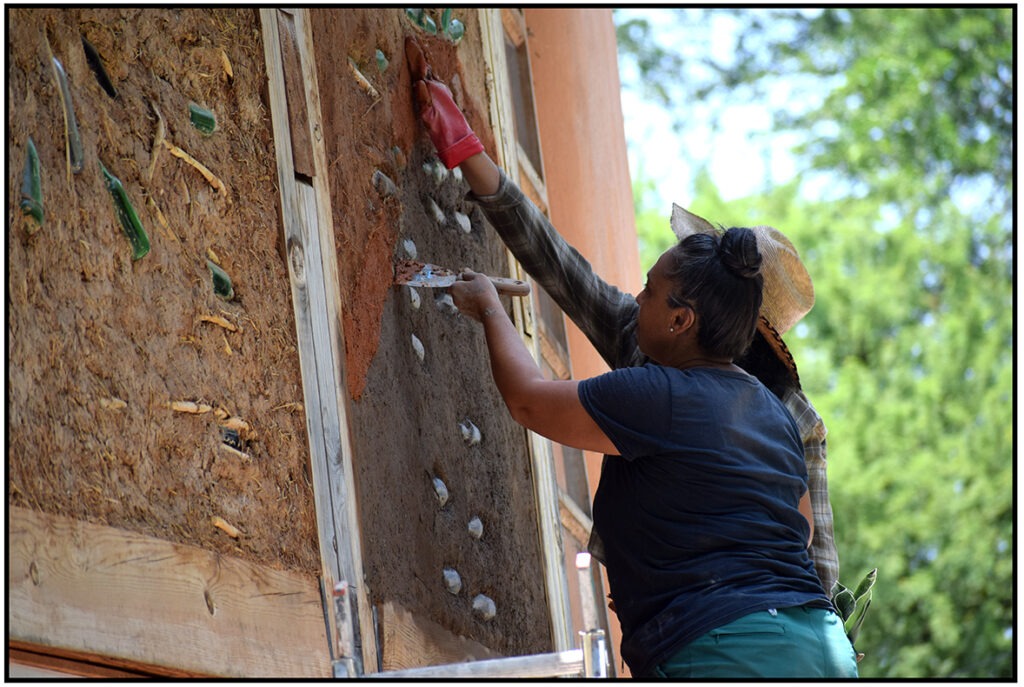
The pale finishing mixture being prepared that day contained earth, river or stream sand, plant fiber and a smaller portion of lime.
Lime can make an exterior coating more resistant to rain. But it is far from the only option.
Traditional builders have also used finely processed animal manure, whose cellulose can help repel water, or replaced ordinary water with the mucilaginous liquid of nopal cactus. These natural additives give an earthen surface qualities that its mineral ingredients do not possess on their own.
The lesson extended far beyond a recipe for mud plaster.
Javier spoke about the great diversity of earthen architecture around the world: sculpted mud dwellings, excavated homes, rammed-earth walls, adobe and bajareque. These systems developed not because one universal technique was exported everywhere, but because communities learned to build with their own climates, materials, needs and tools.
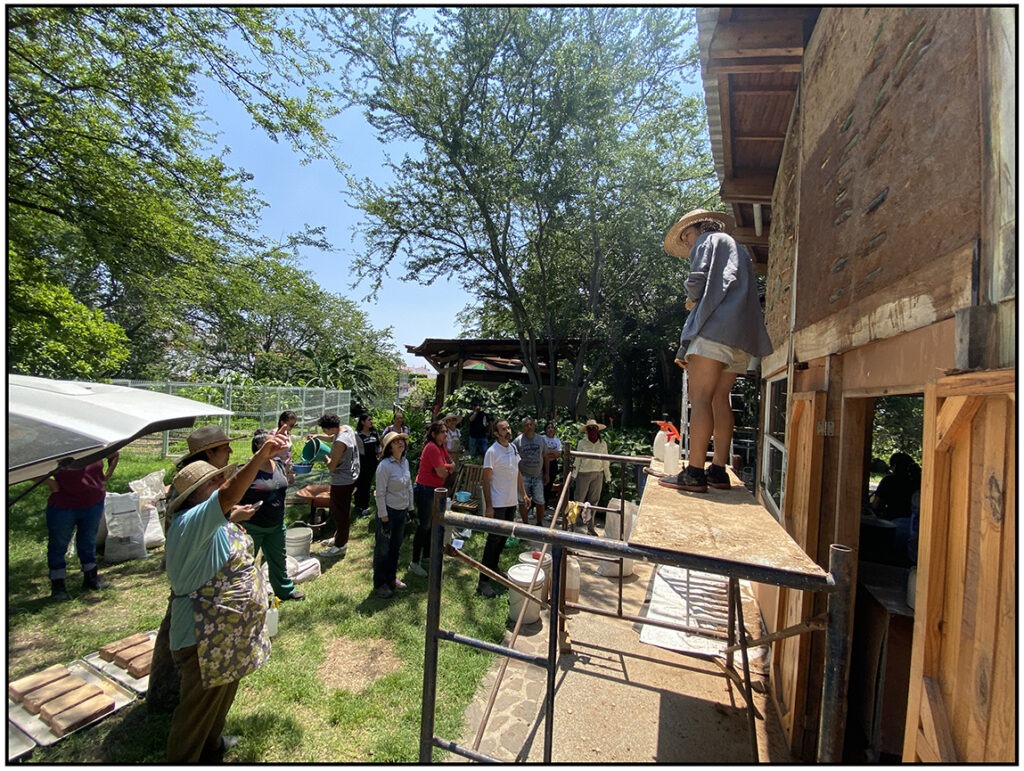
In humid tropical regions, where bajareque developed, builders traditionally put up the roof first. Once they had shelter from the rain, they could continue constructing the walls underneath it. In drier climates, adobe walls could be built first and roofed later.
Thick earthen walls also function as thermal cushions, slowing the movement of heat or cold into a home.
These building traditions embody centuries of observation.
Communities living in earthquake zones developed systems that responded to seismic movement. Those living in cyclone zones adapted their roofs to powerful winds. The resulting architecture was not accidental: it emerged through generations of trial, error and careful attention to place.
Modern industrial construction, Javier suggested, too often overlooks that accumulated intelligence.
His own education brought that lesson home. After completing advanced studies in France, he traveled to work with an Indigenous Jicaque community in Honduras.
“I thought I knew a great deal,” he recalled, after earning his master’s degree in Europe. Once he arrived in the Indigenous community in Honduras, however, he realized that the deepest knowledge belonged to the people who had inherited and practiced these techniques across generations.
Today, he sees bioconstruction as a meeting place between laboratory research and living popular knowledge—testing materials scientifically while respecting the wisdom embedded in traditional practice.
That relationship also changes the meaning of maintenance.
Industrial construction encourages us to imagine that a building should be finished once and for all. Natural construction acknowledges something more organic: buildings require care. An earthen surface exposed to the elements may need another thin layer before or after the rainy season.
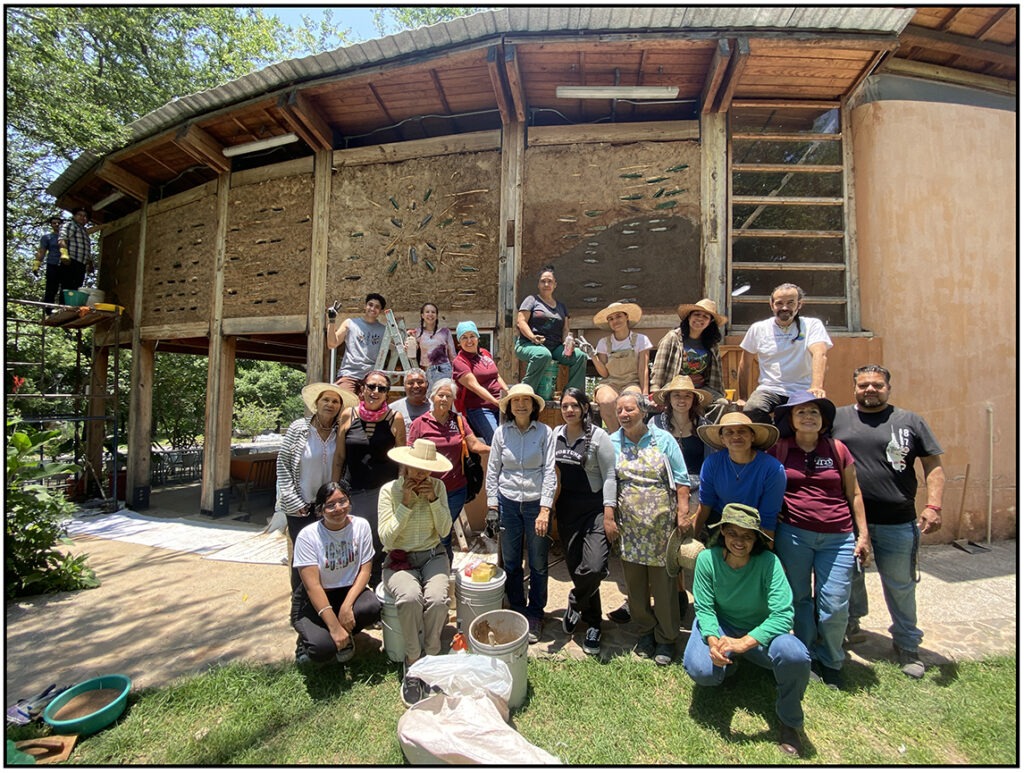
But that work does not have to be viewed as a burden.
Javier described communities in North Africa where the periodic replastering of an earthen mosque becomes a celebration. People gather, repair the building together and turn maintenance into a communal ritual.
At the Parque Agroecológico, he joked, the work was partly an excuse to reach the real objective: lunchtime and the pleasure of spending the day together.
There is resilience in that attitude—and in the material itself.
Javier recalled rural houses whose walls had been made from stones joined with mud. When the walls collapsed, the residents did not need to purchase an entirely new industrial building system. They added water to the earth, gathered their labor and raised the walls again.
“That,” he said, “is resilience.”
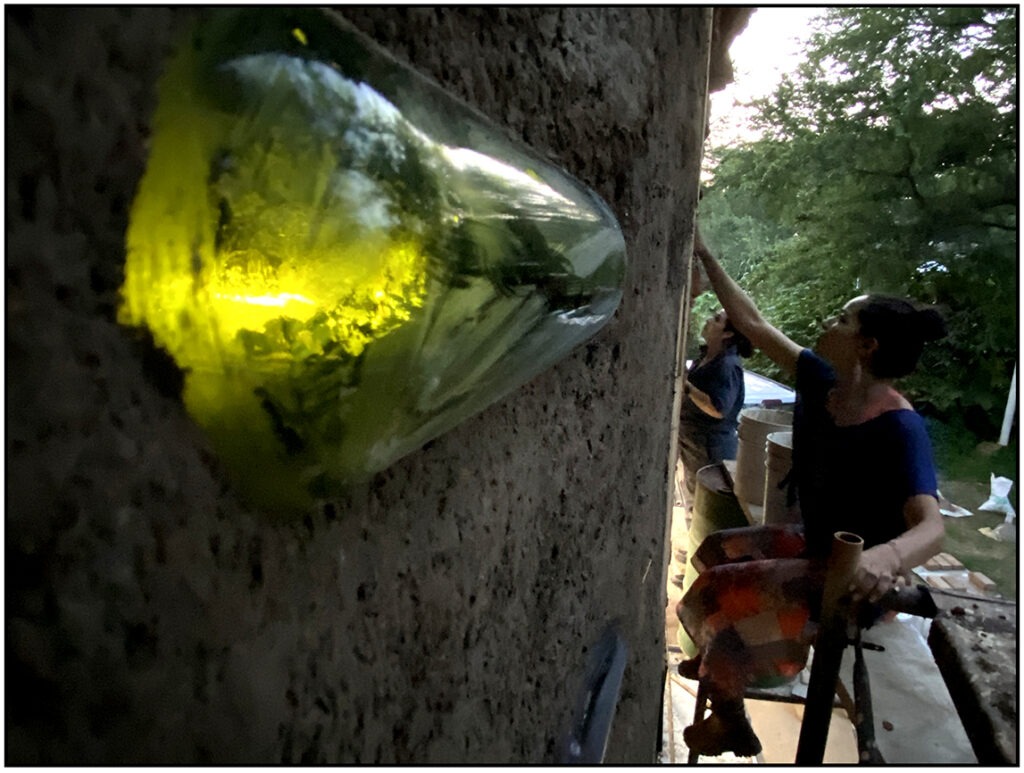
By the end of the workshop, the repaired bajareque panels were becoming more than renewed surfaces. Their colors, textures and visible fibers — and the colorful bottles the mud held in place as bright little design elements — recorded the materials of the place and the hands of the people who had gathered to care for it.
And then came the objective Javier had joked about all along: lunch.
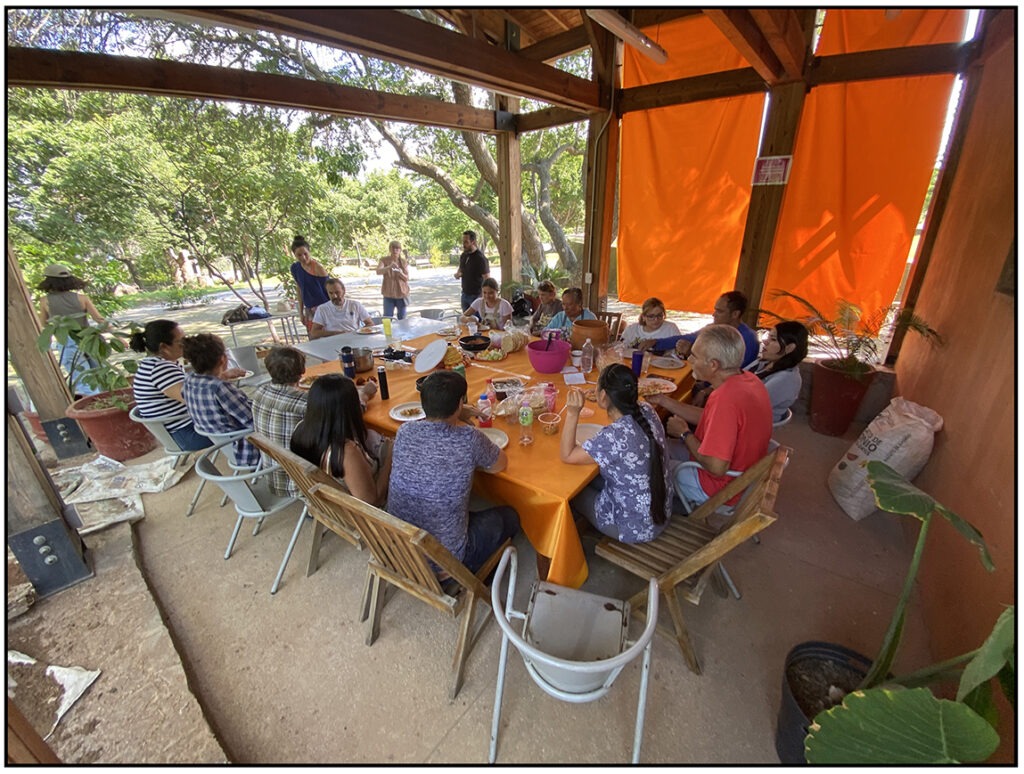
Some 20 hungry, happy people gathered around a delicious vegetarian buffet, courtesy of Ángeles, Caro and a handful of others who pitched in. The meal felt not like something separate from the day’s work, but its natural culmination: learning, labor, conversation and food shared around a structure the community had built—and was now maintaining—together.
The day offered a quiet rebuttal to the idea that maintenance is tedious, unskilled or somehow separate from creativity.
Here, maintenance was experimentation. It was cultural memory. It was science, art, play and community—all mixed together with earth, sand, straw, water and a little lime.
And perhaps that is one of the gifts of bioconstruction, dear readers. It reminds us that caring for the things we have made need not be an unwelcome chore. It can be an opportunity to gather, to learn from one another and to renew not only a wall, but our relationship with the materials, traditions and communities that sustain us.

- A Seat at the Table: Food, Migration and an Unexpected Journey Home - October 13, 2026
- Mud, Memory and a Meal: Learning the Art of Bajareque - September 30, 2026
- Recycling Without Recyclers Is Garbage: A Dispatch From the Heart of Iztapalapa - September 25, 2026