Text and photos: Tracy L. Barnett
For The Guadalajara Reporter
What does an immigration lawyer do when a client’s most urgent problem isn’t immigration law, but insulin?
That was one of the questions confronting Mexican and U.S. law students gathered at the Tecnológico de Monterrey’s Guadalajara campus Aug. 12 for a binational exercise examining what happens after deportation.
The simulation capped The Rhizome Center for Migrants’ six-day Frontlines and Fault Lines: Migration, Resistance, and Resilience immersion program, which brought U.S. law students to Guadalajara to learn about deportation from the Mexican side of the border.
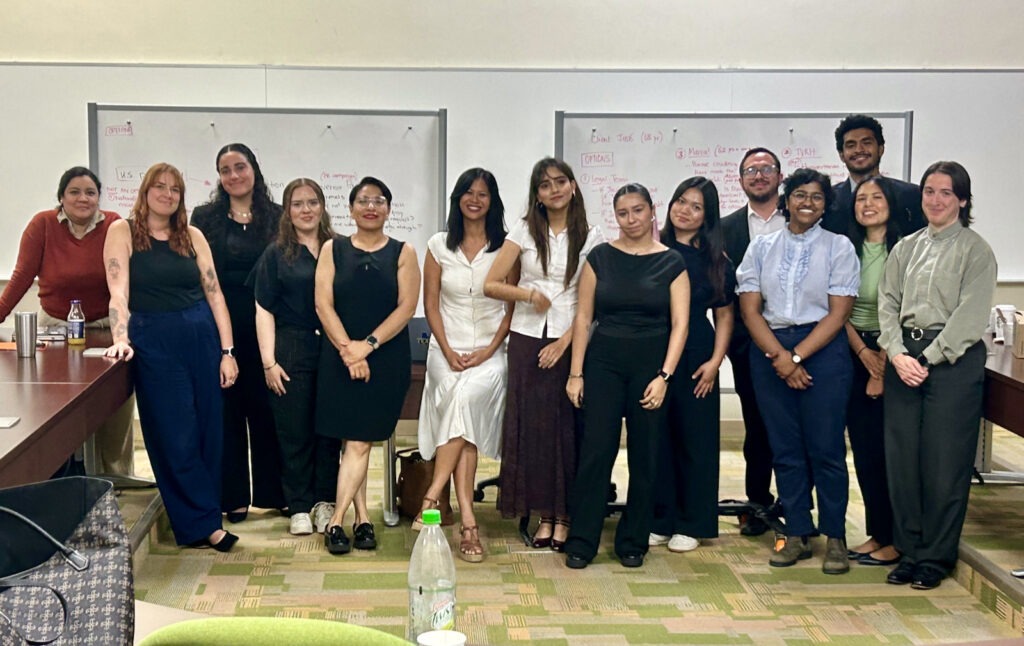
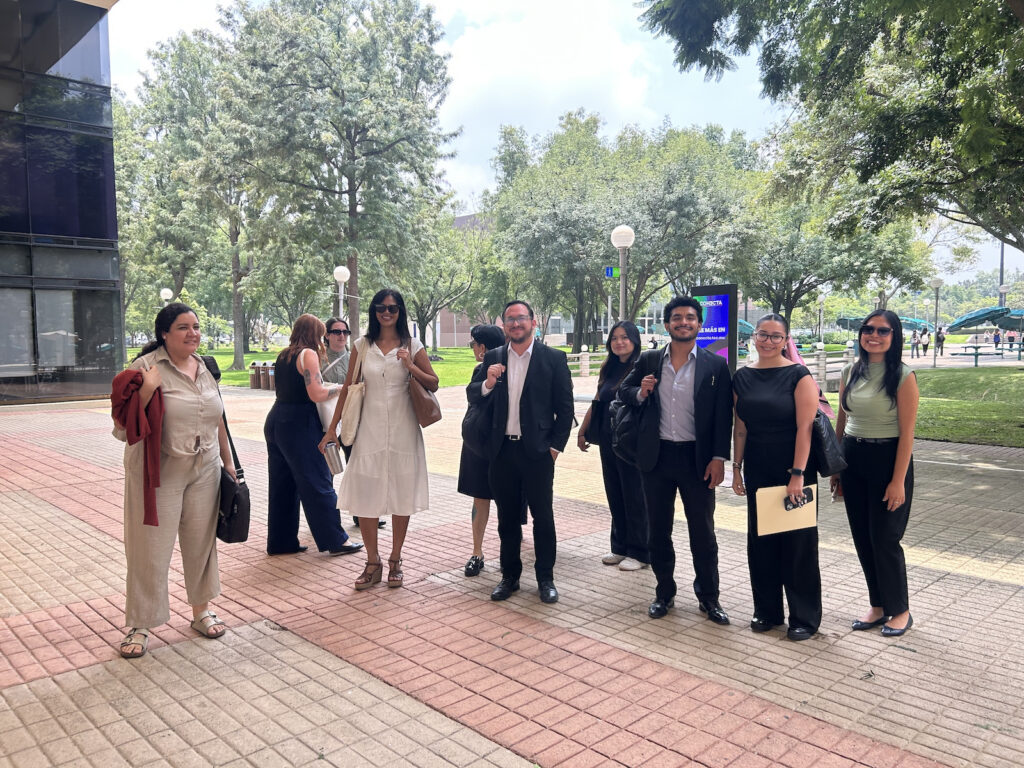
Students from The University of Washington and The University of Texas at Austin worked alongside Tec de Monterrey law students, guided by Rhizome Center founder and immigration attorney Tran Dang, UW professor Georgina Olazcon, and Tec law program director Javier Contreras.
Their hypothetical client, “José,” was a 68-year-old Cuban man who had lived in the United States since age two before being deported to Mexico. His children and grandchildren remained in the United States. He spoke little Spanish, had no meaningful ties to Mexico, lacked identification and stable housing and had serious health needs. What he wanted most was simple: to return home to his family.
The scenario was fictional, but designed to mirror circumstances increasingly seen in Mexico. Since January 2025, roughly 20,000 third-country nationals have been deported from the United States to Mexico, more than to any other country. Cubans make up the largest group, including older people who spent decades in the United States and now arrive in Mexico with few ties, uncertain legal status and limited prospects for returning home.
But getting there was anything but simple.
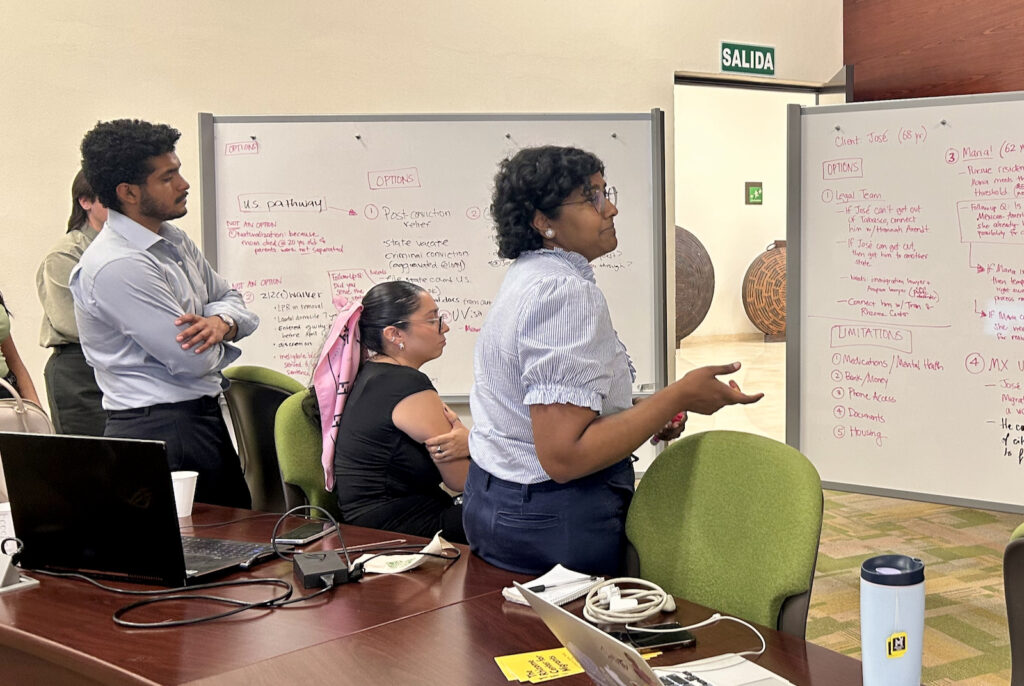
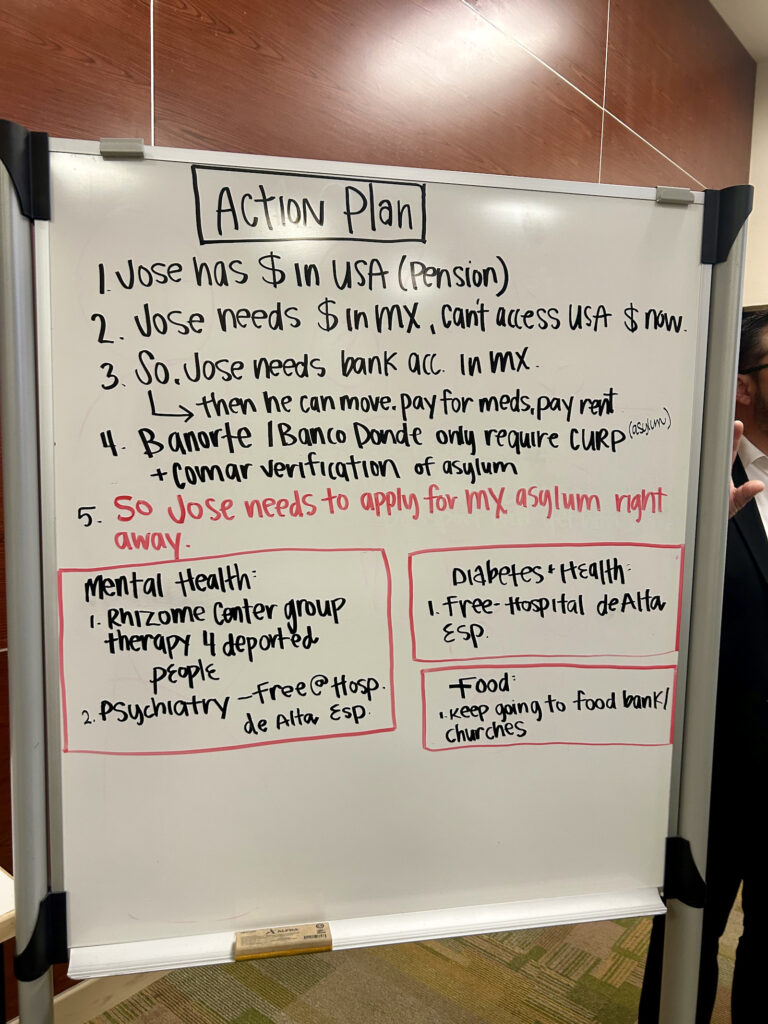
Teams examined possible remedies under both Mexican and U.S. law while simultaneously confronting more immediate questions: Where could José safely live? How could he access his money without identification? Where could he get food and medical care? How urgently did he need insulin? What would happen if pursuing one legal strategy prevented him from traveling to another state?
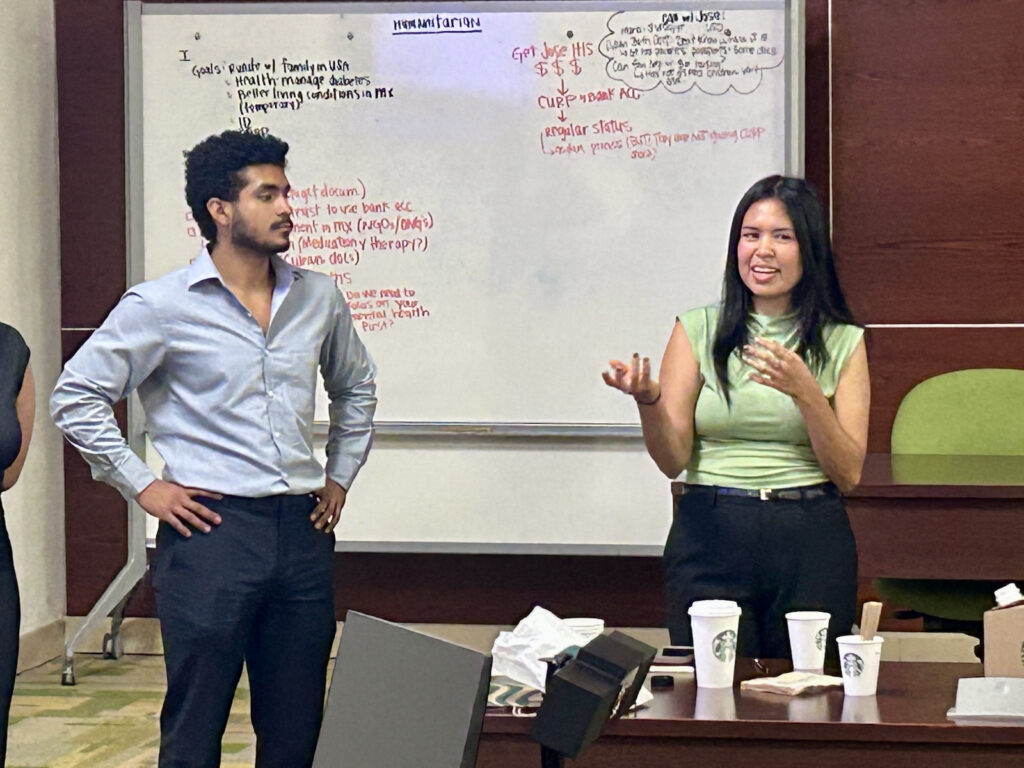
“Holistic representation really starts with the client rather than the legal claim,” Dang told the students, urging them to consider safety, housing, health care, documentation, family, finances and mental health alongside immigration remedies.
Students had to decide what José needed within 48 hours, what could wait weeks or months, and which responsibilities required lawyers or service providers on opposite sides of the border.
The exercise was the culmination of an intensive week that deliberately moved from personal stories to policy and law. Participants met mixed-status families affected by deportation and a military family confronting third-country deportation; visited a halfway house founded by formerly deported gang members and a migrant shelter founded by a priest; and heard from migrant women organizing for integration in Guadalajara.
Academics and advocates then introduced students to Mexico’s migration and refugee systems, including presentations by University of Guadalajara migration researcher Heriberto Vega Contreras, UNHCR Guadalajara head Nancy Estrada, and FM4 Paso Libre legal director, César Rodríguez.
The result was a perspective seldom encountered in U.S. immigration-law classrooms: removal from the United States is not the end of an immigration case. It can instead begin another complicated set of legal, medical, financial and family problems in Mexico.
That became apparent as students discovered that some promising pathways for José led to dead ends, while others could take months or years. His possible return to the United States remained uncertain, meaning the teams also had to help him build a viable life in Mexico while continuing to pursue options north of the border.
For one participant, the exercise underscored the need for creativity at a moment when familiar legal strategies are disappearing.
That creativity, she said, is possible only “when we’re talking to one another, sharing ideas and working in a team.”
It was precisely the lesson the exercise was designed to teach: deportation crosses borders. Effective advocacy increasingly must do the same.Tracy L. Barnett is an independent journalist based in Guadalajara, founder of The Esperanza Project, and communications consultant for The Rhizome Center for Migrants.


- U.S., Mexican law students tackle deportation across borders - October 26, 2026
- Perfect Day Mexico isn’t dead after all. Now its opponents are headed to the Supreme Court - October 26, 2026
- Guadalajara water protesters confront masked groups, defend peaceful march - October 26, 2026
Previous Next