Text by Melina Gil
Photos by Víctor Ibarra
Humanize. Connect. Accompany. Politicize. Let the chords liberate. Let them repair what they did not break. Let powerful notes hold space for dissonance, rebellion and the people who refuse to surrender.
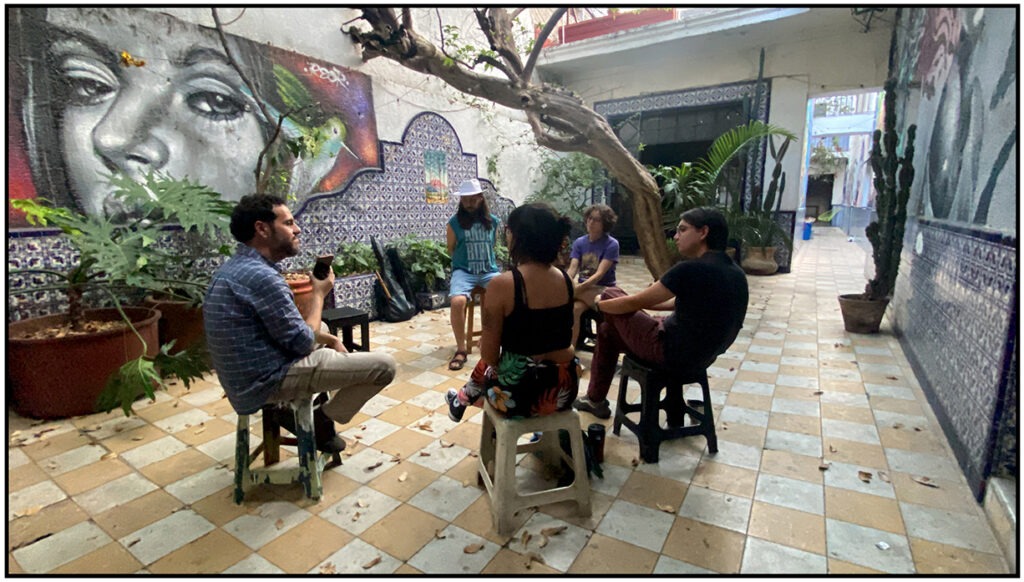
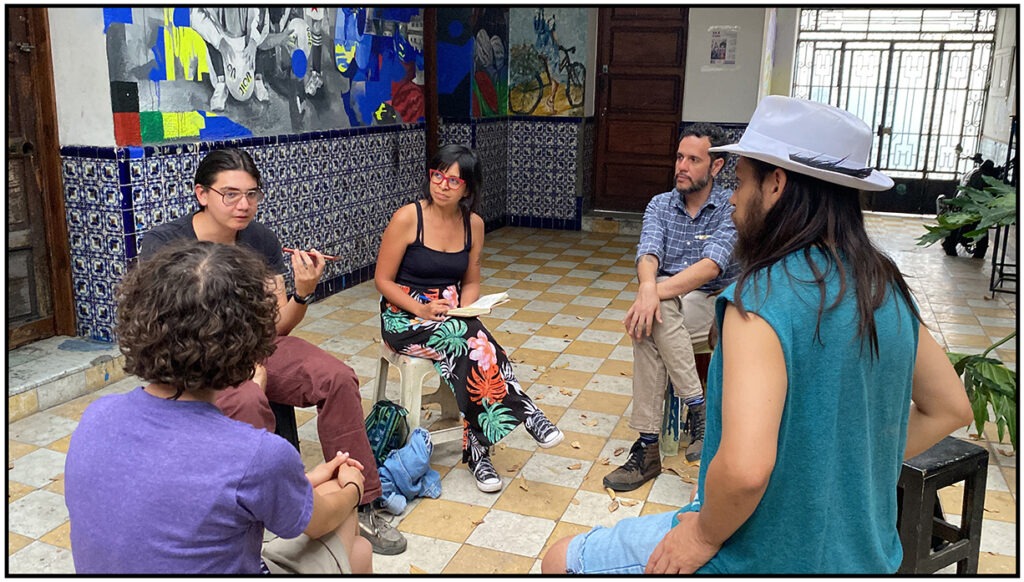
At Casa Quinqué, a community cultural center in Guadalajara, four musicians recently gathered with the hosts of the Radio Coamil podcast (Melina Gil and Víctor Ibarra) to explore the role of music in Mexico’s social movements.
They were Kaskvelita, the stage name of live-looping singer-songwriter Cassandra Murguía; fellow live-looping artist Jijo del Maís; Aldo Zenteno of the politically conscious rap group Vientos del Pueblo; and Diego Partida, a musician whose projects range from punk and surf rock to freestyle performance.
Collectively, their music has accompanied mothers searching for their disappeared children and other relatives, the struggles of the Indigenous communities of Santa María Ostula and Cherán, movements in Chiapas, the defense of working-class neighborhoods in southern Guadalajara and resistance efforts across Mexico.
They have seen elders dance in celebration of their autonomy. They have watched victims of violence find comfort in traditional songs and land defenders celebrate the very life they are struggling to protect.
Joy is part of the struggle
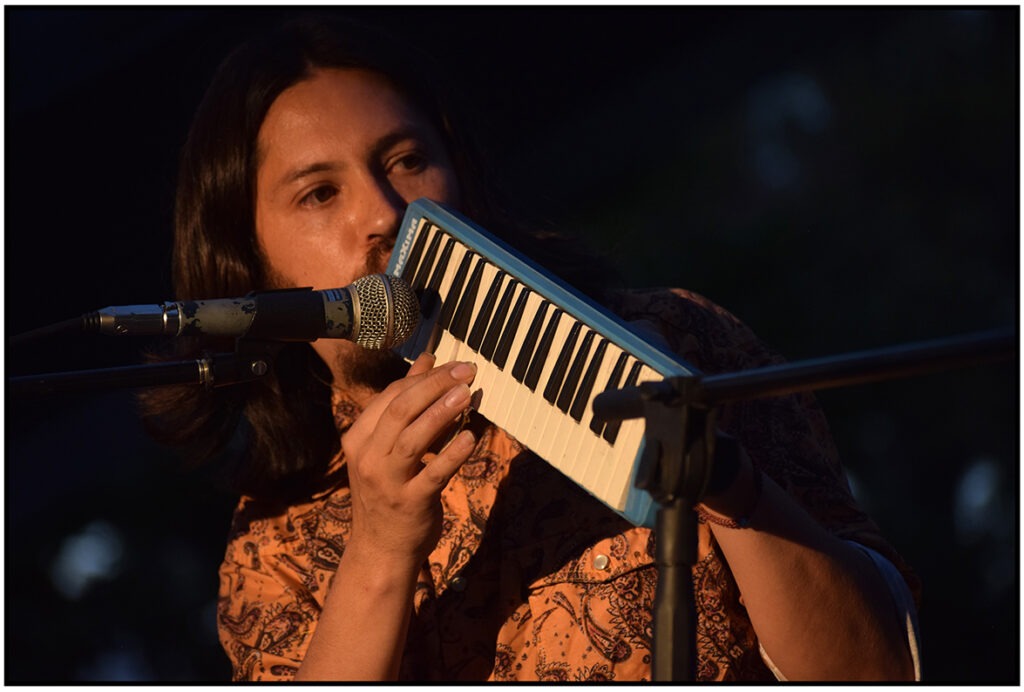
“Every human being needs joy,” Jijo said. “Any ideology falls short because we need to embrace one another. We need to dance. We need that warmth that exists within every struggle.”
Even people who are highly politicized and deeply aware of the violence around them remain capable of happiness, he added.
“They are joyful people—and that is precisely why they are rebels.”
Jijo jokes that people have sometimes told him to put down his hoe and pick up the jarana, the small guitar-like instrument associated with several Mexican musical traditions. But the image captures something fundamental about the musicians gathered at Casa Quinqué: art and the defense of the land are not separate pursuits.
“This is one way we sustain one another,” Aldo said. “It keeps us from collapsing.”
Music can offer refuge, but it can also communicate ideas and awaken political consciousness in ways that conventional organizing materials often cannot.
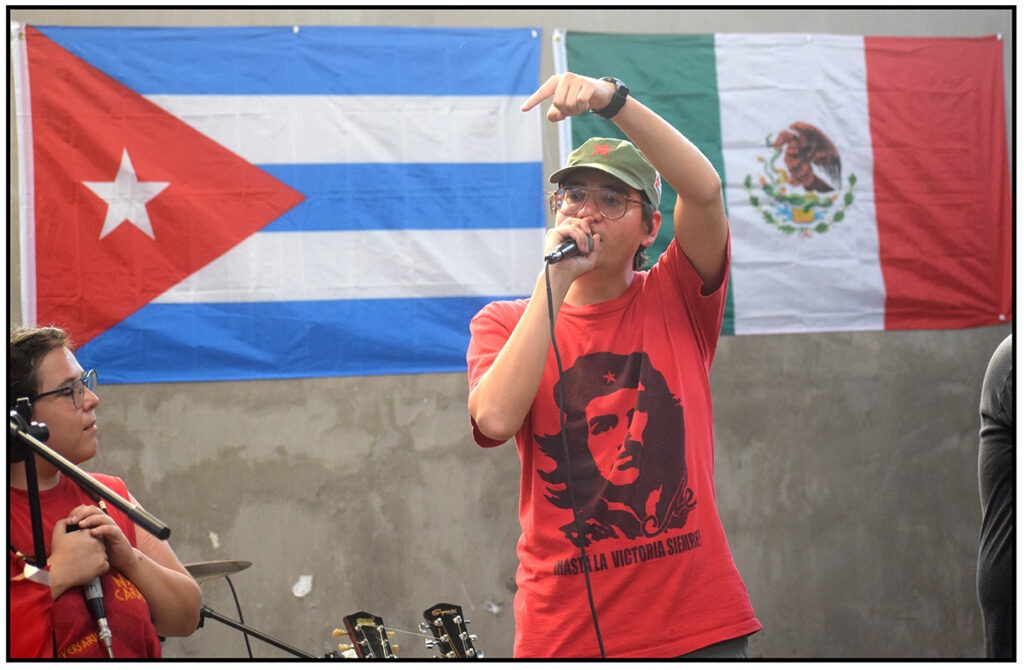
“Our own experience organizing from below and to the left has shown us that sometimes, more than a flyer or a speech, a song, a painting or a theater piece can produce something enormous in terms of political awareness,” Aldo explained.
Music, he said, has historically helped communities in resistance tell stories that would otherwise go unheard.
“In three or five minutes, you can take small pieces of a story and give people something that helps them find their bearings—a kind of compass.”
Finding a place within the movement
For Kaskvelita, the relationship between music and activism became clearer through her involvement in the defense of Tonalá’s biocultural territory on the eastern edge of the Guadalajara metropolitan area.
She came to understand that her role was not necessarily to stand at the front of every confrontation. Her contribution was artistic accompaniment: using music to create joy, connection and safety.
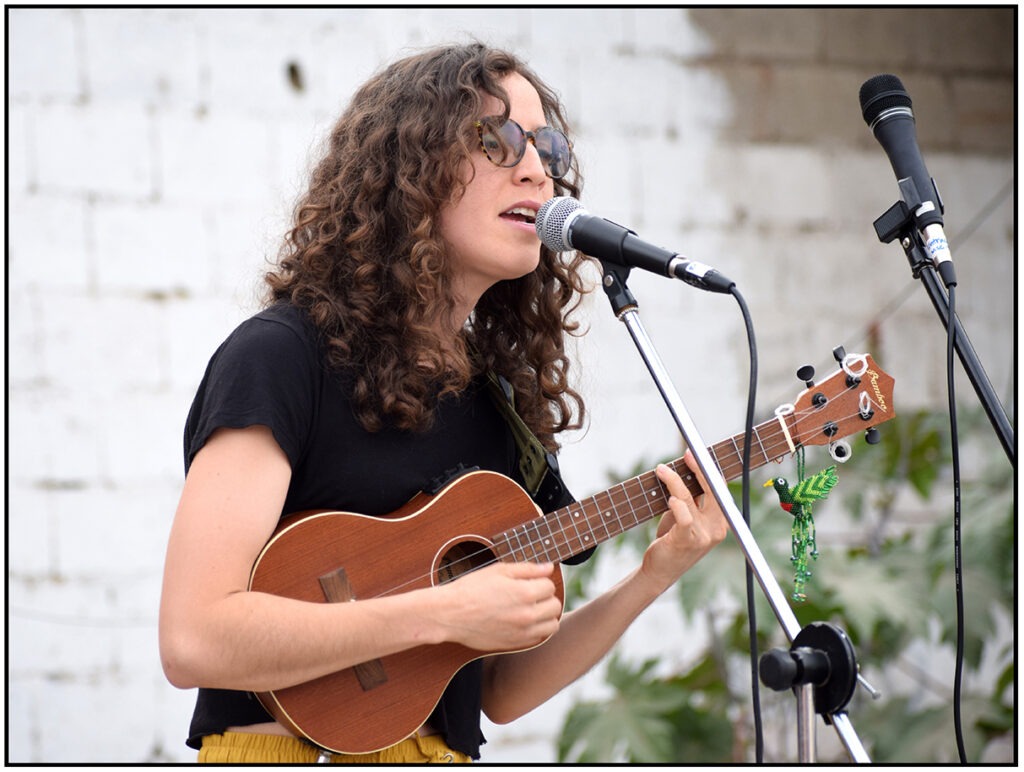
“You need a certain kind of character to resist beside people in that way, and I feel that my character is different,” she said. “Some people genuinely carry that strength. They are the ones who go to the front.”
“I like creating spaces that bring joy. I thought, ‘Maybe this is my way of resisting. Maybe this is how I do politics—by making music.’ Once I understood my role, I understood my work. Creating a safe space is already an incredibly revolutionary act.”
For Jijo, concern for Mother Earth and social justice cannot be separated from artistic creation.
“There is no way to separate those concerns from my artistic search,” he said. “I love the role of the minstrel, the troubadour, the wanderer. Art is my greatest field of militancy.”
More than identifying with any particular “ism,” he added, “I feel human.”
“I plant myself with joy and love. That is my greatest sociopolitical declaration.”
The street as a stage
Performing in community spaces has connected the musicians with audiences they describe as more genuine than those found in many conventional venues. The public square, the street and the protest encampment can become their most meaningful stages.
“On the street, I can stay for three hours,” Kaskvelita said. “I do what I want. I improvise. I don’t like being told what to sing. I like inhabiting a place. That is what fills my soul.”
There is freedom, she said, in recognizing that a song is not simply a possession.
“The lyrics are a gift. They arrive, and then they move onward. Everything else is capitalism. But the street is also an enormous responsibility.”
Sometimes passengers watching her from a bus will tell her that she sings beautifully and express the hope that she will someday “make it big.”
“But for me, this is already something very big,” she said. “We have seen people share a few words with us, or share their tears. Those are the great stages—the places where you connect with something real. Unconventional spaces are gifts.”
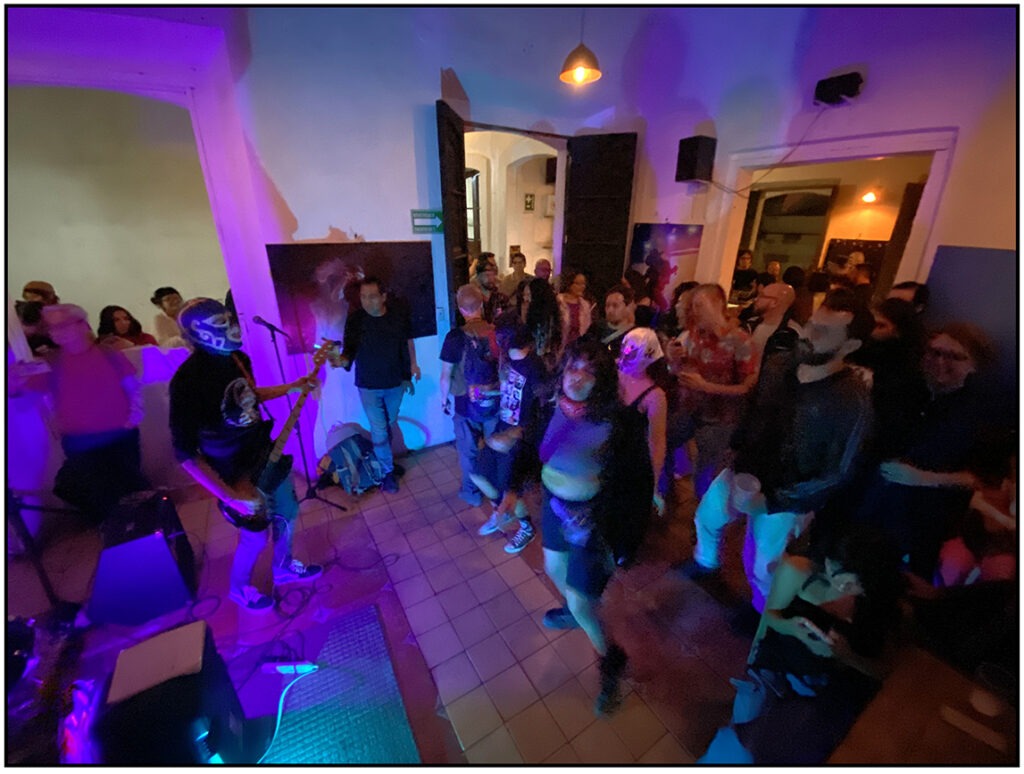
Diego also emphasized the unrepeatable connection created between musicians, audiences and the particular place in which they meet.
“It is like feeling alive inside a moment that will never happen again—not for the person performing and not for the audience,” he said.
Before going onstage, especially at an event organized in solidarity with a movement, he tries to summon the same intensity whether the audience contains hundreds of people or only 10.
“I try to offer a very powerful energy,” he said. “And it is reciprocal. When you give everything onstage, the energy comes back and feeds you.”
Songs as seeds, memory and direction
During the podcast, each musician shared a song illustrating a different dimension of this relationship between music and resistance.
Kaskvelita presented “Semilla,” or “Seed,” a composition born after an episode of ecological devastation. The experience was transformed into a song reminding listeners that the world is not changed through isolated efforts—or overnight.
“People find something in music that connects them with themselves and with one another,” she said. “You do not have to be a musician to experience it. As a listener, something can spark a reflection or a feeling inside you. That is beautiful.”
Jijo shared “Manifiesto de realidad,” or “Manifesto of Reality,” written as a décima espinela: a tightly structured 10-line poetic form in which each line contains eight syllables and follows a particular rhyme scheme.
Aldo presented “Alicia,” a song that challenges the idea that contemporary movements lack historical examples, guiding figures or traditions of struggle from which to draw strength.
Diego opened the album DisKorde, including a song addressing police abuse. Music, he said, can help people direct and give shape to their anger.
“Music helps us focus rage,” he said. “It also has the power to organize us and bring us together through joy, friendship, a little chaos and the sharing of a message—whatever it is that we are singing.”
That may be music’s most important role within a movement. It is not merely a soundtrack added after the struggle has begun. It is part of what makes continued resistance possible.
Music preserves memory. It turns anger into direction and isolation into collective experience. It creates moments of freedom and safety in places marked by grief. And it reminds people that defending life also means finding ways to celebrate it.
Listen to the complete Spanish-language episode, “Resistencias sonoras,” from Radio Coamil, a podcast produced by the Coamil Federalismo collective in Guadalajara, Mexico.

Aldo Zenteno art and activism Casa Quinqué Cherán Coamil Federalismo community art cultural resistance Diego Partida grassroots organizing Guadalajara human rights indigenous resistance Jijo del Maís Kaskvelita land defense Mexico music music activism protest music Radio Coamil social movements sonic resistance Vientos del Pueblo