
Text and photos: Víctor Ibarra
11 octubre 2026.
More than 20,000 people attended the Mega-March for Clean Water in Guadalajara, México, marching from the Minerva Roundabout to Casa Jalisco, the residence of Jalisco Governor Pablo Lemus, who days earlier had assured students—who had confronted him about the city’s water crisis and violence—that “they would be able to march peacefully and with full protection.” That did not happen, however, as protesters were met at Casa Jalisco with barricades, tear gas, and—paradoxically—water cannons and physical assaults, as well as arbitrary arrests by the state police. According to tallies by organizations such as IMDEC and CEPAD, up to 52 people—mostly young people—may have been detained.
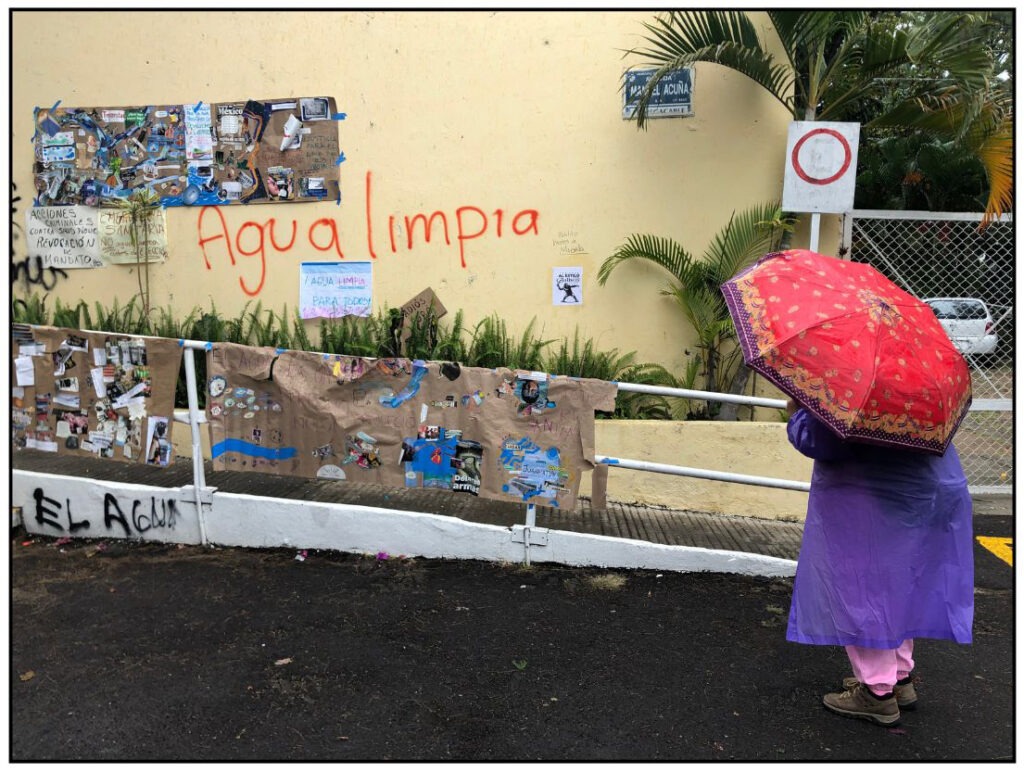
On this cool Sunday morning, with rain threatening to fall—which did not deter the crowd, made up of girls, boys, young people, adults, and seniors—from arriving at the meeting point at the Minerva roundabout, from various parts of the Guadalajara metropolitan area, carrying their posters, banners, costumes, musical instruments, and jugs and containers filled with samples of the murky water that, for more than six months, they had reported receiving from the Intermunicipal Drinking Water and Sewer System (SIAPA) in various neighborhoods—a problem that had intensified in recent months and weeks.
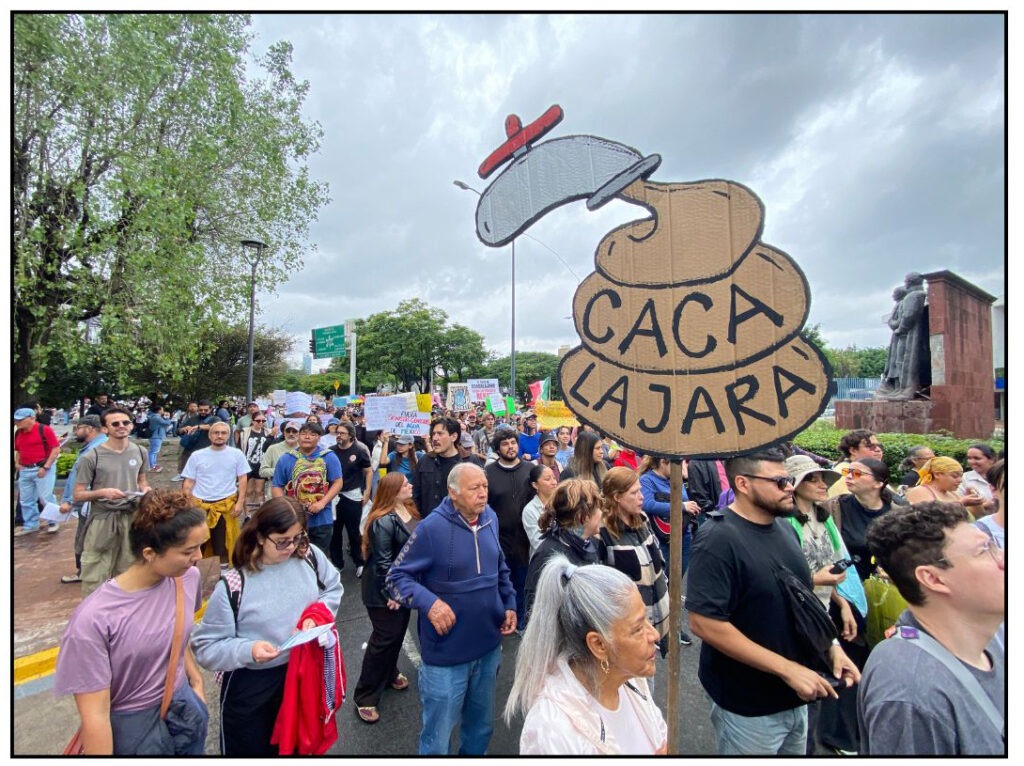

The voices and chants in unison, and on the banners, which could be heard along the route down López Mateos Avenue toward Casa Jalisco, demanded clean water in the neighborhoods, no privatization of this vital resource in Jalisco, an end to corruption at SIAPA, jail time for polluting companies, a public health alert due to the water crisis, and even the resignation of officials such as those at SIAPA or even the governor, among other demands.


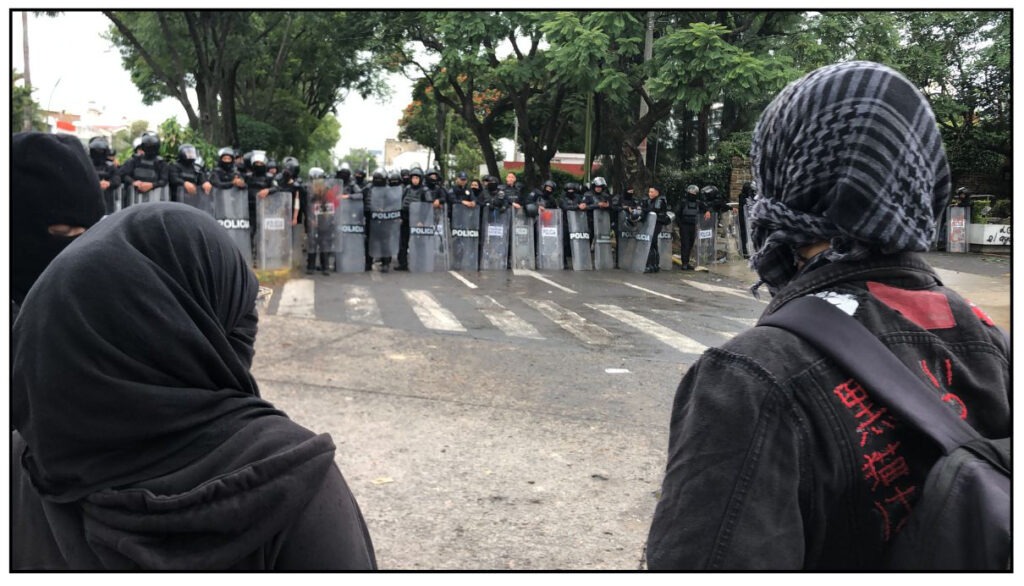
Upon reaching that stretch of more than 10 blocks along the route of the massive march, the group found that Casa Jalisco was already surrounded by metal barriers along the median of Manuel Acuña Avenue—something that had not happened during previous water protests in recent months.
Some protesters had arrived early and had positioned themselves in front of Casa Jalisco. As the marching contingent arrived, the space in the single lane that had been left open gradually filled up, just as the air filled with the deafening chorus of chants demanding clean water—chants that could likely be heard in every room of the Casa Jalisco complex.
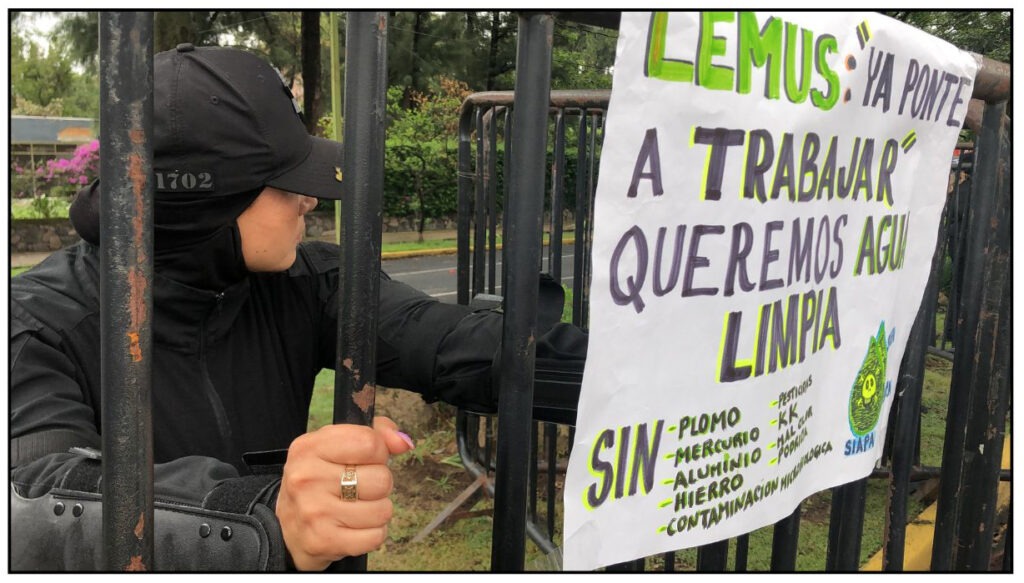

At first, it was female police officers who were guarding the barricades, and when protesters began trying to remove them to get closer, groups of state police riot officers, as well as people in plain clothes, emerged from inside Casa Jalisco to try to stop them. Protesters confronted them and reminded them that they, too, had dirty water in their homes.


Minutes later, in the midst of the riot police’s tight formation, and at various points in front of Casa Jalisco, state police and people in plain clothes began “snatching” people—both men and women—who were standing in front of the riot police; they were immediately thrown to the ground, sometimes beaten, and taken inside the Casa Jalisco compound itself. In response, the other protesters shouted even more forcefully at the riot police, condemning their actions. “We want clean water, not repression.” “Let them go, let them go.” Several people were visibly shaken by the arrests.

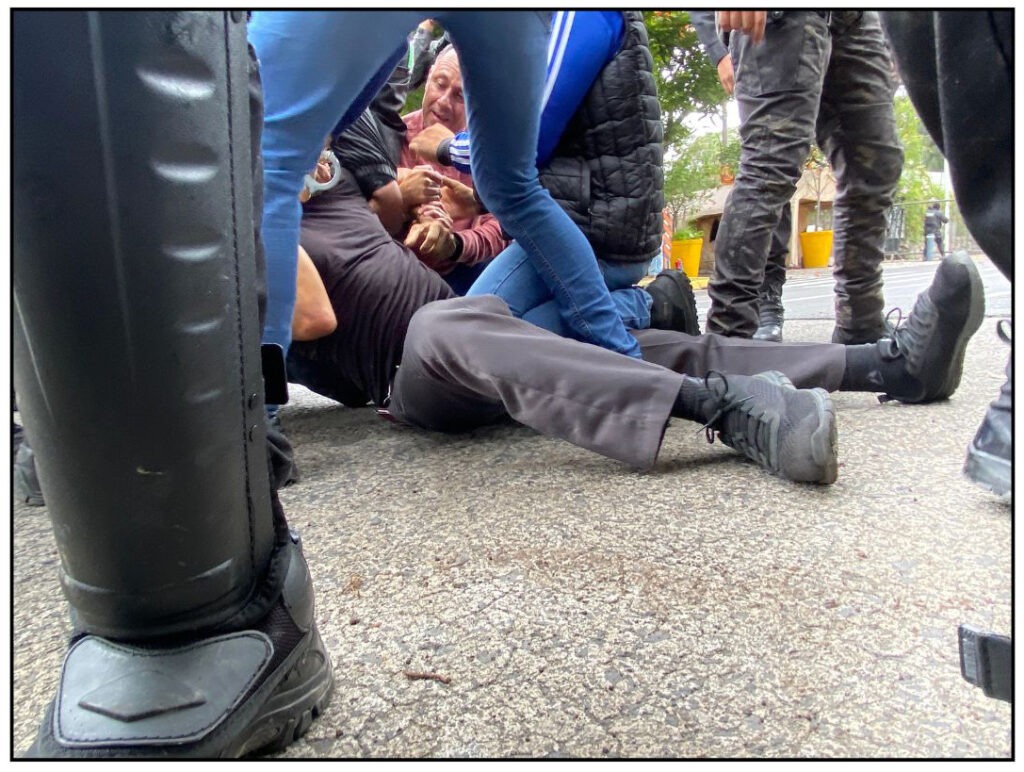

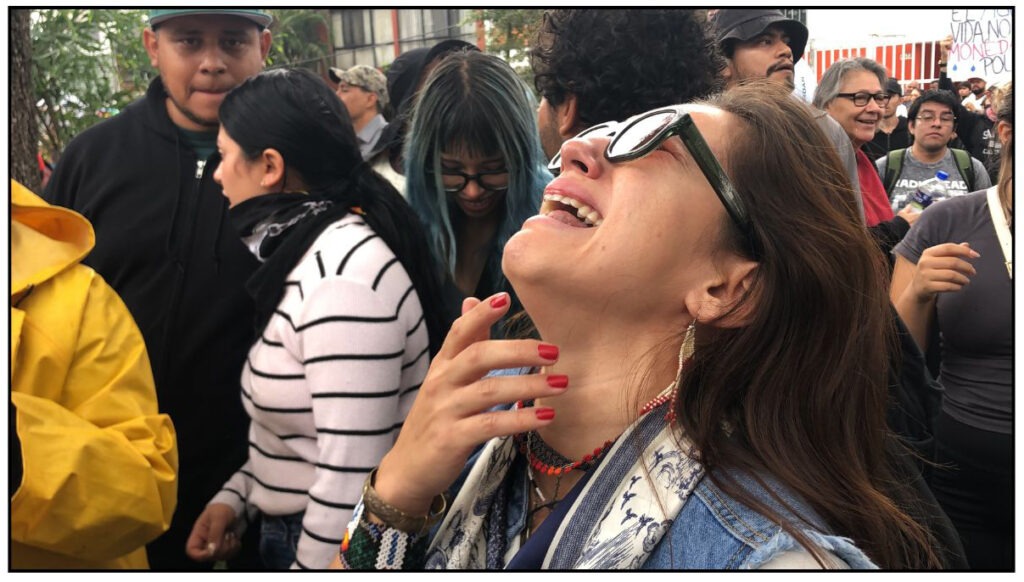
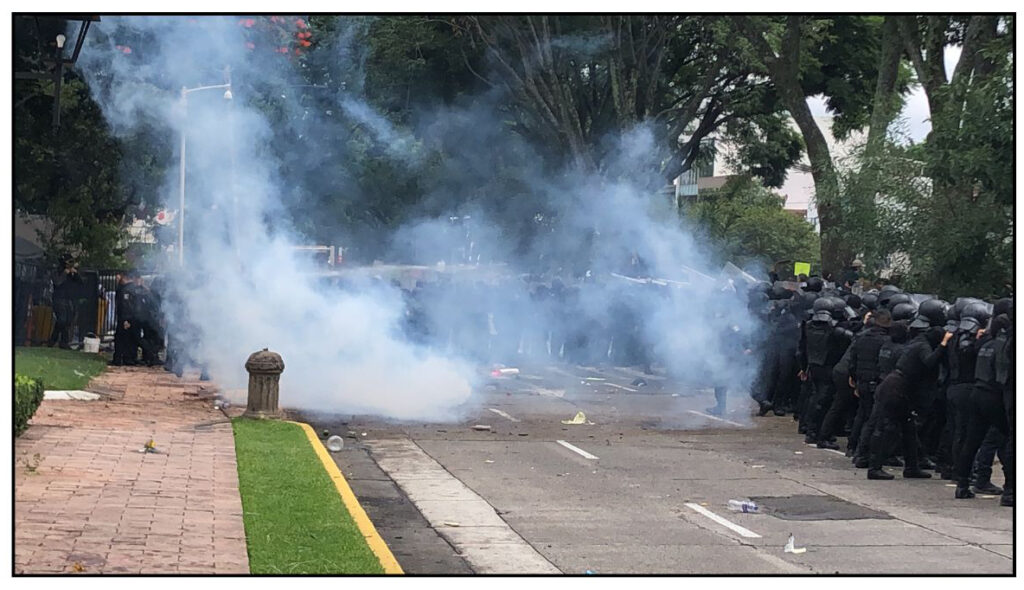
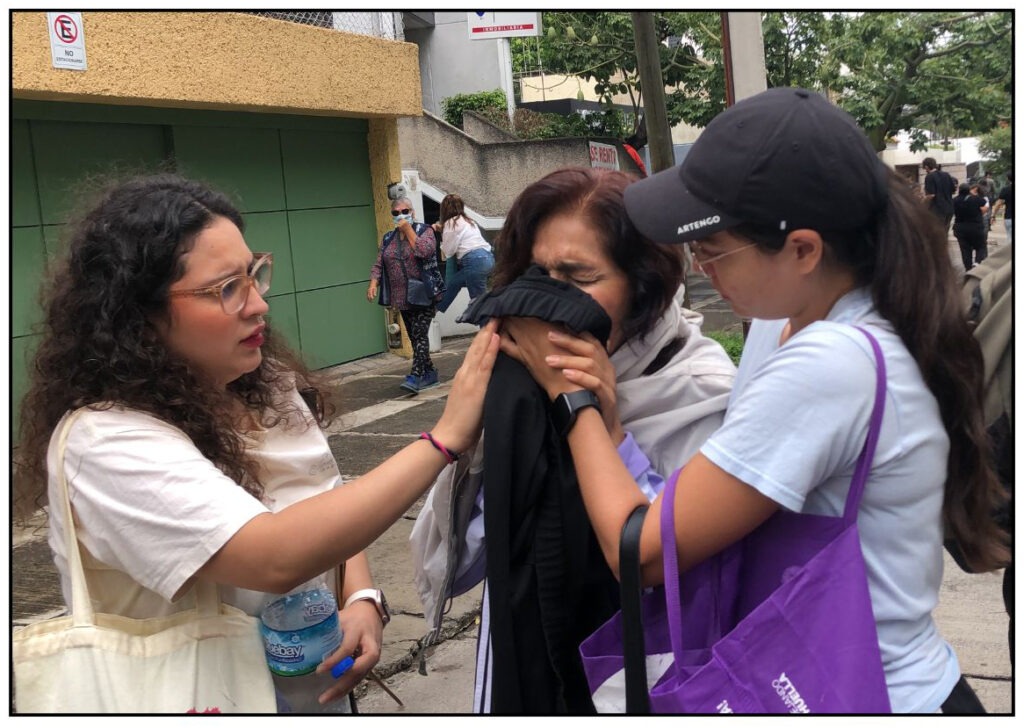
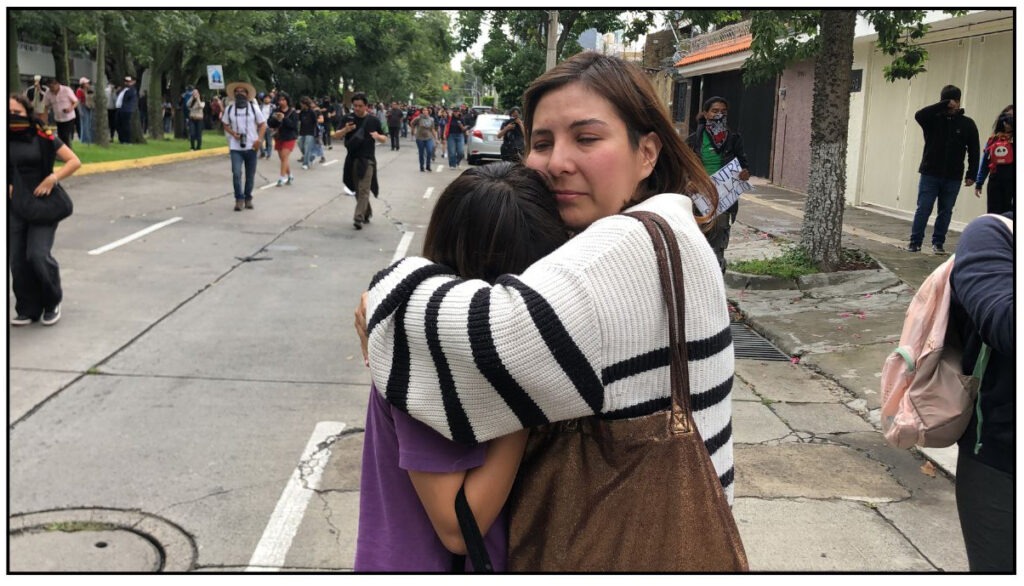
At one point, there was a loud bang from a firecracker, and then smoke began to fill the air. It was tear gas fired by police, which immediately affected everyone nearby—including young children and the elderly—many of whom, distressed and in tears, rubbed their eyes, while family members and supporters helped them by providing water or instructions on how to minimize the damage.
On the left, there was a line of riot police, and suddenly a firefighter, backed by this police unit, began firing powerful jets of water at the protesters demanding clean water, who watched this repressive action in disbelief. “Clean water isn’t wasted!” was the chant that could be heard as water gushed from the hose, which is normally used to put out fires.
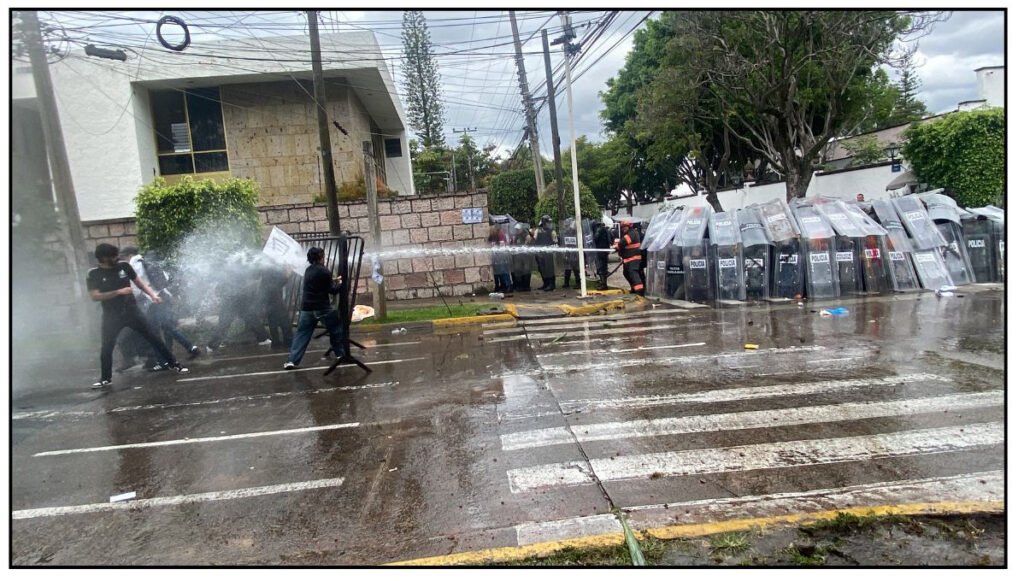
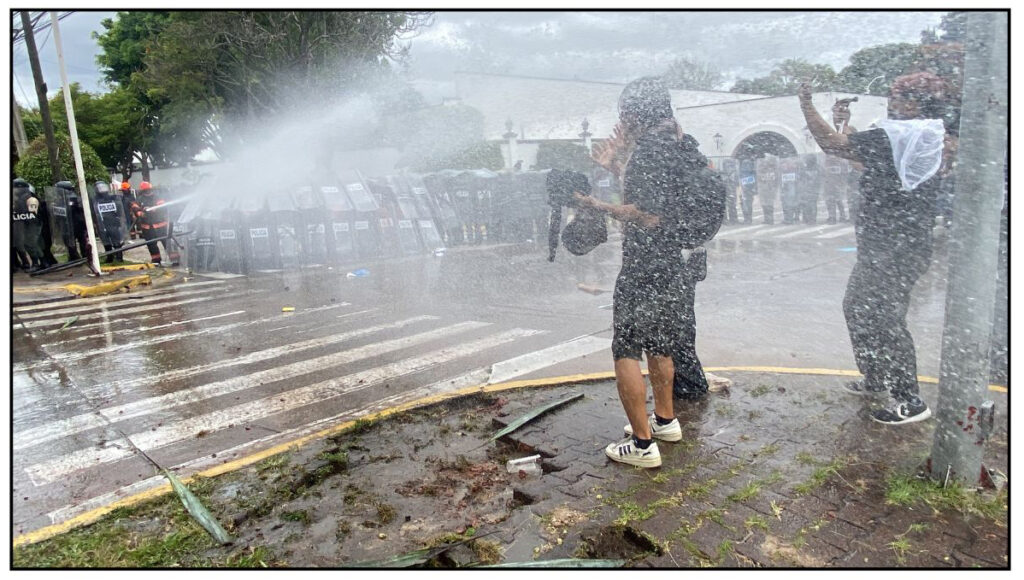
Meanwhile, tear gas canisters continued to be fired—at least four times—and each time the protesters returned to continue making their voices heard in support of clean water, but now also against the repression and for the release of those they had seen being arrested just minutes earlier.
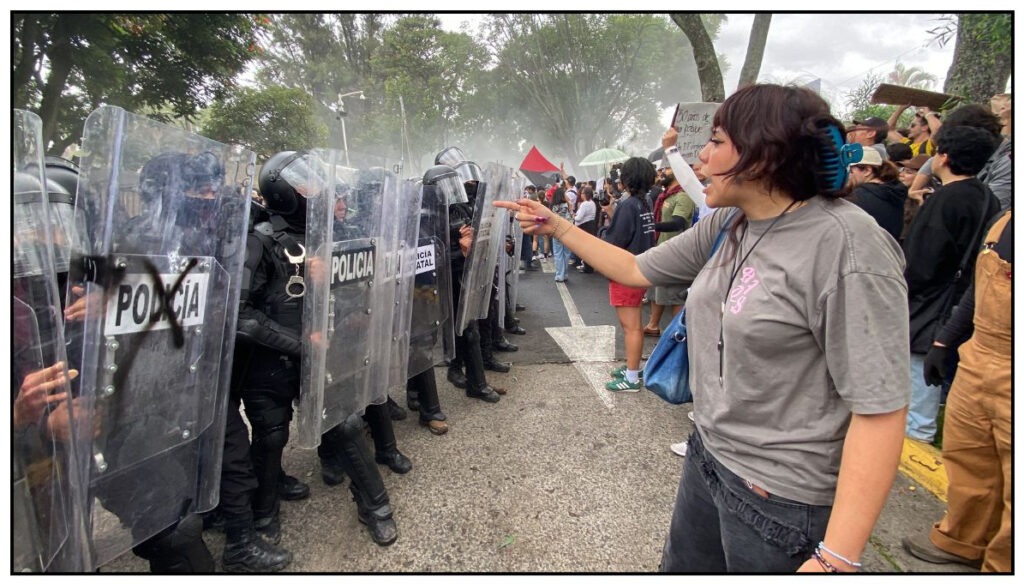
Until around 2:30 p.m., more riot police continued to arrive and advance along Manuel Acuña Street to Rubén Darío, where they also carried out arrests and beat protesters, who were still there despite the arbitrary actions. This led to an even greater dispersal of those participating in the demonstration on this occasion.
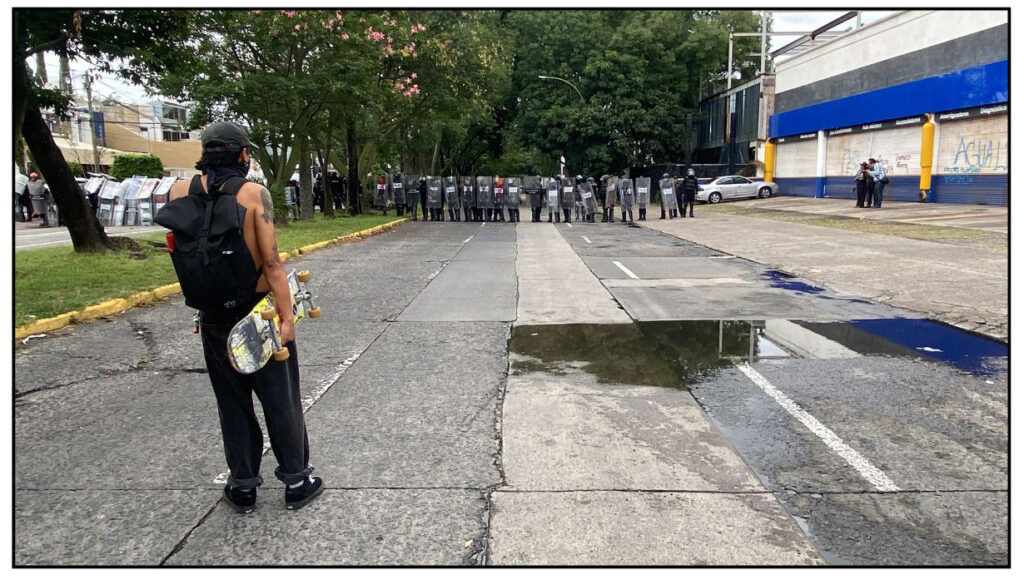
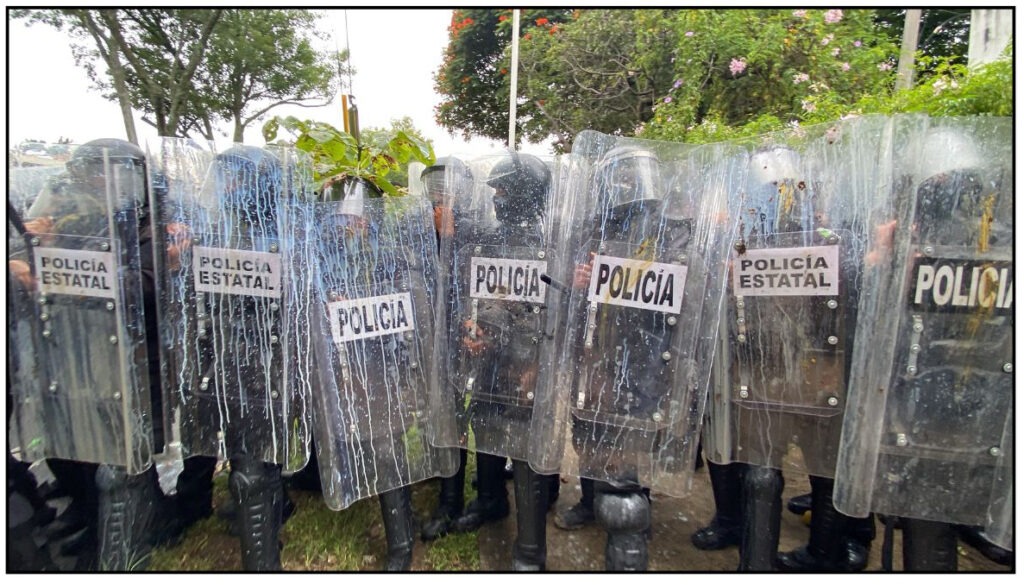
At 4:00 p.m., relatives of detainees, along with organizations such as CEPAD and IMDEC, held a press conference one block from Casa Jalisco, where they stated: “We have documented arbitrary detentions and acts of torture. It is important to note that until these individuals are listed in the national registry of detentions and we know their whereabouts with certainty, these are cases of enforced disappearances; we must call it out and demand that the authorities locate them and guarantee their physical and psycho-emotional well-being.”
Meanwhile, half an hour later, another group of protesters was picking up the trash scattered on the ground around the state police officers and the remaining barricades, cleaning up the area, while speaking with the police to condemn the repressive actions they had carried out moments and hours earlier.
By the end of Sunday, the activist groups and family members were demanding the appearance and release of 52 people, but as of that time, the authorities had not confirmed their transfer to the 14th State Prosecutor’s Office, where both family members and activist groups had gathered.

- Protesters demand clean water in Guadalajara and are met with repression at Casa Jalisco - October 12, 2026
- Arts to Breathe: Guadalajara’s Barrios to Host International Arts Festival - September 17, 2026
- Kites flying in the wind to defend the territory in Tonalá, México - August 26, 2026