By Tracy L. Barnett and Tran Dang
Reinaldo was not supposed to be the story of the evening.
The deported Panamanian U.S. Army veteran had arrived in Guadalajara from Panama City just the day before, on his way north toward Ciudad Juárez for a naturalization interview. Nine years after being deported from a country where he had lived most of his adult life — and after 15 years of service in the U.S. military — Reinaldo, now in his 60s, had learned that his military record could provide a path to U.S. citizenship.
Whether immigration officials would actually allow him to cross the border to pursue it was another question.
His attorney in El Paso had contacted Tran Dang, founder and executive director of The Rhizome Center for Migrants, part of the Deported Veterans Coalition and support network, to help coordinate Reinaldo’s passage through Mexico on the way to his citizenship interview. The Rhizome Center helped ensure his safe entry into the country, got him the essentials he needed — including a SIM card and cash — and helped him book the flight that would carry him north toward the border.
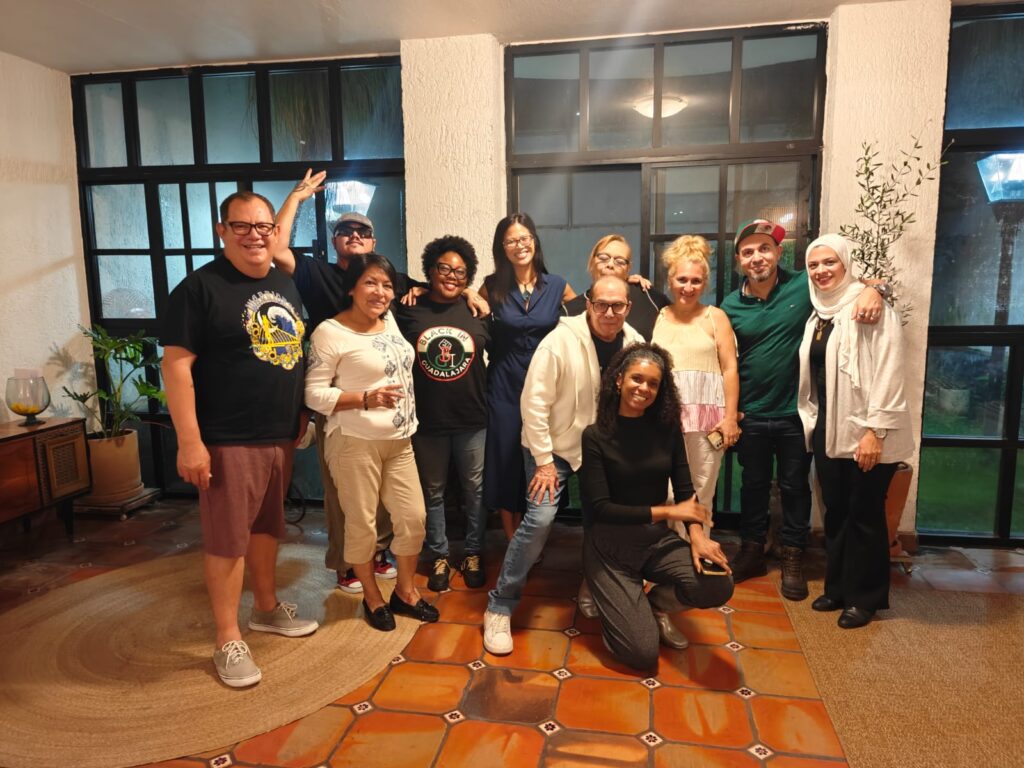
And so, in the middle of a carefully coordinated journey north, Reinaldo found himself around a table full of strangers one evening in late August, eating Vietnamese street food and listening as other immigrants talked about what it means to leave one country, begin again in another — and find people willing to help along the way.
The fundraiser was not the reason Reinaldo was in Guadalajara, but his presence gave the gathering an unexpected urgency. Here was one of the people this web of support was built to serve, sitting at the table while his own future remained unresolved.
The dinner was the second fundraiser hosted by immigrant chef Alice Liu and her husband, Miguel, at their Guadalajara home and culinary project, Speakeasy Cocina. This time, Vietnamese-American chef Charlie Huynh, founder of Let’s Pho, brought his team and the food.
The two events marked a growing collaboration between Alice, Charlie and the Rhizome Center — immigrant entrepreneurs using their food, businesses and networks to support other migrants navigating far more precarious transitions.
The dinners also helped support the Rhizome Center’s fourth annual International Food + Culture Fest, held Sept. 27 under the theme “Many Journeys, One Community.”
More than 30 guests attended the dinner, which raised 10,100 pesos (almost $600 USD) for the Rhizome Center. Together, Alice and Miguel’s two fundraising events brought in 15,200 pesos (nearly $900 USD)—more than Alice typically raises by participating as a food vendor at the annual festival. The result exceeded expectations, Tran said, and opened the door to something the organization hopes to continue throughout the year: intimate gatherings in which donors can meet and build relationships with the people who are at the center of their support.
Passing on the blessing
For Charlie, the cause is personal. He migrated from Vietnam to the United States about 26 years ago without family or a network to help him navigate a new country.
“I didn’t have any family. I didn’t know anyone,” he told the group. “And I understand how hard it was navigating a whole new life and culture.”
Years later, after building a restaurant business in the United States, he migrated again — this time to Mexico, with experience, resources and connections he had not had the first time. First, to establish a popular restaurant in Puerto Vallarta; then one in Guadalajara; and now, one in Ajijic.
That contrast drew him to the Rhizome Center’s work with people arriving in Mexico without those advantages.
“If you don’t have resources, you don’t know anyone, that would be so hard,” he said.
He wanted, he said, to “pass on the blessing.”
Alice opened her home. Charlie and his team cooked. And Tran did what Charlie called “the hardest part”: helping people piece their lives together after deportation.
After deportation
The Rhizome Center occupies a critical gap in the migrant-serving landscape.
Founded in 2018 during the first Trump administration, the U.S. nonprofit has its only physical office in Guadalajara. Unlike most migrant organizations, its work begins where others’ work ends: after someone has already been deported.
That may mean revisiting a U.S. immigration case, helping separated families, providing mental-health or humanitarian support, or simply helping someone navigate the bureaucracy of starting again in Mexico. Through its role in the Deported Veterans Coalition and support network, the Rhizome Center also works across borders to support veterans such as Reinaldo as they pursue possible avenues for return.
For Reinaldo, that possibility had suddenly become immediate.
Nine years away
His story is complicated, and Reinaldo himself makes no attempt to portray it otherwise.
He arrived in the United States with a tourist visa as a very young man, he told the gathering, but later enlisted in the U.S. military by telling them that he was a U.S. citizen. He later served 15 years in the Army and rose through its ranks, willing to risk his life for the United States and its people.
Years later, that false claim caught up with him and he was deported.
Tran had met him in person only the night before the dinner, but the Rhizome Center’s involvement in his case was already much more than a chance encounter. Working through the Deported Veterans Coalition and support network, the organization was helping manage the Mexico leg of a cross-border effort to get him safely to his U.S. citizenship interview.
Tran told the group about a veteran the organization represented who had been deported for 25 years.
Today, he is a U.S. citizen living in Seattle.
“We don’t care if it’s been 25 years,” Tran said. “As long as we continue to maintain the hope that deportation doesn’t have to be permanent, we keep working toward a just outcome.”
For Reinaldo, that hope was suddenly very immediate.
Soon he would continue north.
At the dinner, no one could say with certainty what would happen when he reached the border. The Rhizome Center and the wider network supporting him had helped get him this far. The next step was beyond their control.
Reinaldo eventually reached the border — but he was not permitted to enter the United States to attend his naturalization interview. He remains outside the country today, waiting for another opportunity to pursue U.S. citizenship based on his military service.
The setback did not end the effort. The network that helped him move safely through Mexico continues to support him as he waits for another path forward.
Many journeys, one community
The Sept. 27 International Food + Culture Fest has now come and gone, but the relationships behind it continue.
Alice and Charlie’s collaboration is part of a wider community putting homes, kitchens, businesses and connections to work for people navigating migration and deportation.
At their August dinner, that network briefly became visible around one table — including a deported veteran pausing between Panama and the U.S.-Mexico border, hoping that after nine years away he might finally be allowed to return.
He was not.
Reinaldo was denied entry to attend his naturalization interview and remains outside the United States, waiting for another opportunity to pursue citizenship based on his military service.
Alice and Charlie will keep cooking. The Rhizome Center and its partners will keep working across borders. And Reinaldo will keep waiting for the next opening.
His journey is not over. Neither is the work of the network around him.
Tracy L. Barnett, founder and editor of The Esperanza Project, also provides communications consulting to The Rhizome Center for Migrants. Tran Dang is the founder and executive director of The Rhizome Center for Migrants and a co-author of this article. The Esperanza Project retains editorial control over its coverage.
- A Seat at the Table: Food, Migration and an Unexpected Journey Home - October 13, 2026
- Mud, Memory and a Meal: Learning the Art of Bajareque - September 30, 2026
- Recycling Without Recyclers Is Garbage: A Dispatch From the Heart of Iztapalapa - September 25, 2026
Previous Next