By Tracy L. Barnett
For The Esperanza Project
The rice paper looked almost impossibly fragile.
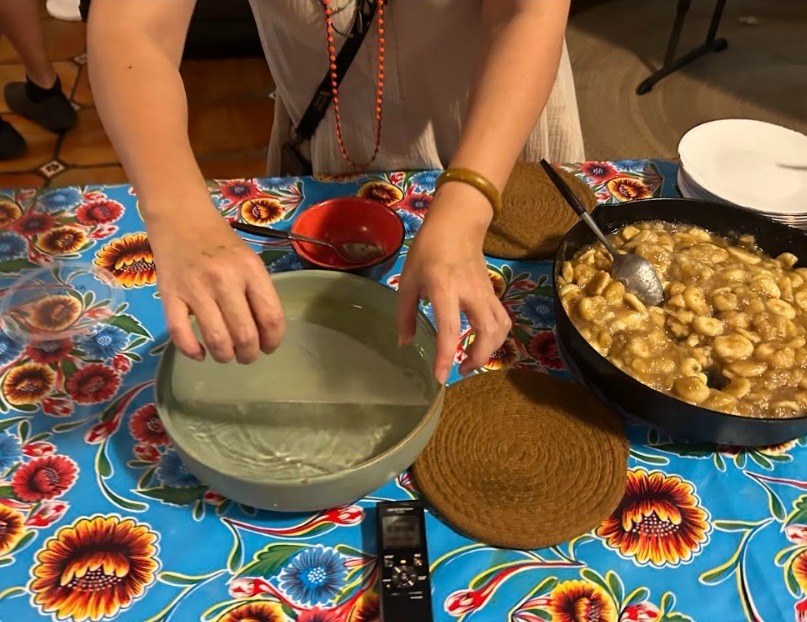
Chef Alice Liu dipped a translucent round into water, laid it carefully on the table and began arranging slivers of vegetables and herbs across its surface. Around her, a roomful of people attempted to follow along, discovering that making a Vietnamese spring roll is one of those things that looks deceptively simple until you try it yourself.
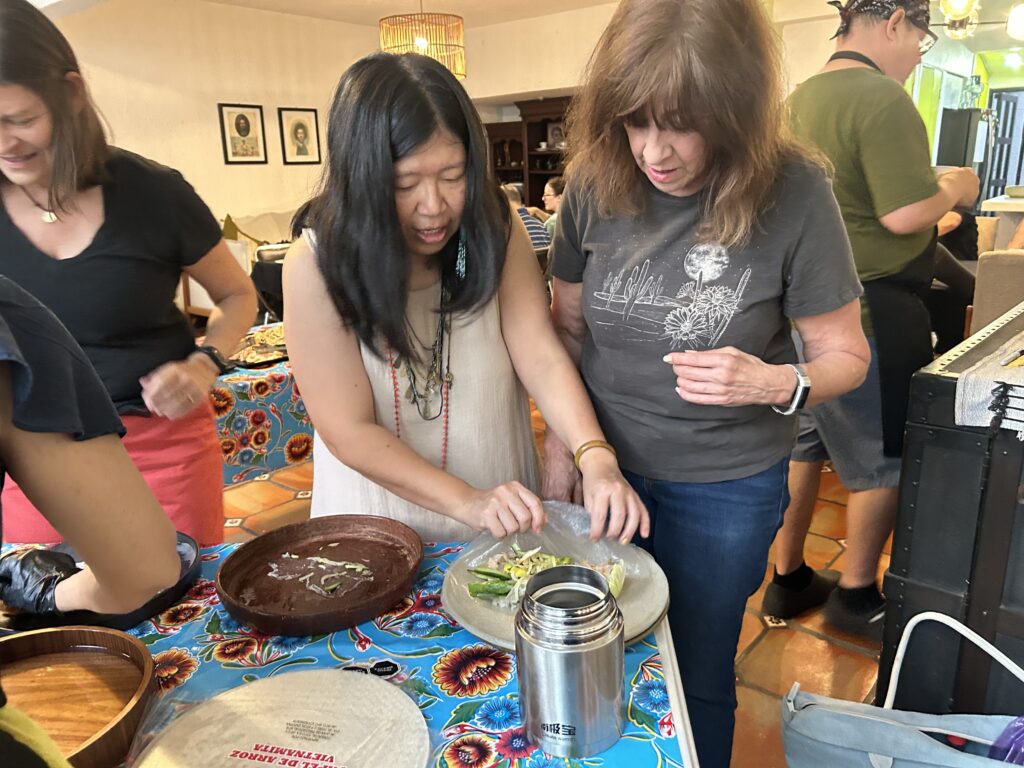
Too much filling and the wrapper tears. Too loose and everything falls apart. The trick is to fold the sides inward, tuck everything together and roll gently but firmly.
Alice leaned over the table, demonstrating the motion again.
It struck me later that there was something fitting about that small exercise in holding disparate things together.
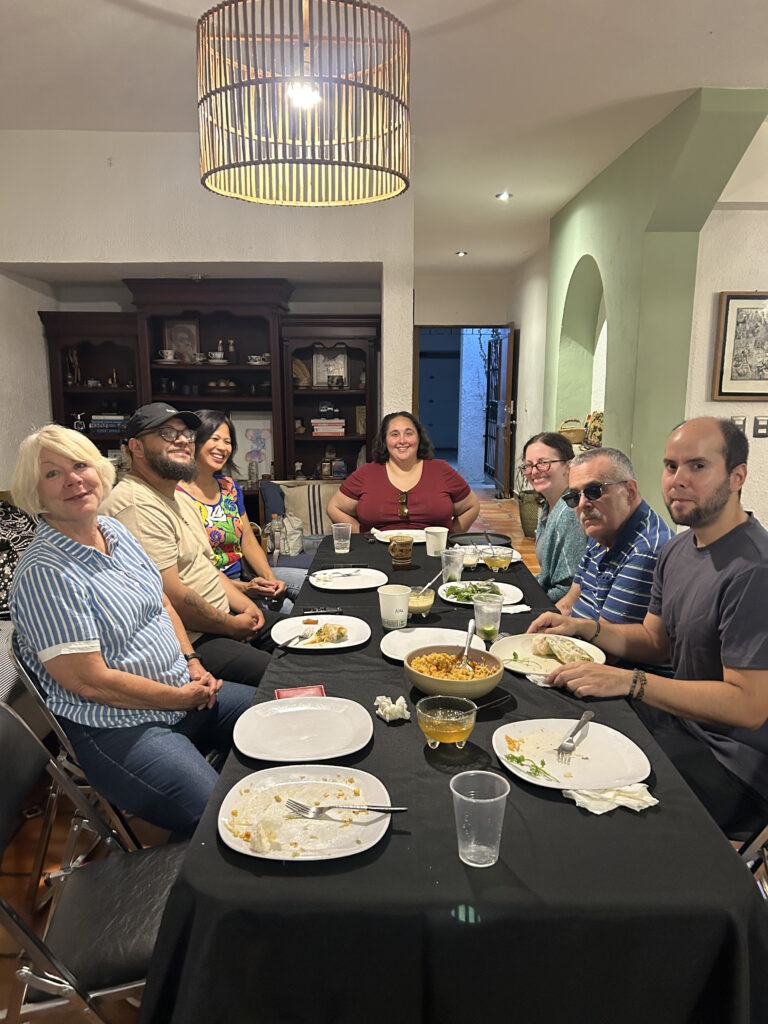
We had gathered that Friday evening in Guadalajara for “Rolls with Purpose,” a fundraiser Alice and her husband, Miguel, organized for The Rhizome Center for Migrants. But beneath the laughter, the food and the conviviality ran a much more complicated story — one about people whose lives have been split between countries, families forced apart by deportation, newcomers trying to find their footing in Mexico, and immigrants who have found enough stability to reach back and help those arriving behind them.
For Rhizome Center founder Tran Dang, that last part matters deeply.
The Rhizome Center provides free legal assistance to deportees and other migrants — helping people untangle immigration cases, reunite families and obtain the documents they need to live and work in Mexico. Increasingly, the organization is also providing humanitarian aid to people arriving after detention and deportation, sometimes with little more than the clothes they are wearing.
But legal status is only part of the problem.
“Finding home again is really difficult,” Tran told the group.
Some left Mexico as toddlers or young children. Some spent decades in the United States. Their children, spouses, careers, neighborhoods, language and cultural reference points may all be there.
Then suddenly they are “back” in a country that may be home on paper but no longer feels like home at all.
Josue Cortes knows that terrain intimately.
Most people in Guadalajara know him by his artist name, Wombay. He is a Chicano rapper with an easy smile, an irrepressible philosophical streak and a habit of turning even painful stories toward some possibility of transformation.
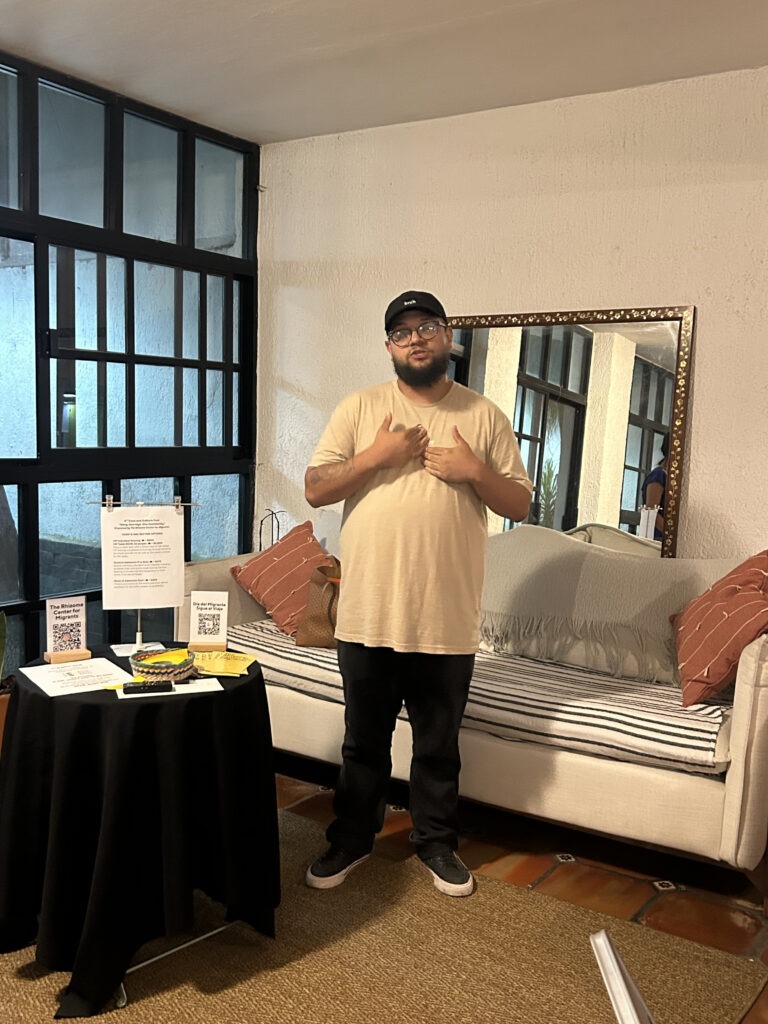
He was born in Mexico but grew up in the United States. When he was around 12, his father was detained, setting off a cascade of events that changed the family’s life. His mother eventually made the abrupt decision to return to Mexico with the children.
One day they were living in the United States; almost overnight, everything changed.
The family that Josue remembers as extraordinarily close began to fracture after the move. His parents separated. He struggled through adolescence, addiction and rehabilitation. He became a father at 16 and worked wherever he could — selling aguas frescas in the tianguis, taking call-center jobs and eventually rapping on Guadalajara buses to bring in extra money.
Through it all ran a question that is familiar to many people whose identities span the border.
In the United States, people told him he was Mexican.
In Mexico, people told him he was American.
“It’s like a constant battle,” he told me later. “Even though I’m home … no matter where I go, I feel like I’m not at home.”
And yet Josue has spent years constructing a home anyway.
He built a life here. His family, once splintered, gradually found its way back together. He became a musician and performer, using hip-hop and now reggae to communicate the things he sometimes struggles to say in ordinary conversation.
And for the past several years, he has served as emcee for the Rhizome Center’s Migrants Day food and culture festival.
He keeps returning, he says, because of what happens when he meets other people whose lives also stretch between languages, countries and identities.
For a moment, he feels at home.
That is the deeper purpose of the Rhizome Center’s annual festival, now entering its fourth year.
Food is certainly part of the attraction. So are music, dancing, crafts and performances. But Tran sees the gathering as an exercise in cultural integration — a phrase that can sound bureaucratic until you sit beside someone who has spent years being told they belong somewhere else.
This year’s theme is “Many Journeys, One Community.”
The festival itself is created largely by migrants and refugees, by a migrant-led, migrant-serving organization (the Rhizome Center), with participants from communities including Vietnam, Haiti, Venezuela and India, among others.
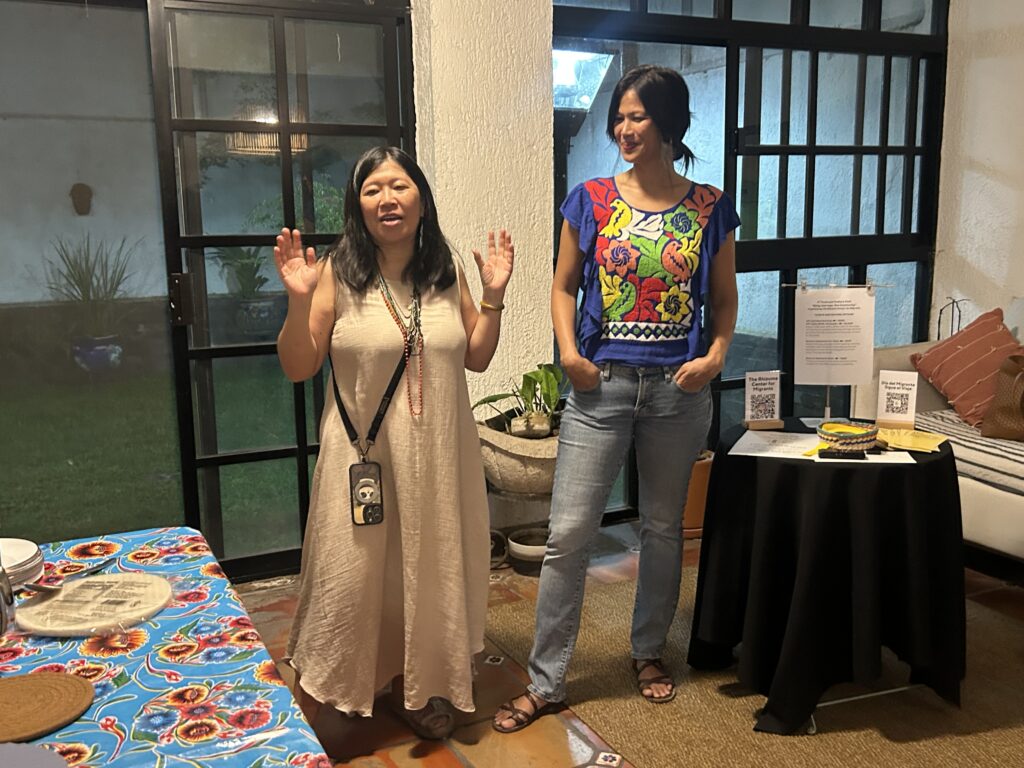
Alice Liu has been part of it from the beginning.
An immigrant herself, she moved to Guadalajara from California in 2021 and eventually built Speakeasy Cocina, the cloud kitchen she runs with her husband, Miguel. Food, for the couple, has always been a way of creating community.
But Alice told the guests that working with Tran introduced her to a population she had barely understood before: deportees and migrants trying to rebuild lives after experiences that can leave them isolated from both the countries they left and the country where they have landed.
Tran’s commitment moved her enough that this year, rather than simply participating as a food vendor, Alice decided to organize fundraisers ahead of the festival.
And she is not the only immigrant chef doing so.
On Aug. 269, Vietnamese-American chef Charlie Huynh, founder of Let’s Pho, will host another Rhizome Center benefit, providing the food and offering guests a preview of dishes he plans to feature in a new Vietnamese street-food concept.
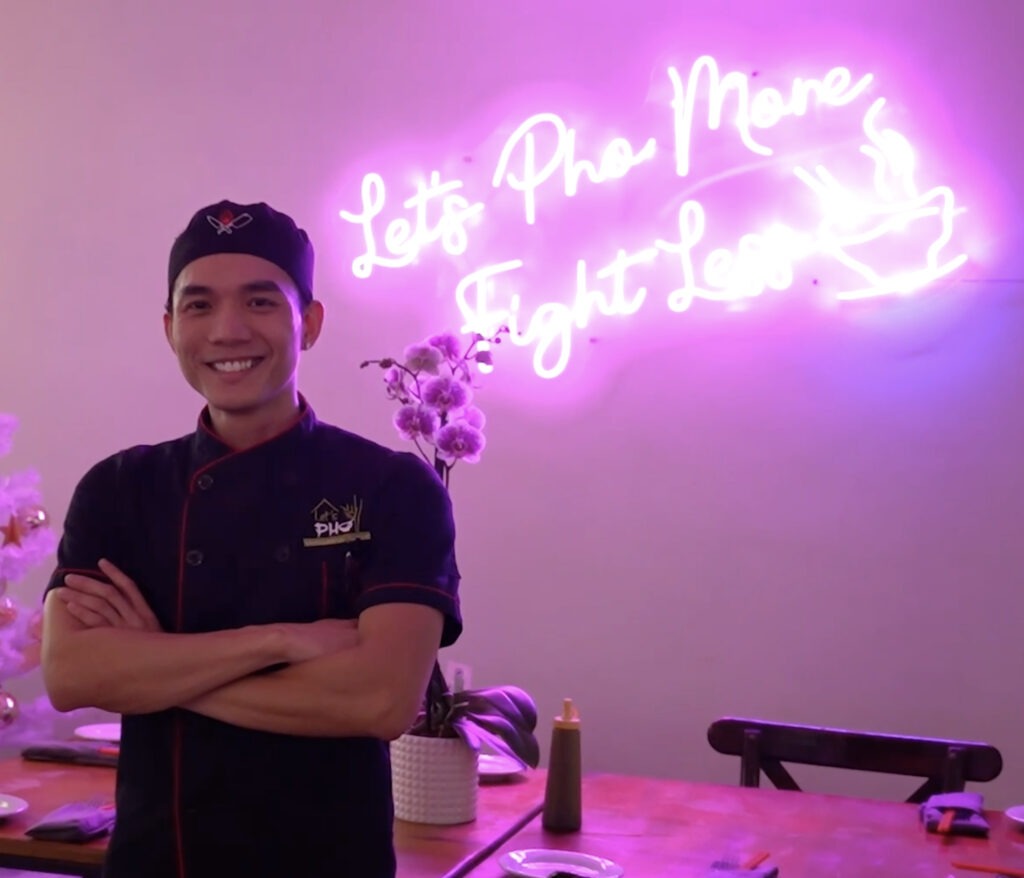
Charlie’s connection to the work is personal.
He migrated from Vietnam to the United States without speaking English.
“I didn’t speak any English, didn’t know anyone, didn’t know the law, and had to get my paperwork in order,” he told me. “Without help, I had to navigate almost everything on my own.”
Years later, after building a restaurant business in Houston, he migrated again — this time by choice and under vastly different circumstances.
He moved first to Puerto Vallarta and then fell in love with Guadalajara, where he expanded Let’s Pho. By then he had friends, contacts and a network ready to help him navigate life in Mexico.
The contrast stayed with him.
“Because of that, I wanted to share the blessing with those that are going through the same process,” he said.
And food, he believes, is uniquely suited to that work.
“You don’t have to speak the language or understand the culture to enjoy a meal,” Charlie said. “Food is a national love language. It’s universal.”
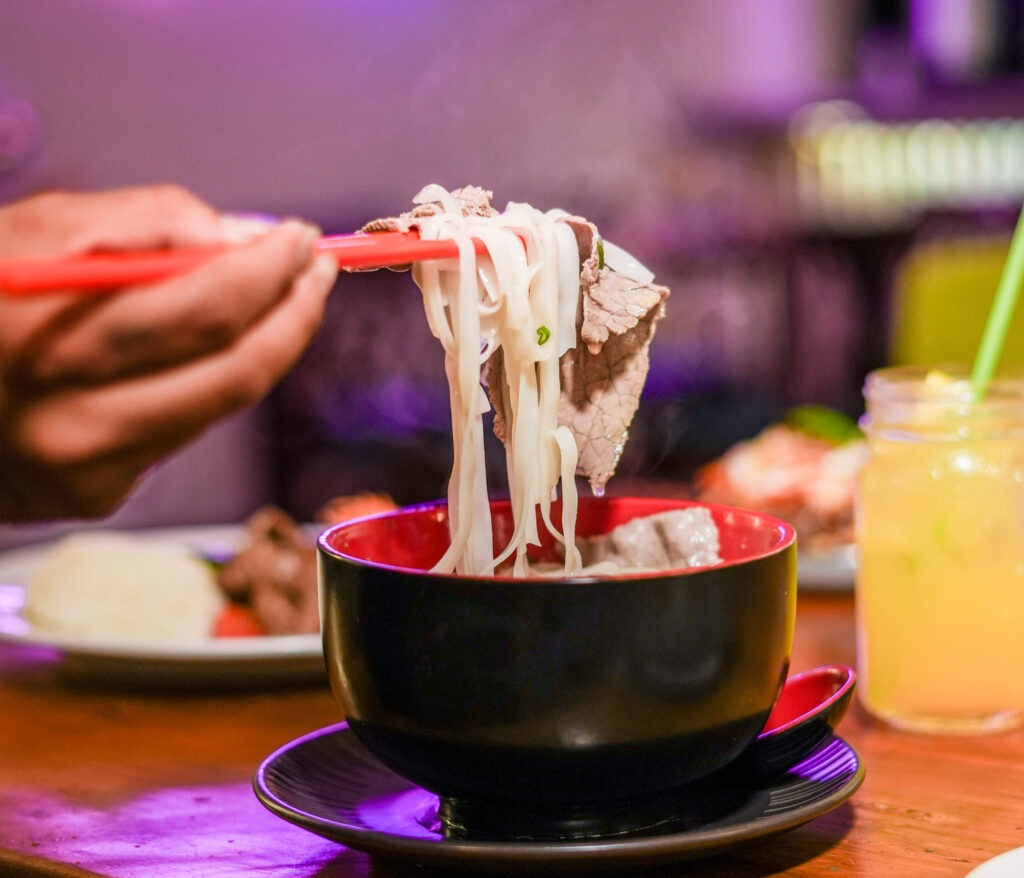
Perhaps that is why these gatherings work.
Around a table, categories begin to loosen.
Immigrant. Deportee. Refugee. Expat. Mexican. American. Vietnamese. Chicano.
For an evening, people become the person passing you a bowl of herbs, the stranger helping you rescue a torn spring roll, the musician waiting to tell his story, the chef explaining a flavor from a childhood thousands of miles away.
Suzanne Shelton and her husband, Mike, came because they wanted to support people affected by immigration policies they find painful and unjust. “Helping them here is something that we can do,” she told me.
It is a modest statement, but perhaps an important one.
None of these dinners will repair a family separated by deportation. A food festival cannot replace years lost between parents and children or erase the disorientation of waking up in a country that everyone insists is yours when it no longer feels that way.
But it can create a place to begin.
A table.
A conversation.
A familiar taste.
Someone who understands what it means to belong to two places at once — or, some days, to neither.
And sometimes home begins there.
COMING UP
Aug. 26 — Let’s Pho benefit for The Rhizome Center for Migrants: Vietnamese-American chef Charlie Huynh will provide the food and preview dishes from a new Vietnamese street-food concept. [8 pm Aug. 26 / Speakeasy Cocina, Calle Dia 2385, Jardines del Bosque. Cost: 400 pesos / Reservations at [email protected] or WhatsApp +52 33 1146 2188.]
Sept. 27 — Fourth Annual Migrant Day Food & Culture Festival: “Many Journeys, One Community.” [ “Many Journeys, One Community: A family-friendly celebration of culture, community, and belonging for Migrants Day,” hosted by The Rhizome Center for Migrants, in collaboration with Caminantas — Casa Zuno, Av Unión 2226, Col. Americana / Instagram @diversidadculturalgdl and @therhizomecenter.]
Tracy L. Barnett is founder of The Esperanza Project and also provides part-time communications consulting to The Rhizome Center for Migrants. Reporting and editorial decisions for The Esperanza Project are independent.
- Mud, Memory and a Meal: Learning the Art of Bajareque - September 30, 2026
- Recycling Without Recyclers Is Garbage: A Dispatch From the Heart of Iztapalapa - September 25, 2026
- Clean Air Fair turns Parque Rojo into open-air classroom - September 19, 2026