Text and photos: Tracy L. Barnett
For The Guadalajara Reporter
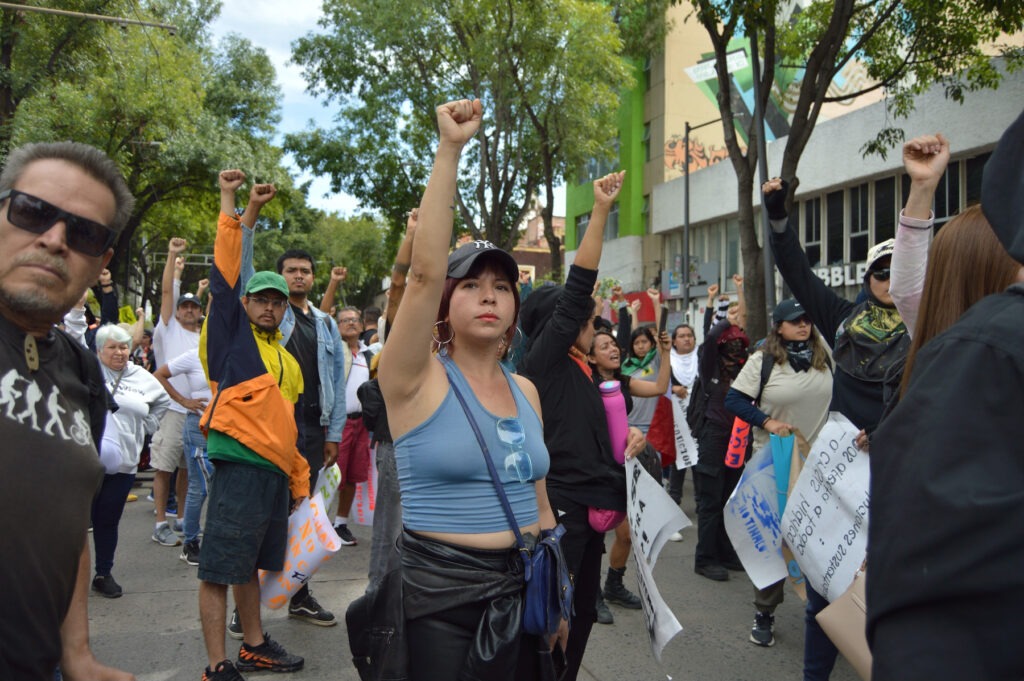
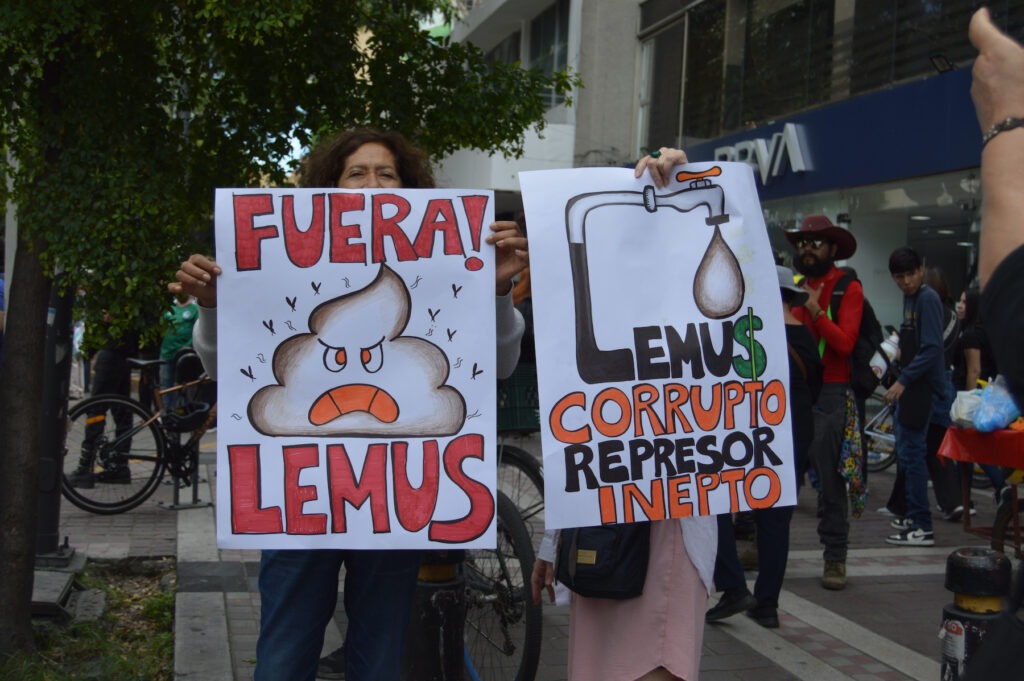
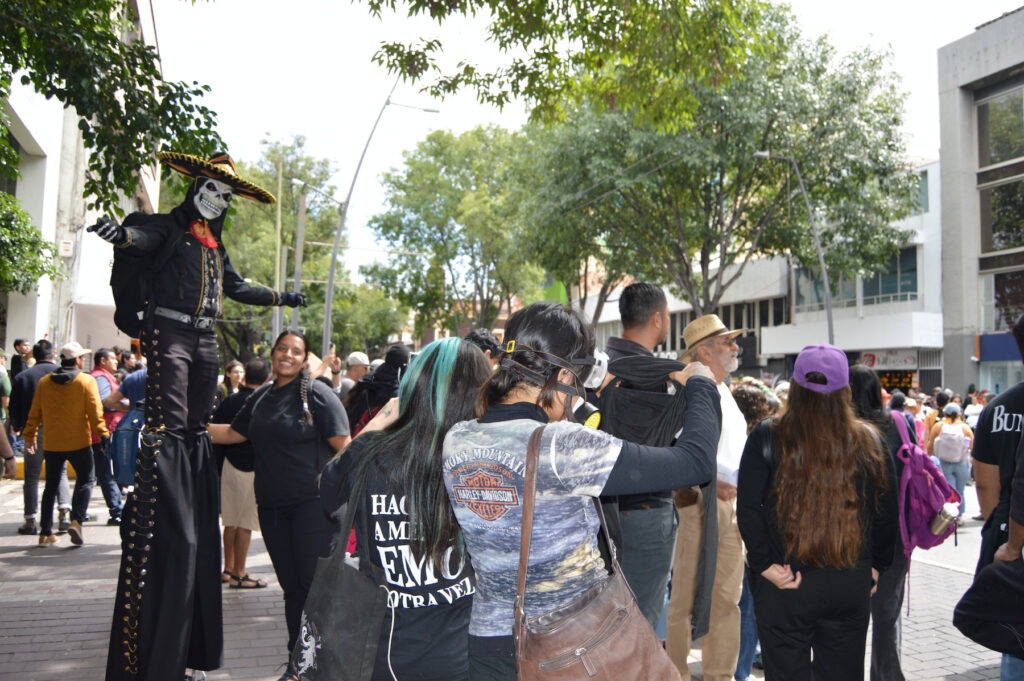
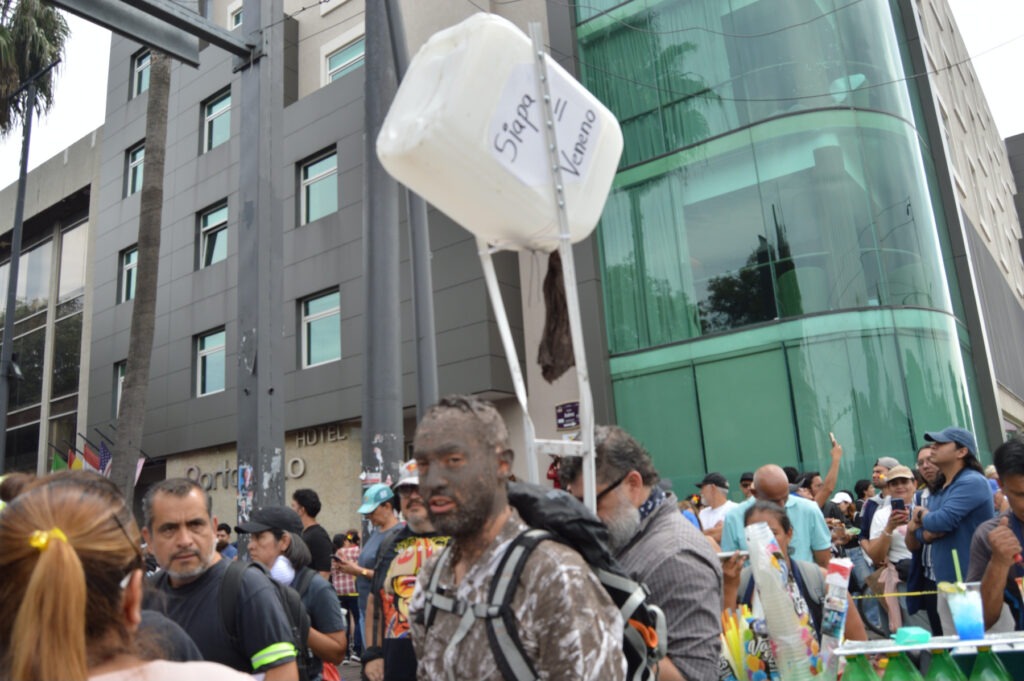
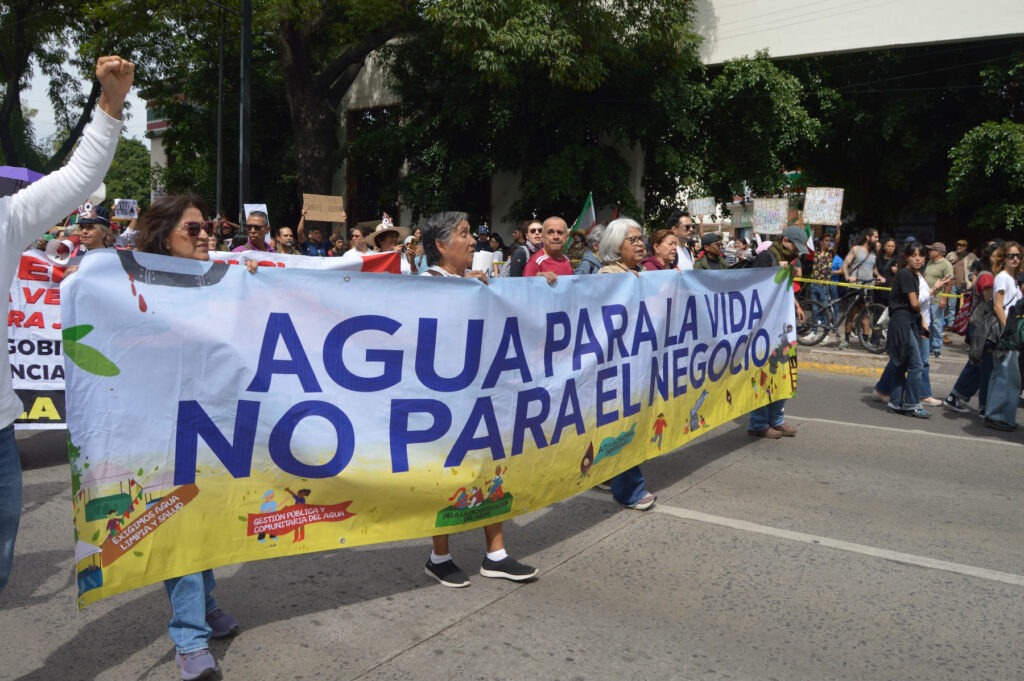
GUADALAJARA — There was plenty of Tapatío humor on display at Sunday’s massive march for clean water: protesters dressed as piles of poop, a bright-red Muppet, and an elegant Catrín towering above the crowd on stilts. One marcher, covered head to toe in mud, had rigged a large water jug above his head, with murky liquid apparently pouring down over him.
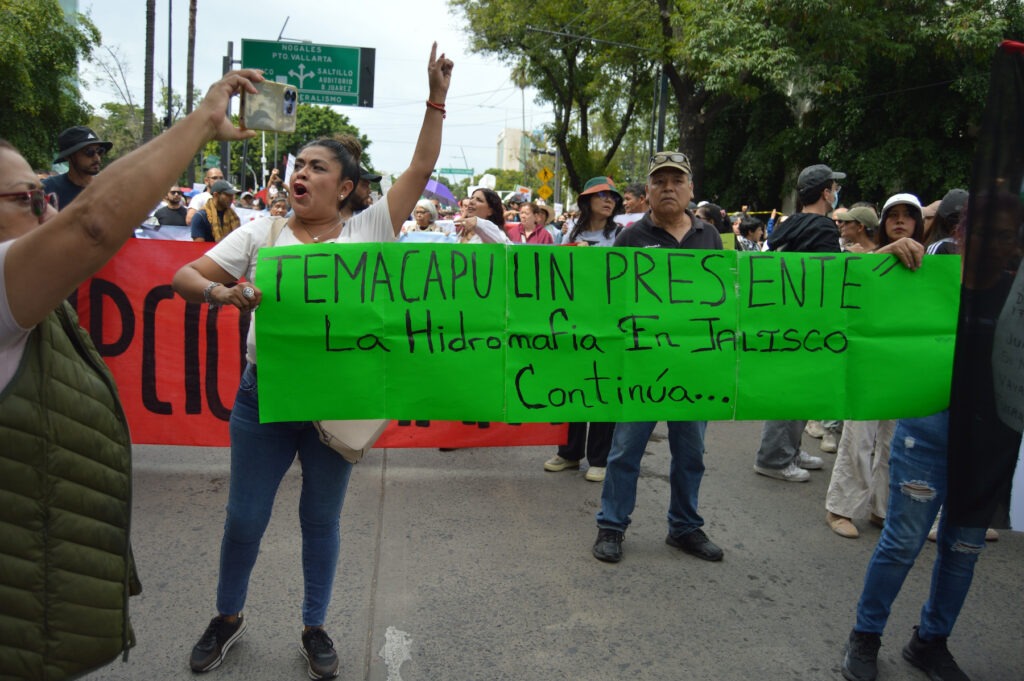
The mood was festive and fraternal, with creative costumes and spirited chants reflecting months of frustration over foul-smelling, discolored tap water.
But beneath the humor lay a serious challenge. An estimated 10,000 to 15,000 people gathered October 18 to demand clean water, according to organizers. They soon found themselves confronting groups of masked individuals wielding sticks, hammers and explosive devices, threatening to turn the peaceful demonstration into a violent confrontation.
Rather than allow the intruders to hijack their protest, demonstrators confronted them, demanded they uncover their faces and organized to protect one another. The apparent absence of police protection along much of the route heightened concerns about public safety.
Organizers identified at least five separate groups of masked individuals, according to El Informador. Their presence delayed the march for more than two hours near Parque Rojo, where protesters debated whether to proceed toward Government Palace.
“The priority right now is not to move forward, but to prevent a repeat of what happened last week,” a representative of the march’s Security and Logistics Commission told the crowd.
The October 11 demonstration had ended in violent clashes, arrests and allegations of police brutality. This time, organizers were determined to avoid another confrontation.
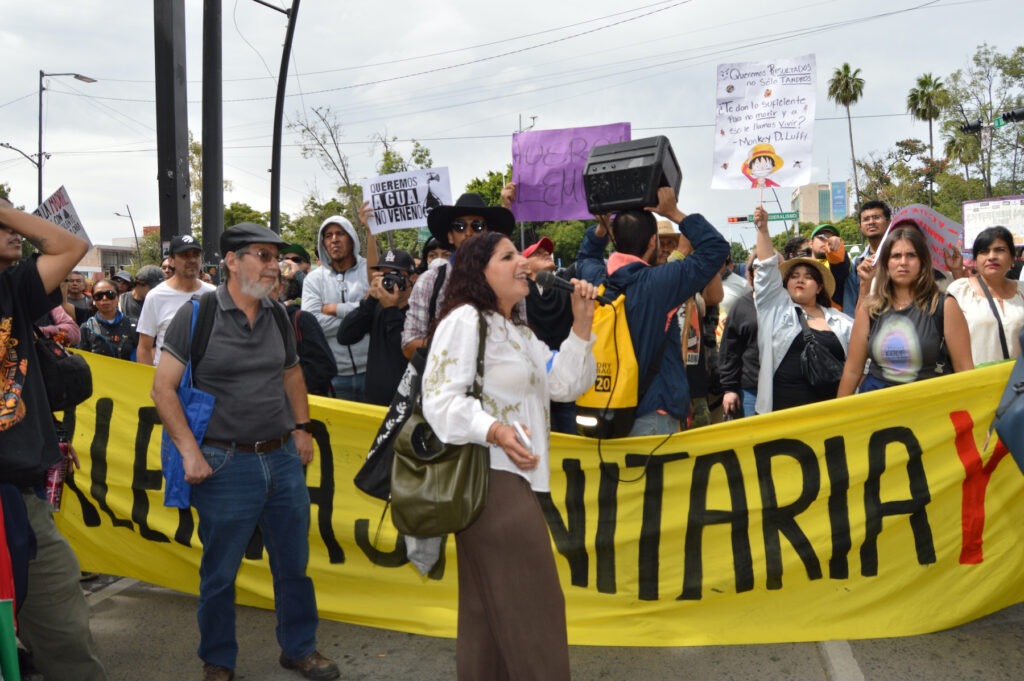
They used megaphones to communicate their decisions, sent advance teams to assess conditions and urged participants to remain together. Volunteers from first-aid and anti-tear-gas brigades were on hand.
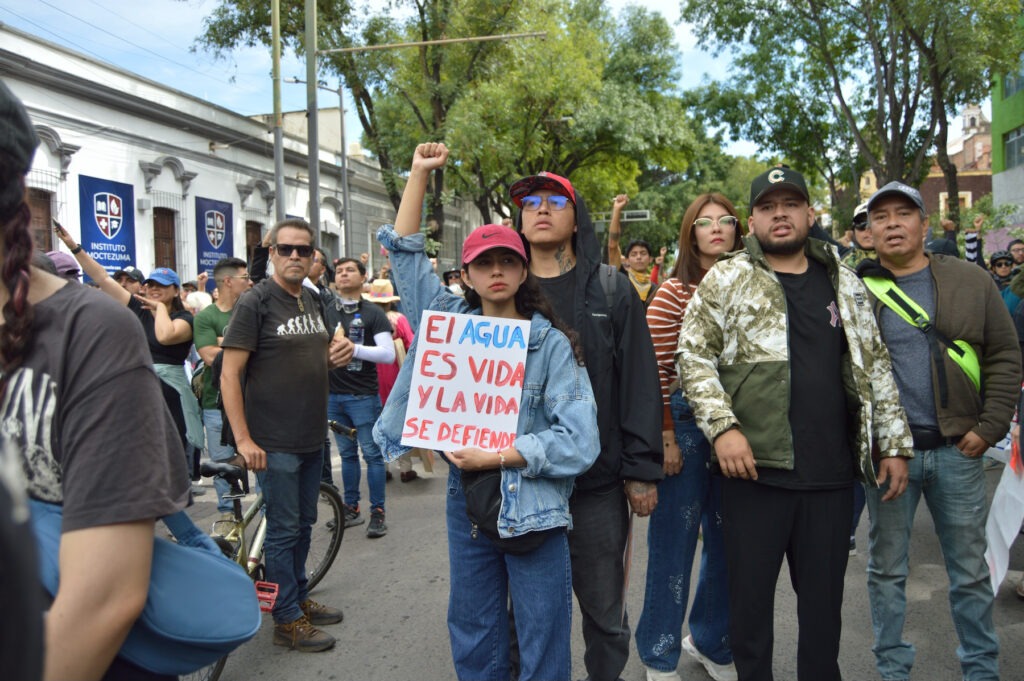
“All of us who came peacefully made a conscious decision to show our faces,” said Ligia, a biomedical engineer working with an independent first-aid brigade. “We consciously chose not to be part of any of this.”
Some participants wanted to continue marching, while others argued that advancing would put families, older residents and other vulnerable demonstrators in danger.
Alan Carmona, a member of the environmental organization Un Salto de Vida, urged the crowd to make its decisions collectively.
“It’s important that we decide this collectively and reach a consensus, so that we don’t put ourselves at risk because of the decision of one group or another,” he said.
Carmona proposed advancing together, linking arms and establishing security groups along side streets to prevent violent groups from entering their ranks.
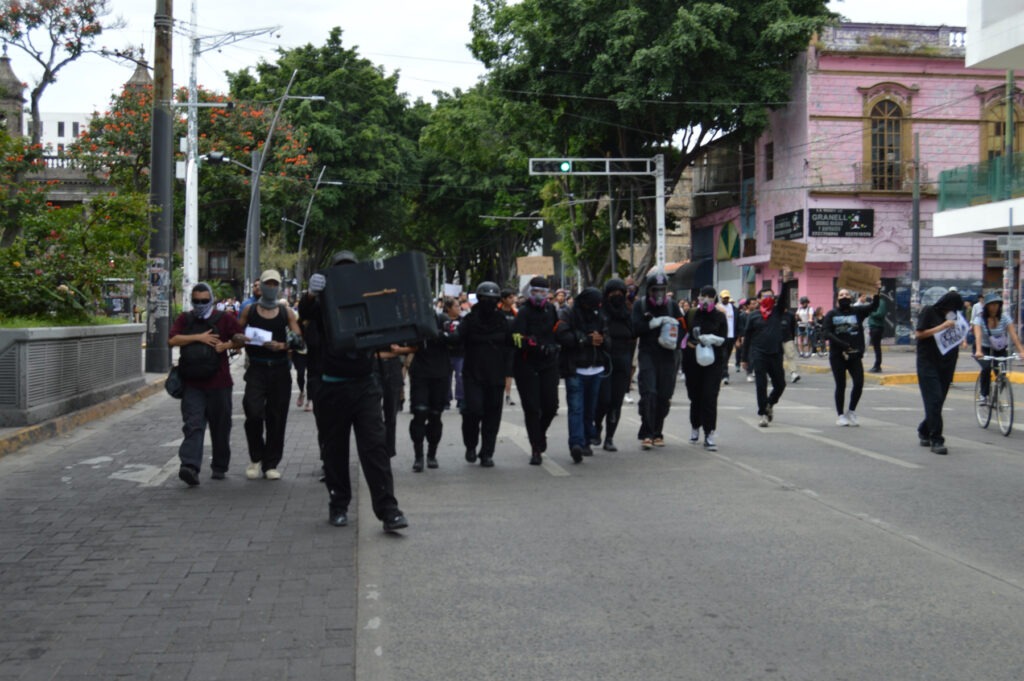
Eventually, a portion of the crowd decided to move forward. At the head of the contingent marched a line of protectors, their faces covered and arms linked, forming a human barrier as demonstrators made their way toward Government Palace.
Others remained at Parque Rojo or dispersed, following organizers’ recommendations.
The lack of visible police intervention against the masked groups stood in sharp contrast to the previous Sunday’s crackdown.
Cuauhtémoc Peña Cortés, secretary general of the Federation of Government Workers of Jalisco and its Municipalities, accused the state government of deliberately allowing provocateurs to disrupt the protest.
“Today he didn’t send police, but he sent provocateurs or plainclothes officers,” Peña said, referring to Governor Pablo Lemus.
Carmona likewise suggested that the violent groups appeared coordinated and possibly paid, an allegation that has not been substantiated.
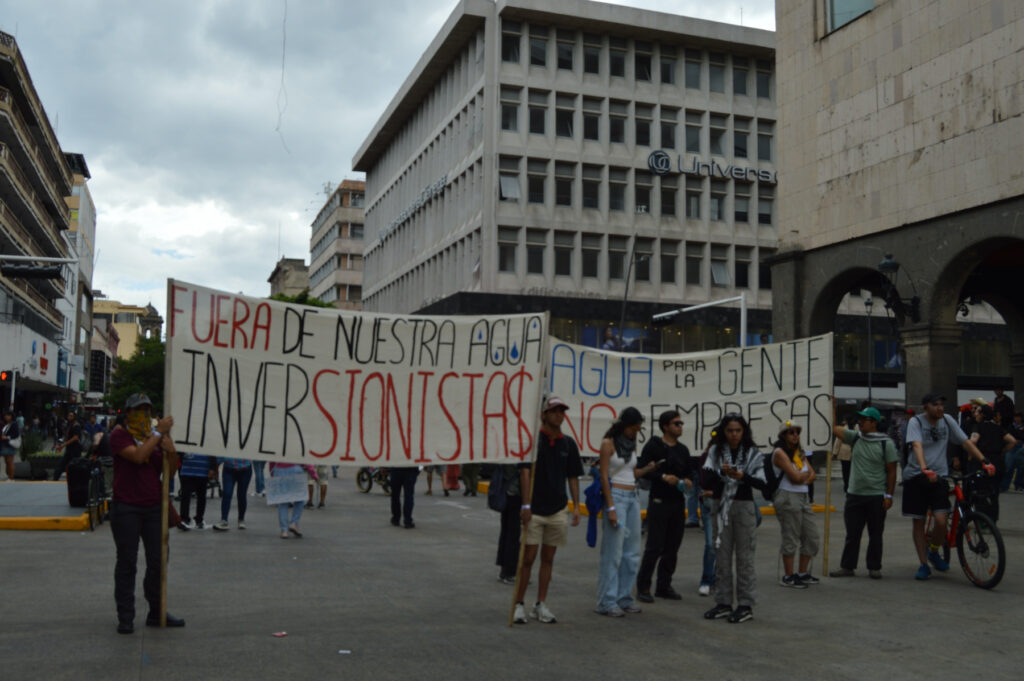
Riot police were stationed behind barricades at Government Palace, but reports described little intervention as masked individuals damaged businesses, smashed windows and later attacked government buildings.
State authorities defended their restrained response as an effort to avoid escalating confrontations, while condemning the vandalism and distinguishing those responsible from peaceful demonstrators.
For residents, the central demand remained unchanged: safe drinking water. The protests follow months of complaints about contaminated-looking, foul-smelling tap water, now compounded by rationing across hundreds of neighborhoods.
“We want clean water, but we want to achieve it peacefully,” Ligia said. “We’re not giving up.”

- Life on Pause: The Children Left in Limbo - October 27, 2026
- U.S., Mexican law students tackle deportation across borders - October 26, 2026
- Guadalajara water protesters confront masked groups, defend peaceful march - October 26, 2026