At the Feria Internacional del Libro de Guadalajara, amid crowded aisles and the buzz of new releases, the story of a small rural town in the Altos de Jalisco reclaimed the spotlight — carried, once again, by the voices of women.
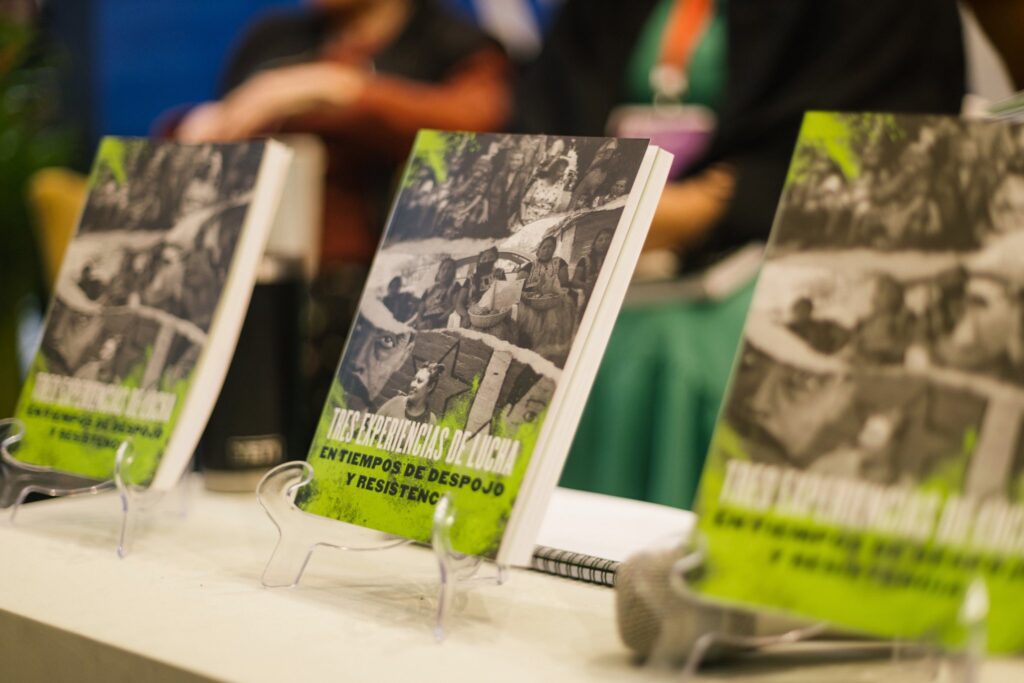
On December 7, at the STAUdeG stand inside Expo Guadalajara, IMDEC presented Tres experiencias de lucha en tiempos de despojo y resistencia, a book that documents three emblematic struggles against extractive megaprojects in Mexico. But the heart of the presentation was Temacapulín — and the women who refused to let their town be erased by the El Zapotillo dam.
Para leer este artículo en español haz click AQUÍ
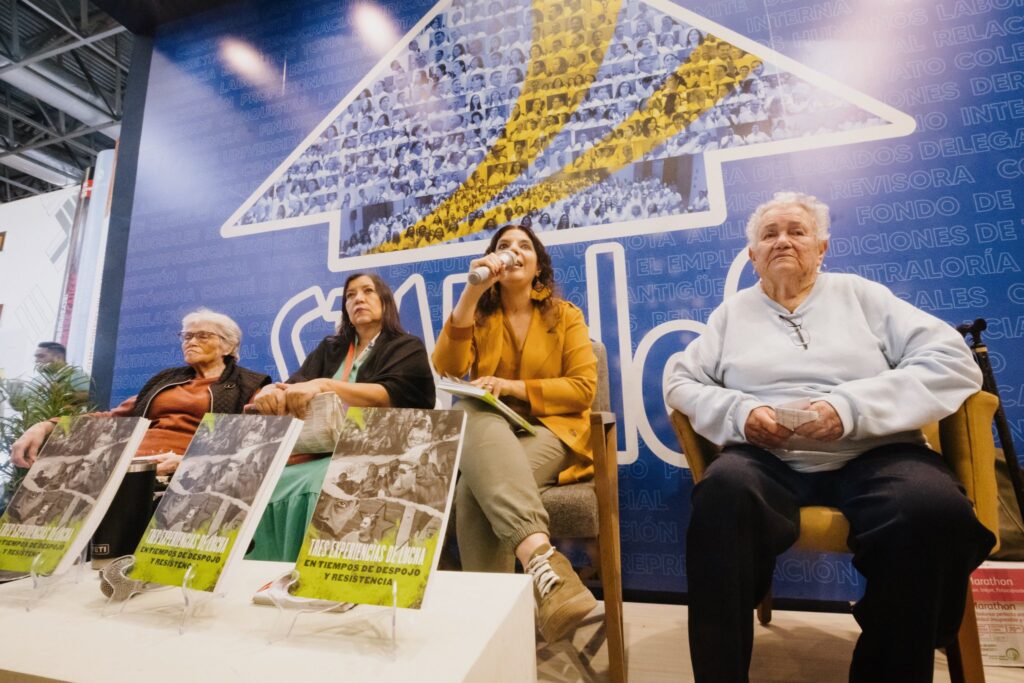
The book brings together three cases of resistance: the fight against El Zapotillo dam in Jalisco, the Proyecto Integral Morelos, and the defense of Chontal territory in Oaxaca against open-pit mining. Across all three, a common thread runs deep: women organizing from their communities to defend life, land, dignity, and collective rights..
For Temacapulín, the presentation focused on the chapter “Batallas en los Altos de Jalisco: De la lucha contra El Zapotillo a la gestión integral del agua,” which traces a struggle that lasted more than a decade and culminated in a historic victory in 2021, when the dam’s height was limited and the town was spared from flooding.
“This book recovers not only the strategies of resistance,” said María González Valencia, director of IMDEC, “but the voices — especially the voices of women — and the meaning that sustaining these struggles in community had for them.”
Those voices were present in the room.
Isaura Gómez, known affectionately as Chagua, spoke with quiet force about the emotional toll of living under the threat of disappearance. She described years when fear made it impossible to eat or sleep, when simply hearing news about the dam would bring tears. “It was like being in agony,” she said, likening the experience to watching a loved one slowly die. Only when the danger passed, she said, did “the soul return to the body.”
María de Jesús García, Marychuy, reflected on why she could never accept relocation. It was not only about territory, she said, but dignity — about refusing to break the social fabric that bound neighbors, generations, and memory together. “We have the same rights as anyone else,” she said, recounting years of organizing despite exhaustion, loss, and mistrust of political power.
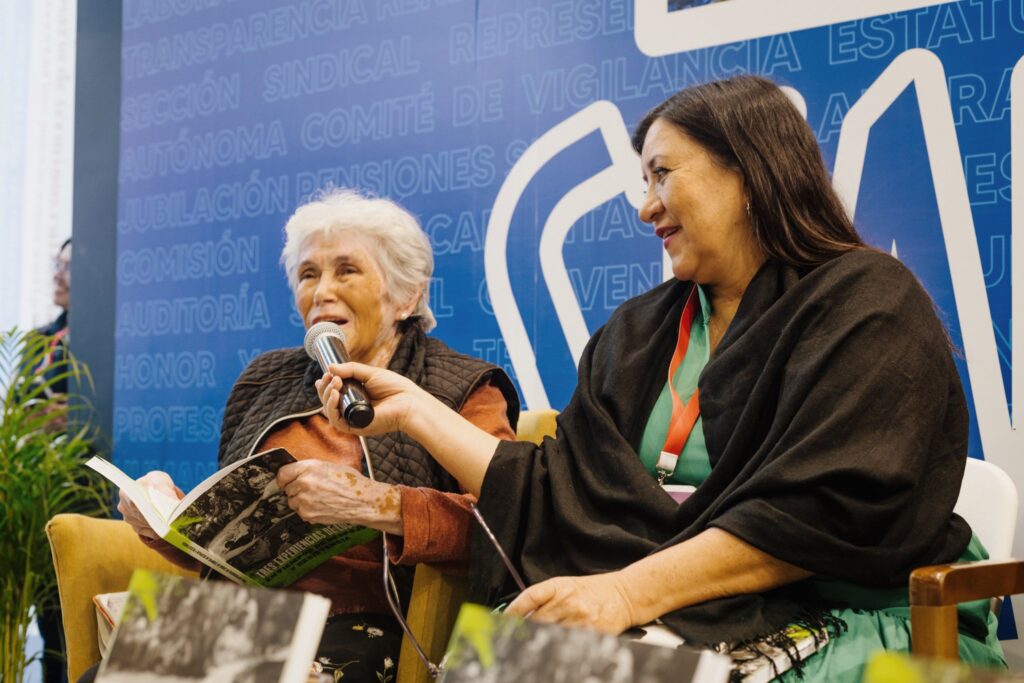
Journalist Sonia Serrano, who accompanied the struggle from its early days, reminded the audience that El Zapotillo failed not because of technical flaws alone, but because of Temacapulín’s resistance. She spoke of legal victories that bought time, of corruption that hollowed out the project, and above all of a community that made the abstract language of “development” painfully human.
By centering everyday life — the plaza, the church, the cemetery, family homes — the struggle dismantled the narrative that some lives must be sacrificed for urban growth. “What these testimonies do,” Serrano said, “is make us understand what is really at stake.”
One of the most distinctive elements of Temacapulín’s resistance, González noted, was how faith became a political force. Deeply religious communities did not keep their beliefs confined to prayer. Images of the Señor de la Peñita and the Virgen de los Remedios accompanied marches and negotiations, placed directly before authorities. Religion, González said, was politicized — transformed into collective strength and moral authority.
Equally vital were the hijas e hijos ausentes — migrants who carried Temacapulín with them to Guadalajara, the United States, and beyond. Their organizing expanded the struggle beyond geography, proving that territory lives not only where one resides, but where one belongs.
The book does not romanticize victory. Speakers acknowledged unresolved issues: unfinished repairs, pending legal guarantees, and the long process of healing after years of conflict. Yet the message was clear — the victory was real, and it belongs to the people.
“Memory matters,” González said. “If we don’t preserve it, others will rewrite it.”
At FIL Guadalajara, surrounded by stories from around the world, the women of Temacapulín offered a reminder: resistance is not only fought in courts or streets, but sustained in kitchens, churches, friendships, and faith. Their story, now bound in pages, remains a living lesson — that without struggle, there is no victory, and without women, there is no community left to defend.

Previous Next