From traffic medians to collective milpas, grassroots growers push back against a law they say criminalizes community care of the land.
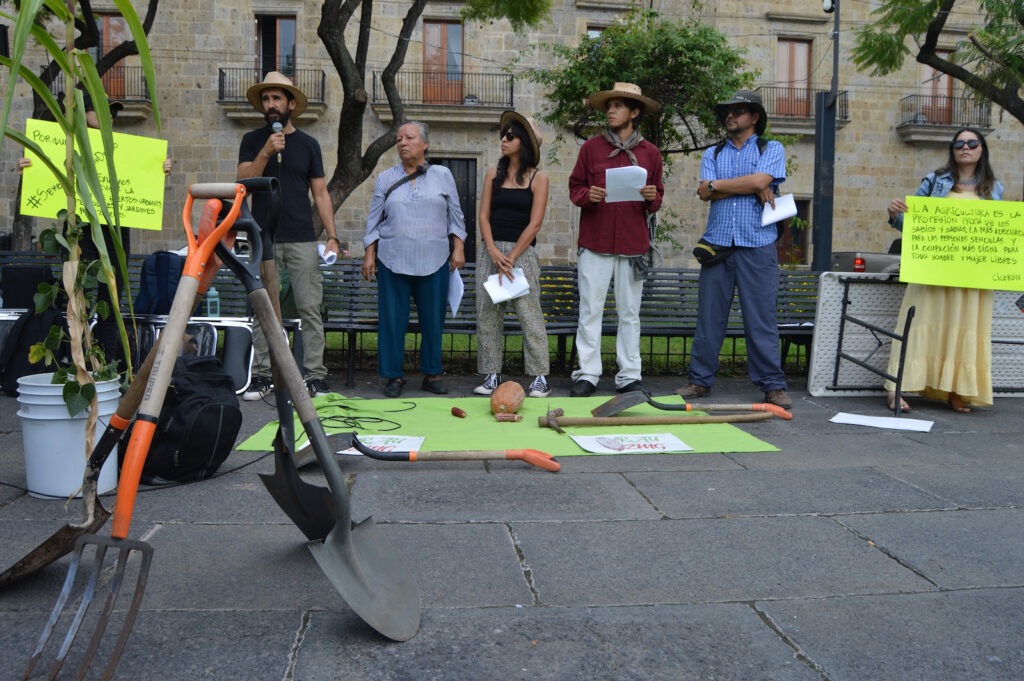
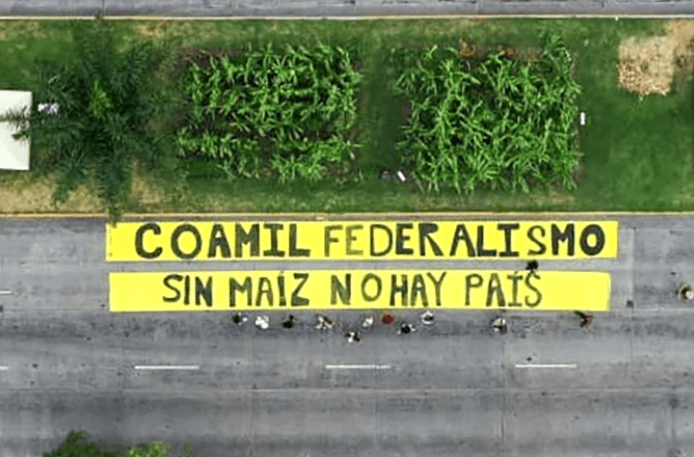
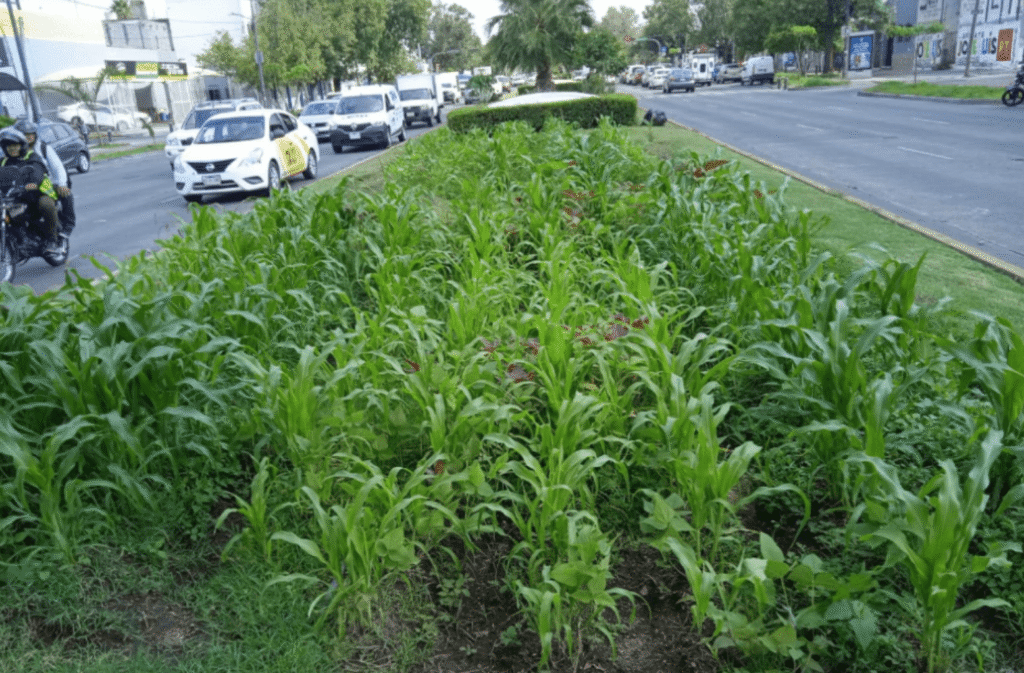
On a traffic median in Guadalajara, a patch of maize has grown and flourished every summer for nearly a decade. It was planted not by a government program or a corporate green initiative, but by a group of residents who believed that even the most forgotten corners of the city could be places of nourishment, beauty, and resistance.
That act of planting would later become an act of defiance.
For the second time in less than three years, Guadalajara’s urban agriculture community is mobilizing against proposed regulations they say bureaucratize planting in public space and threaten long-standing agroecological practices across the city. The movement’s message is clear — and deeply rooted in lived experience:
“Sembrar es un derecho, no un permiso.”
Planting is a right, not a permit.
Para leer este artículo en Español haz click AQUÍ
A Living Network Beneath the Concrete
Long before city officials began drafting laws about “urban agriculture,” community gardeners, seed savers, and agroecology collectives had already been cultivating Guadalajara’s margins — traffic medians, vacant lots, sidewalks, schoolyards, and neglected public spaces.
They planted milpas and pollinator gardens. They restored soil damaged by construction and contamination. They created informal food networks in neighborhoods with limited green space and rising food insecurity. They did it without public funding and outside formal institutional frameworks, guided by ancestral knowledge, ecological ethics, and collective care.
For many participants, urban agriculture is not a hobby or beautification project. It is a political and spiritual practice — a way of reclaiming land, healing territory, and asserting food sovereignty in a city shaped by inequality and ecological stress.
The First Confrontation: 2023
In July of 2023, that quiet, grassroots work collided with state power.
Guadalajara authorities moved to restrict planting in public spaces, leading to police interventions against urban gardening collectives. Members of the Huerto Rabia y Memoria collective were detained for planting corn in a public area. Police later disrupted a community planting event, actions organizers interpreted as intimidation aimed at deterring agroecological activity in public space.
The response was swift and collective.
Dozens of organizations and hundreds of individuals rallied under the banner #SembrarNoEsUnDelito (“Sowing Is Not a Crime”), issuing a public denunciation that framed planting as a collective right tied to food sovereignty, environmental care, and community self-organization — not a criminal offense.
The movement exposed a painful contradiction: while Guadalajara’s leaders spoke publicly about sustainability and climate resilience, the city was policing those who were literally growing food and restoring ecosystems.
A New Proposed Law, the Same Logic
Now, in 2026, critics say history is repeating itself.
A new proposed Urban Agriculture law advancing through local legislative channels has once again sparked resistance from collectives, gardeners, and food-sovereignty advocates. They argue that the proposal reprises — and deepens — the same problems that triggered public outcry in 2023:
• Regulation without meaningful consultation
• Surveillance of community activity
• The framing of autonomous planting as a punishable act
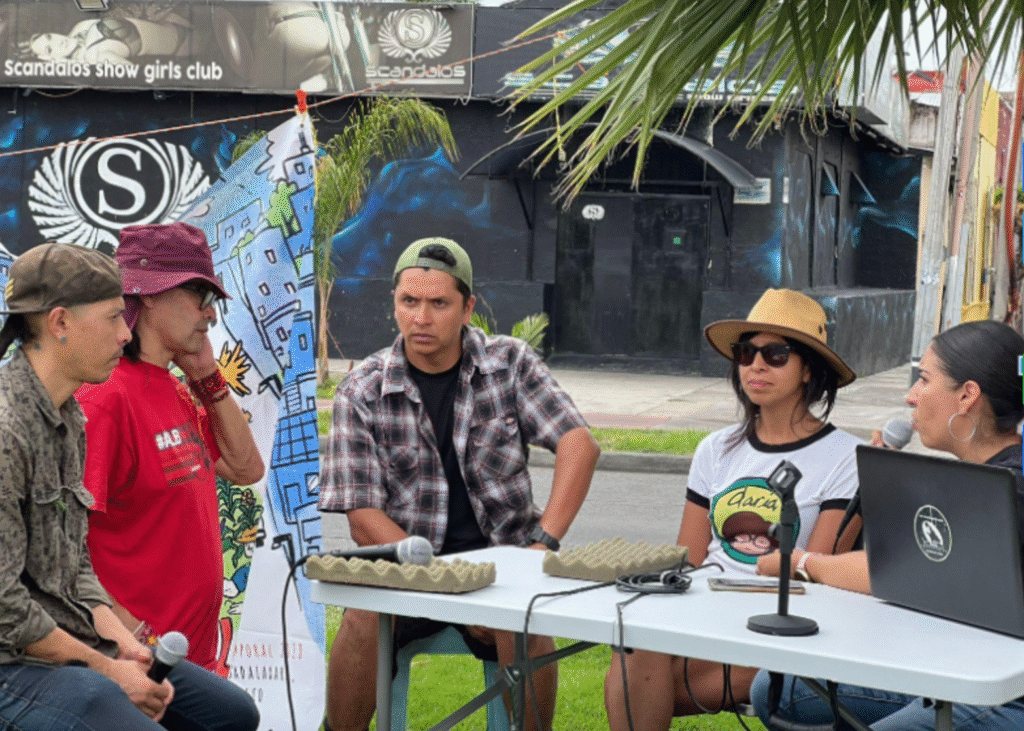
According to public documents circulating among activists, the law would require the registration and regulation of urban agriculture projects, including mapping, oversight, and formal authorization for planting in public spaces.
While framed as a tool to promote sustainability and environmental order, opponents argue that the real effect would be to transform autonomous, community-led practices into activities subject to permits, monitoring, and potential sanctions.
At the heart of the critique is a simple but profound concern:
The law treats planting as something that must be authorized by the state — instead of recognizing it as an existing civic practice rooted in collective care of land, water, and food systems.
Who Owns the City’s Soil?
Beneath the legal language lies a deeper conflict about power, territory, and public space.
Urban agriculture collectives in Guadalajara have long operated in spaces the city overlooked or abandoned. They filled ecological voids with life. They transformed concrete scars into living commons.
Opponents of the proposed law argue that formalizing these practices through government control risks excluding precisely the people who built them, while opening the door to selective enforcement, privatization, or commercial co-optation.
They also point to a history of uneven environmental regulation in the city, where large-scale polluters and developers often operate with impunity while grassroots actors face scrutiny.
In that context, requiring permits for planting is not neutral policy — it is a political decision about who has the right to shape public space.
A Broader Struggle for Food Sovereignty
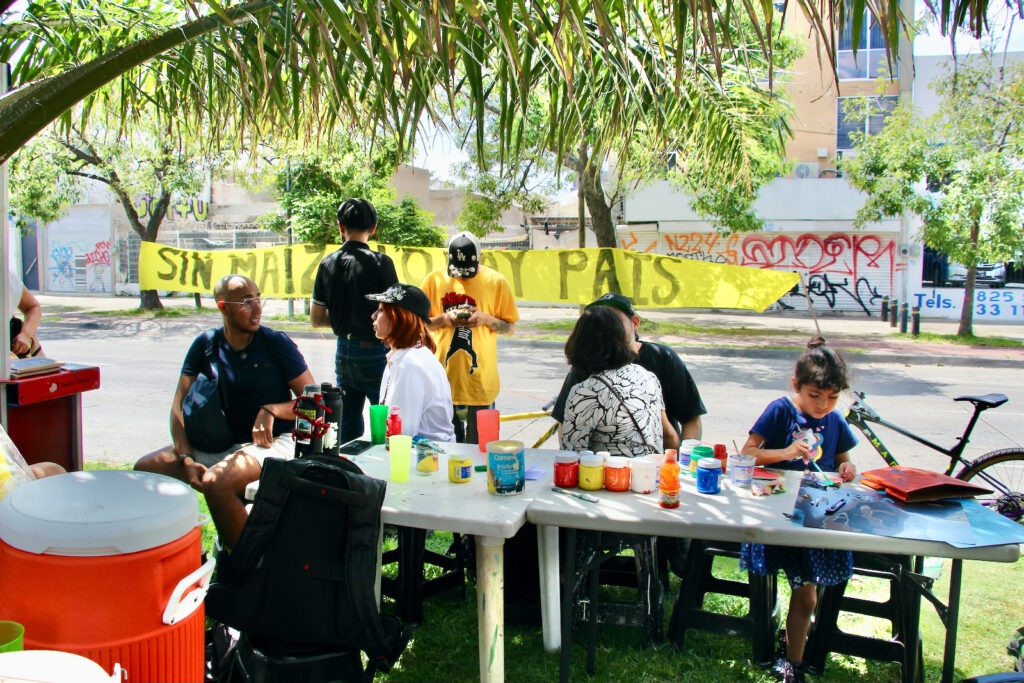
The resistance to the proposed Urban Agriculture law is part of a wider movement in Jalisco and across Mexico that links food production to autonomy, territory, and human rights.
From this perspective, urban agriculture is not an accessory to urban life. It is a response to:
• Rising food costs
• Ecological degradation
• Unequal access to healthy food
• The erosion of communal land practices
Regulating planting without the participation of those most affected is seen not as responsible governance, but as enclosure — the slow bureaucratic fencing-off of a living commons.
As one of the movement’s guiding principles now states:
“Sembrar es un derecho, no un permiso.”
Planting is a right, not a permit.
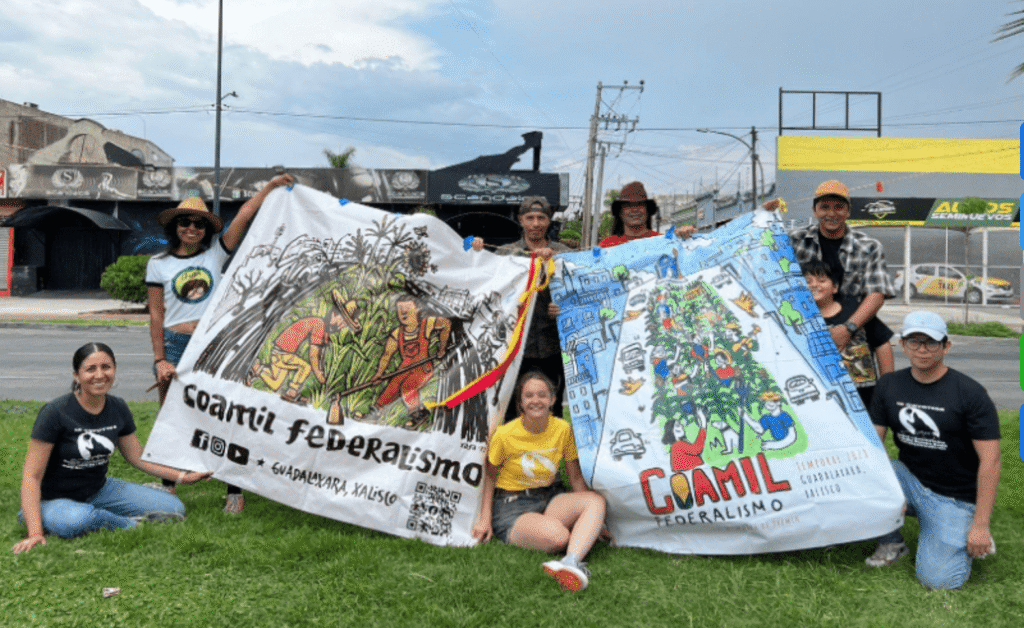
The Movement Rises Again
As the proposed law advances, activists are once again organizing public statements, information campaigns, and collective responses. The Urban and Peri-urban Agriculture Network of the Guadalajara Metropolitan Area (RAU) is calling upon collectives, communities, organizations, academics, and individuals to endorse this statement and defend the community-based self-management of public spaces, warning that Guadalajara risks repeating a cycle of criminalization rather than building collaborative solutions.
For them, the issue is not whether urban agriculture should exist — it already does.
The real question is whether the city will recognize community growers as partners in ecological restoration and food resilience — or treat them as problems to be managed.
The movement’s message remains consistent with 2023:
Planting is not a crime.
Planting is a right.
And public space belongs to the public.

- ‘Planting Is a Right’: Guadalajara’s Urban Ag Rebels Rally Against Proposed Regulations — Again - January 21, 2026
- The women who kept a Mexican pueblo above water — and stopped a megadam - January 15, 2026
- Reading the Earth: How Mexican scientists are using nature to find the disappeared - January 7, 2026
Coamil Federalismo milpa Sowing is not a crime urban agriculture