Text and photos: Tracy L. Barnett
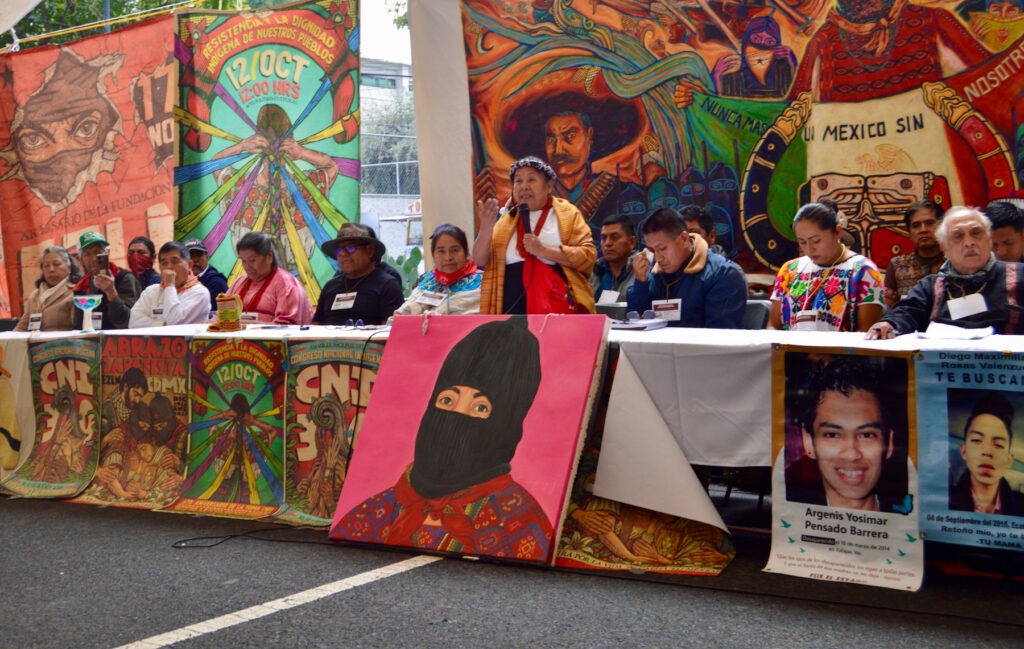
Thirty years ago, Comandanta Ramona — a diminutive Tzotzil woman representing the Zapatista movement — marched into Mexico City with her masked delegation and helped launch a national Indigenous political space that would become the Congreso Nacional Indígena (CNI).
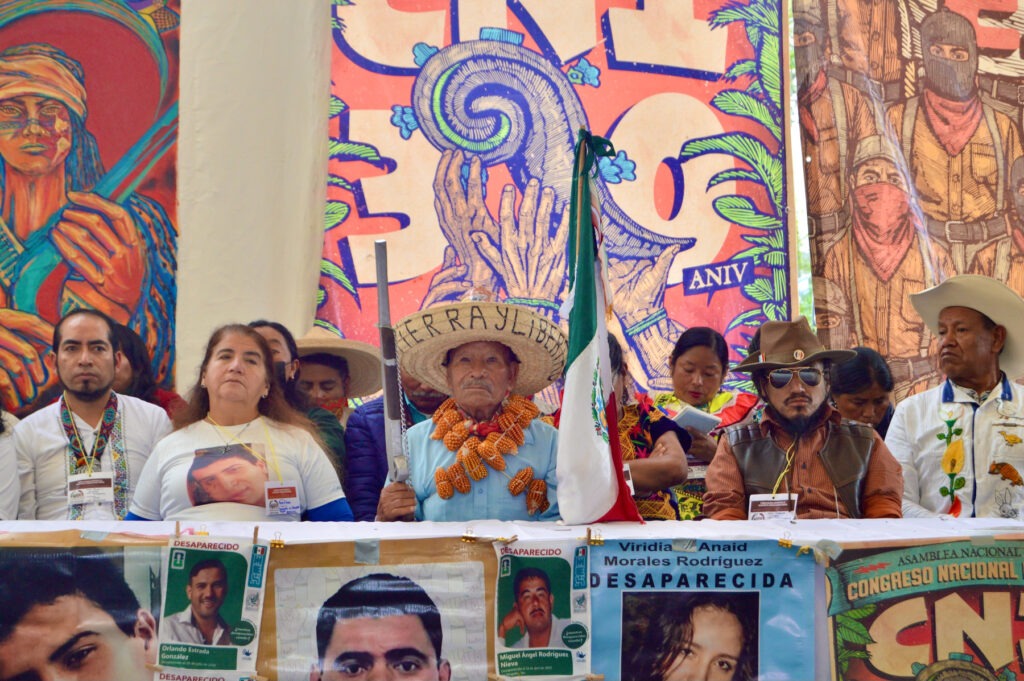
This October, the CNI returned to the capital for its 30th anniversary inside another potent symbol of Indigenous defiance: a former federal Indigenous affairs building seized six years ago by Otomí women and transformed into the Casa de los Pueblos y Comunidades Indígenas “Samir Flores Soberanes,” named for the Indigenous land and water defender assassinated in Morelos in 2019.
The symbolism was difficult to miss. So was the water.
Across three days of testimony and debate, water surfaced again and again — polluted rivers in Veracruz, depleted aquifers and dirty tap water in Jalisco, wells contested in Puebla, megaprojects and mining threatening communities from Oaxaca to Sonora.
What had begun three decades earlier as a struggle for Indigenous autonomy was now being fought, increasingly, through one of Mexico’s most basic necessities.
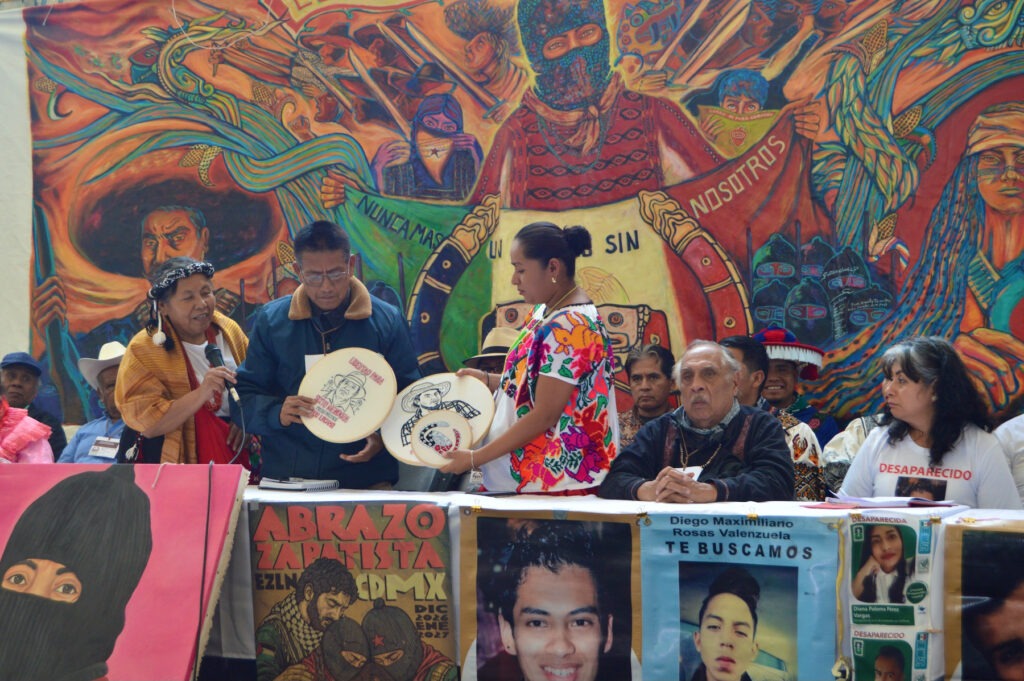
The CNI traces its birth directly to the political earthquake set off by the Zapatista Army of National Liberation, or EZLN, which rose up in Chiapas on Jan. 1, 1994, demanding land, democracy and Indigenous rights.
Two years later, after the San Andrés dialogues between the Zapatistas and the federal government, Indigenous peoples from around the country took an already growing Indigenous rights movement to the next level, building a national space of their own.
María de Jesús Patricio Martínez — better known as Marichuy, a Nahua traditional healer from Jalisco and longtime CNI spokeswoman who in 2017 became the first Indigenous woman to seek Mexico’s presidency — recalled those beginnings at the opening plenary.
Communities barely knew one another then, she said, but quickly discovered how much they had in common: land disputes, poor health and education services, internal divisions often fueled from outside.
“If our problems are the same, why walk alone?” she recalled them asking.
The answer became the CNI: not a political party or government body, but an autonomous gathering of Indigenous peoples, nations, tribes and communities committed to defending territory and exercising self-determination on their own terms.
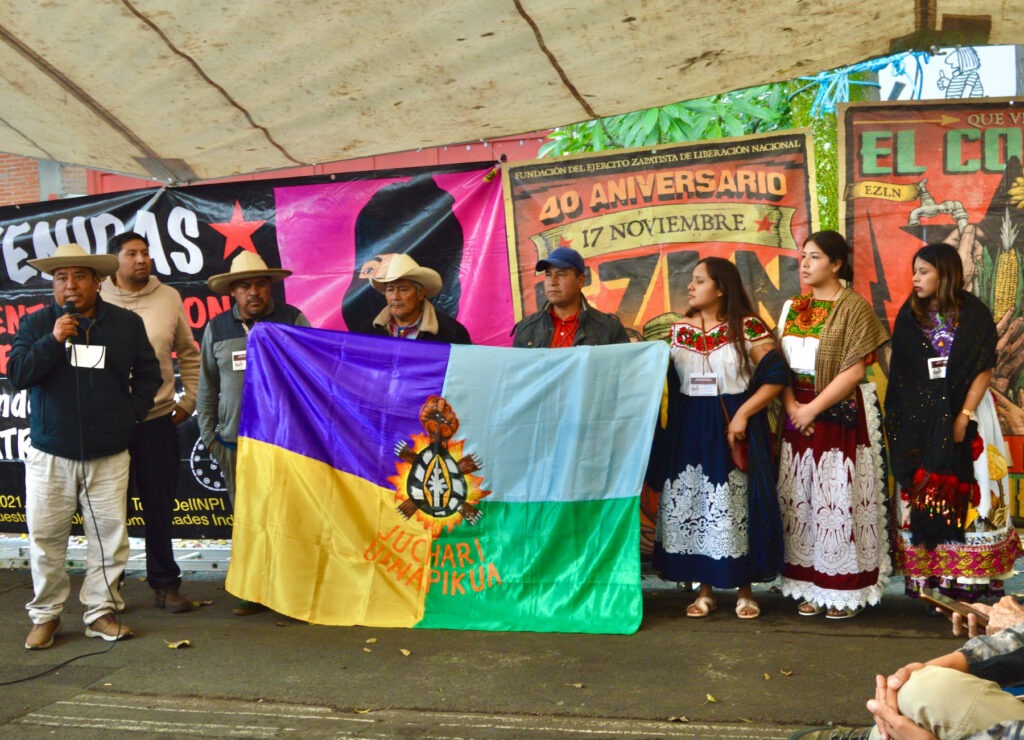
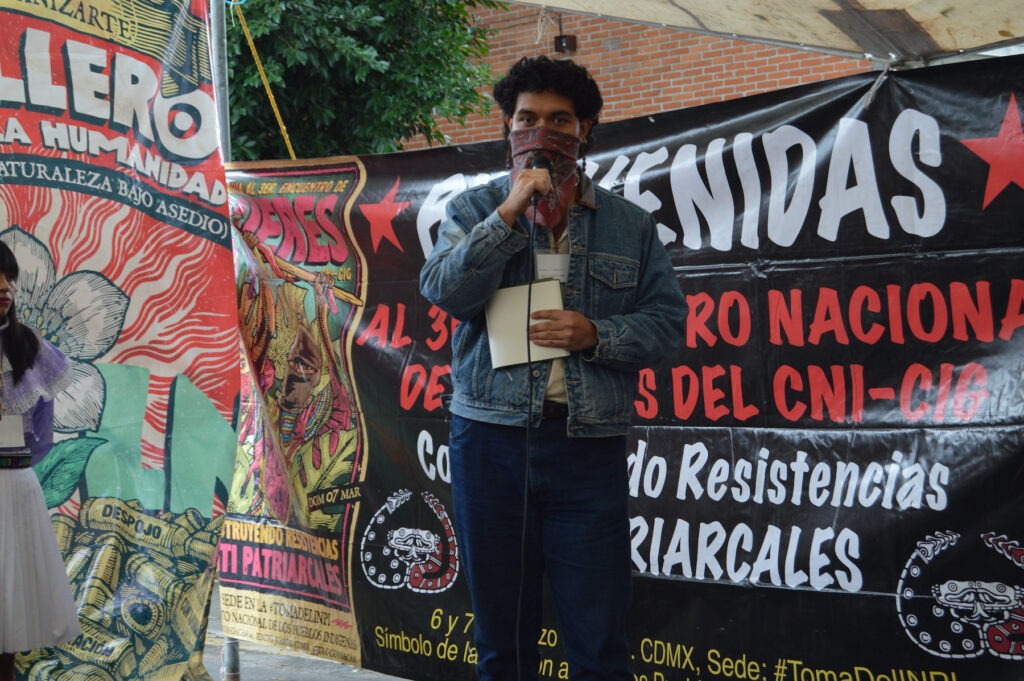
For the anniversary gathering, that autonomy was visible in the architecture of the event itself. Indigenous delegates met privately in working groups inside the building. Outside, beneath a vast tent spanning the closed-off street, invited allies — students, feminists, environmentalists, human-rights defenders, families of the disappeared and other organizations — held separate discussions about how to support the CNI without trying to direct it.
At public plenaries, the two groups came together to compare conclusions. Then the Indigenous delegates went back inside to continue their own deliberations, while a music and art festival and street fair unfolded under the big tent.
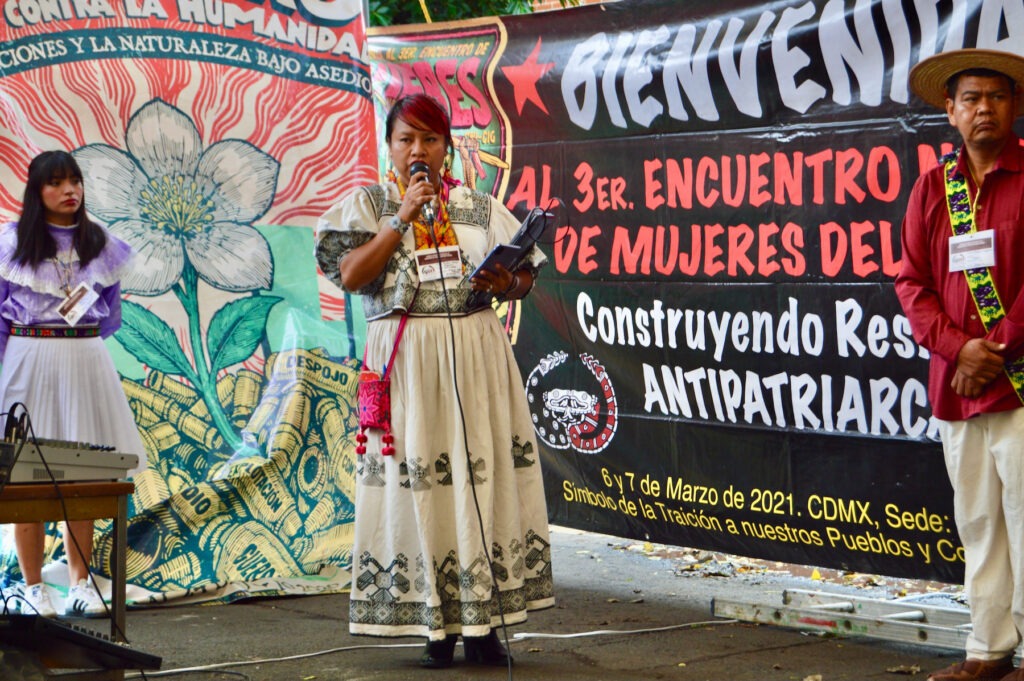
If one issue linked the wildly different geographies and populations represented at the gathering, it was water.
Cecilia Sánchez Martínez, of the Veracruz collective Mujeres que Luchan por la Vida, described communities resisting megaprojects that, she said, leave few jobs but contaminate “our rivers, our beaches, our lagoons and all the bodies of water we have.”
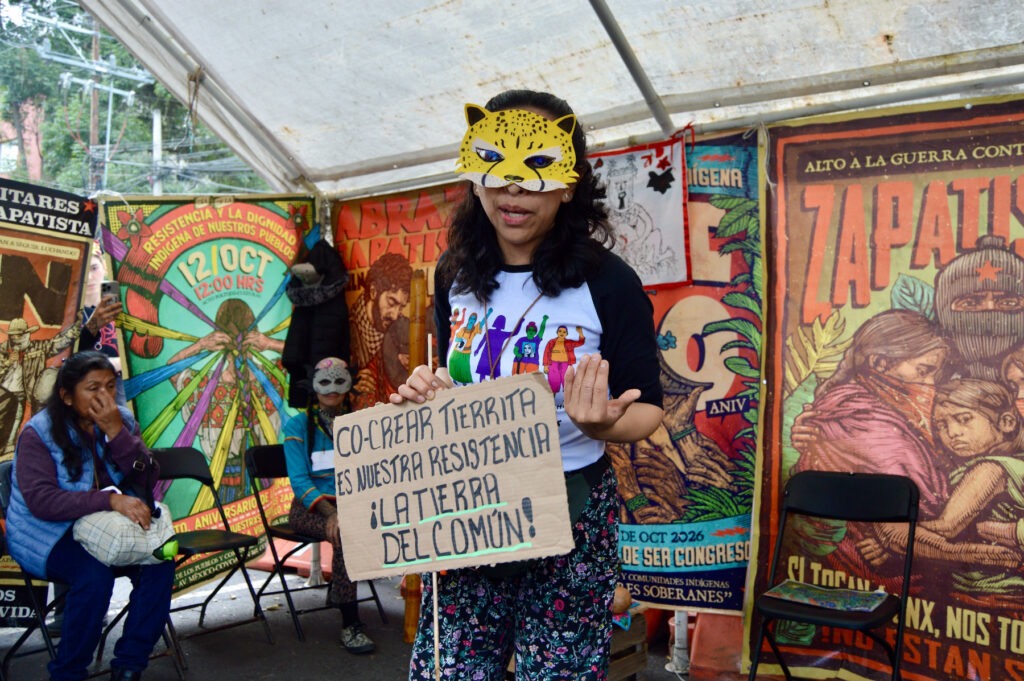
Wixárika delegates from western Mexico spoke of aquifers threatened by mining and industrial agriculture. Participants from Puebla described communities confronting police and machinery over wells. Others spoke of dams, tourism developments, industrial corridors and urban expansion.
Carlos Beas Torres, a longtime non-Indigenous ally of the CNI and veteran organizer, argued that such conflicts are precisely why the Congress matters beyond Indigenous communities.
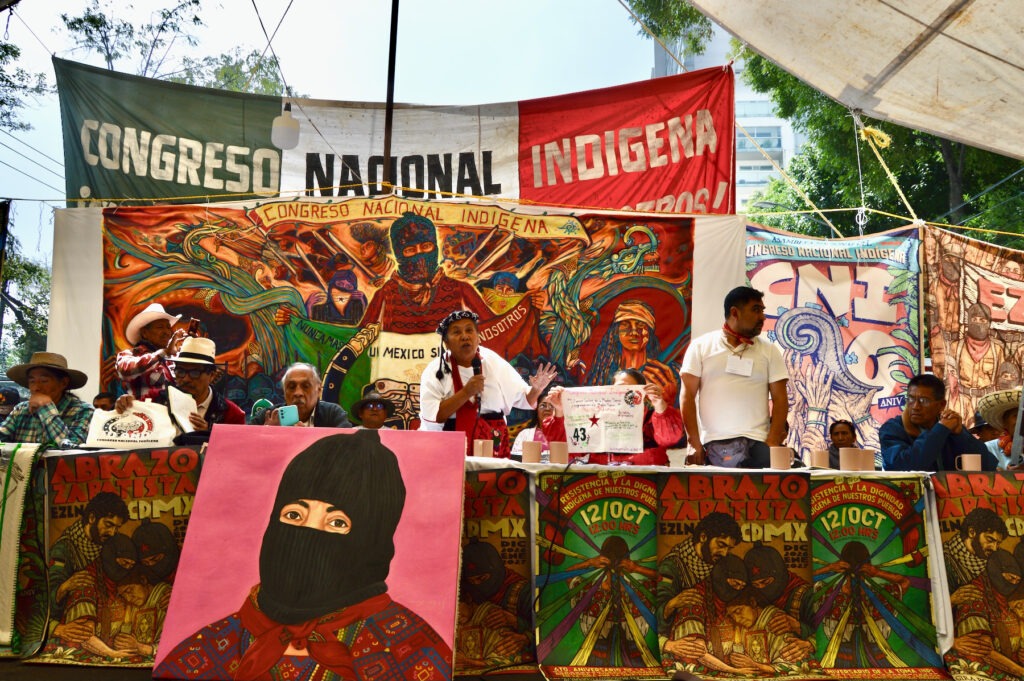
“The message the Congreso Nacional Indígena is sending is not for Indigenous peoples,” he said. “It is a message that goes beyond.”
One of the clearest expressions of the broader crisis, he said, is water — pointing to Guadalajara, where hundreds of thousands of residents have been receiving discolored, tainted water.
Buying another garrafón may get a family through the day, he said, but it does nothing to resolve the underlying problem.
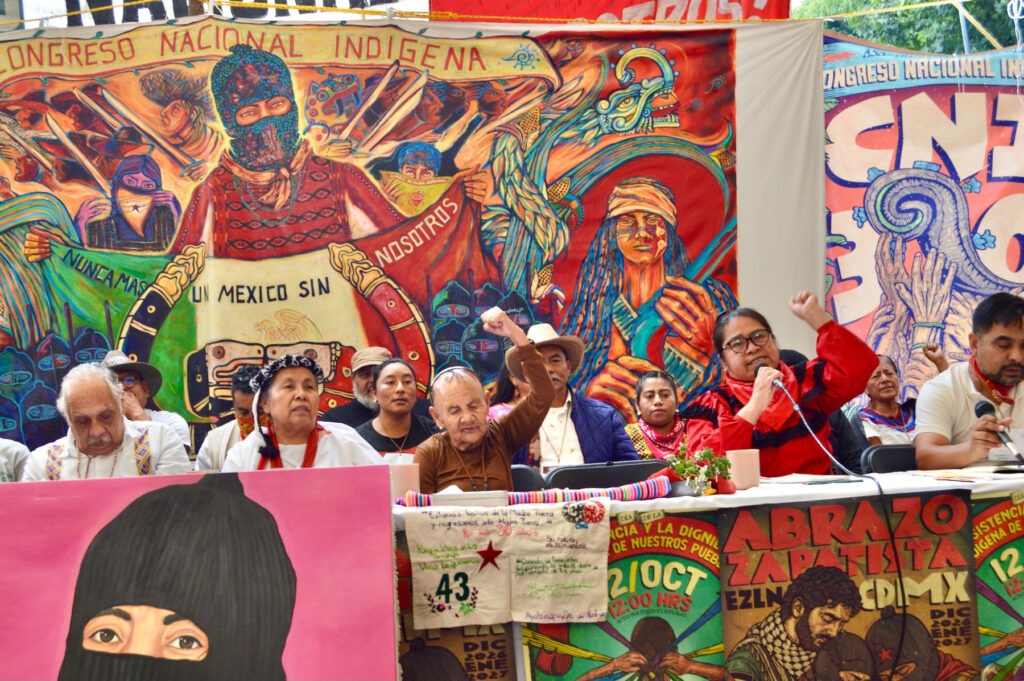
The same pattern surfaced repeatedly during the gathering: seemingly local conflicts over a spring, aquifer, forest or river leading back to larger questions about who gets to decide what happens to a territory — communities, governments or corporations.
The anniversary soon turned into a direct challenge to the Sheinbaum government.
The administration has celebrated the 2024 constitutional reform recognizing Indigenous and Afro-Mexican peoples as subjects of public law as a historic advance. But CNI delegates were deeply suspicious of the proposed law intended to put those rights into practice — both because of what it contained and because of how Indigenous communities were being asked to review it.
Ramón González López, a Wixárika former communal land commissioner from Tuxpan de Bolaños, described communities being handed a massive document and asked for an opinion almost immediately.
“They arrive all of a sudden and say, ‘Here, we have this law, and we need you to review it and tell us whether it’s good or bad,’” he said. “Almost overnight. That’s not right.”
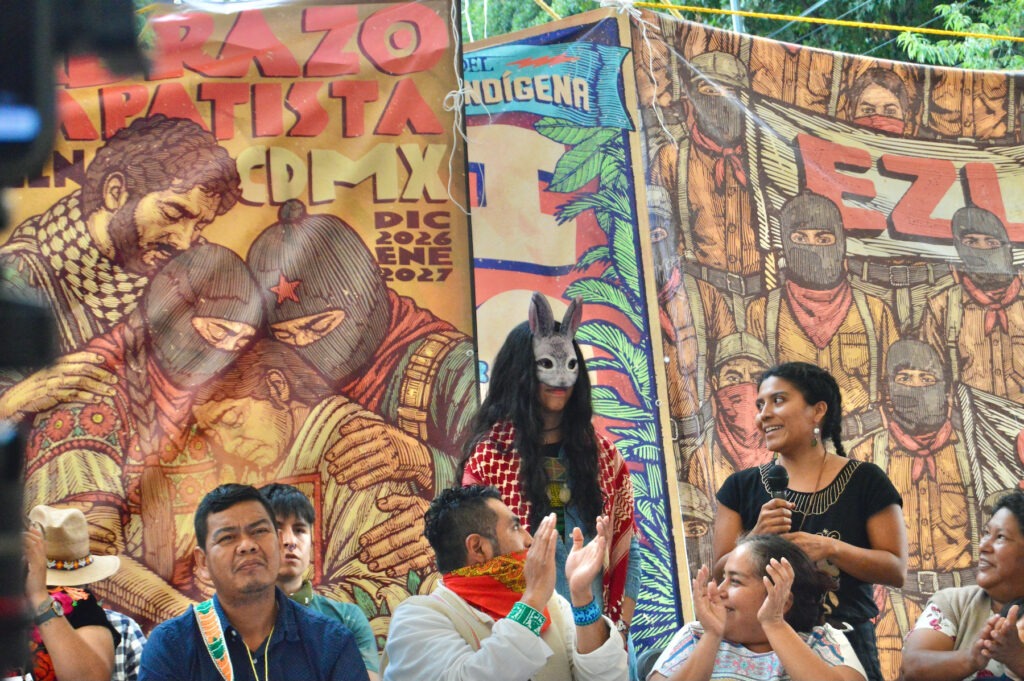
Then he held up the scale of the task: “This huge book, more than 450 articles. Who wrote it? How did they write it? Why did they write it? Why weren’t we invited when they were writing it? … You can’t review something like that in one or two days.”
By the second day, representatives of 35 Indigenous peoples had reached a near-unanimous position: reject the proposal.
Reporting back to the plenary, delegates declared: “With law or without law, we will continue exercising our free self-determination according to the different territories we inhabit.”
The final pronouncement went further.
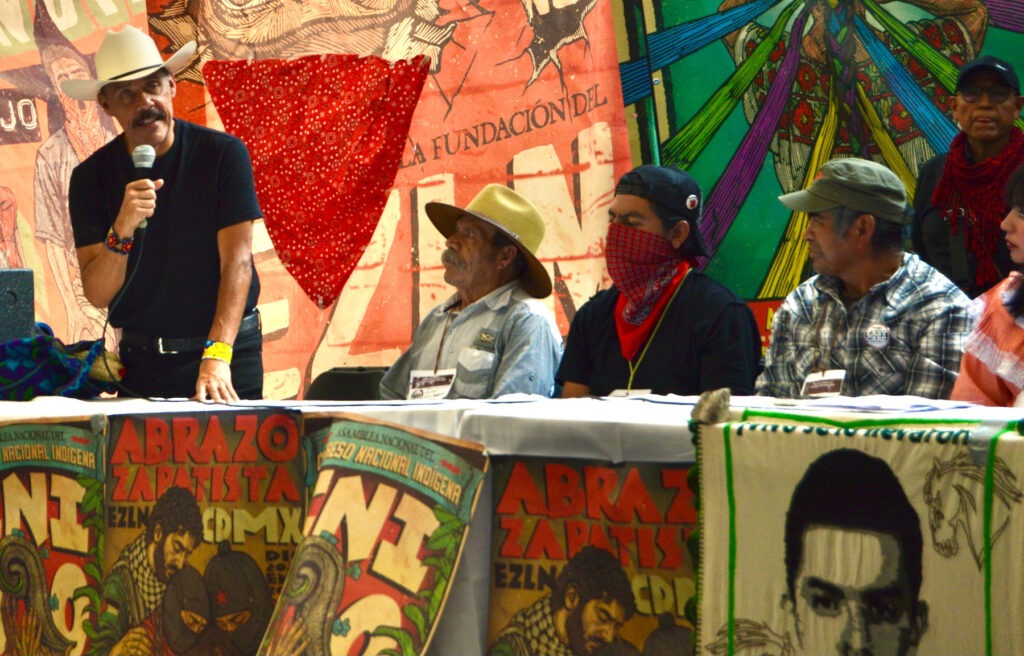
Carlos González, an Indigenous attorney from Jalisco, founding member of the CNI and one of Mexico’s leading legal voices on Indigenous rights, read the closing declaration.
“Indigenous consultation is a power belonging to our peoples, not to the state or to corporations,” it stated.
Communities themselves, through their assemblies and customary systems, must decide whether consultation is appropriate, the document continued.
“The occupation of our territories and the destruction of our peoples are not matters for consultation.”
The declaration called on the CNI to strengthen and expand its presence across Mexico and urged participating communities to carry the agreements back to their own assemblies. It also demanded action on disappearances, political prisoners and attacks on land defenders while reaffirming support for Zapatista autonomy.
For all the grim testimony, the gathering itself was remarkably buoyant.
Music filled the courtyard at night. Murals were painted. Workshops ranged from political education to composting the waste generated in the dry toilets set up to accommodate the gathering. Children ran between meetings. Young people played pelota, the prehispanic predecessor to soccer, in the cordoned-off street. Steaming and delicious food appeared in enormous pots, piled high into bowls served by Otomí women in their colorful pleated collars.
One working-group report captured that contradiction: resistance, it said, was not simply saying no to megaprojects or government laws, but continuing “through love, through hope, but also through rebellion.”
There was also a clear sense of generational handoff.
Some of the veterans who helped build the CNI are now elderly. Younger delegates, women and first-time attendees were everywhere.
Noé Valentín Aguilar Rojas, from the Indigenous community of San Lorenzo de Azqueltán in Jalisco, was attending the national CNI gathering for the first time with his 22-year-old son Fernando, now serving in his community’s highest position of authority as communal land commissioner. His community has been engaged in a historic struggle to recover their stolen lands, a struggle that led to last year’s assassination of one of their leaders. Hearing so many stories of dispossession and resistance was overwhelming, he said — but also strangely reassuring.
The details differed from place to place, but “the struggle of everyone is the same,” he said. “One person’s path belongs to all of us.”
The CNI formally closed its anniversary gathering shortly after 2 p.m. on Oct. 12.
Then the Otomí women who had hosted the Congress took the microphone.
Six years earlier, they had occupied the headquarters of the federal Indigenous affairs agency and refused to leave, turning it instead into housing, an organizing center and a meeting place for movements far beyond their own community.
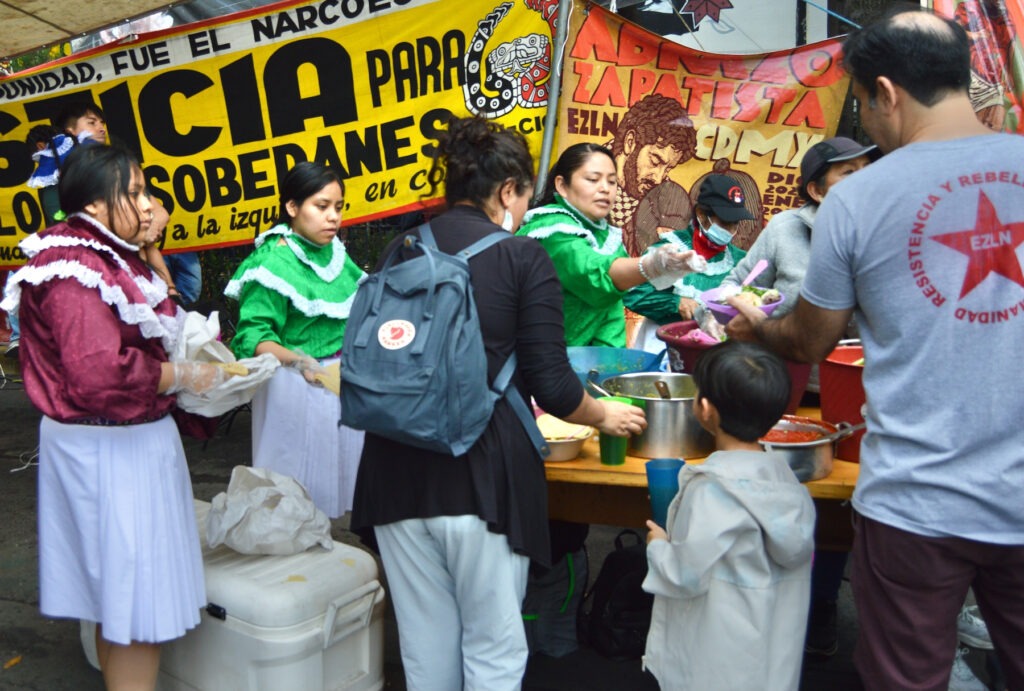
Now, invoking Comandanta Ramona and the Zapatistas, they announced that the Casa de los Pueblos would become patrimony of the CNI and the EZLN.
Thirty years after Ramona marched into Mexico City to help create a national Indigenous movement, another group of Indigenous women stood on a stage in front of a government building they had claimed for themselves and handed it, symbolically, to that movement.
The anniversary was over.
The unfinished struggle was not.
- Perfect Day Mexico isn’t dead after all. Now its opponents are headed to the Supreme Court - October 26, 2026
- Guadalajara water protesters confront masked groups, defend peaceful march - October 26, 2026
- Thirty years after the Zapatistas shook Mexico, Indigenous leaders confront an unfinished struggle - October 26, 2026